A province with two very different food traditions
Eating across the Province of Huelva can feel like moving between two neighbouring kitchens. Near the Atlantic, fish, shellfish and preserved seafood are central; inland, oak pasture, cured meats, seasonal mushrooms and slow-cooked stews take over. The agricultural country between them contributes strawberries, other fruit and the wines of the Condado. One single tapas menu will not tell you the whole story.
This guide is about foods and how to recognise them, not a ranking of restaurants. Ingredients and dishes are not always available every day; catch, season and individual kitchen choices matter. If a waiter says something is off the menu because it has not arrived fresh, that can be a useful sign rather than an inconvenience.
Gamba blanca: the famous white shrimp
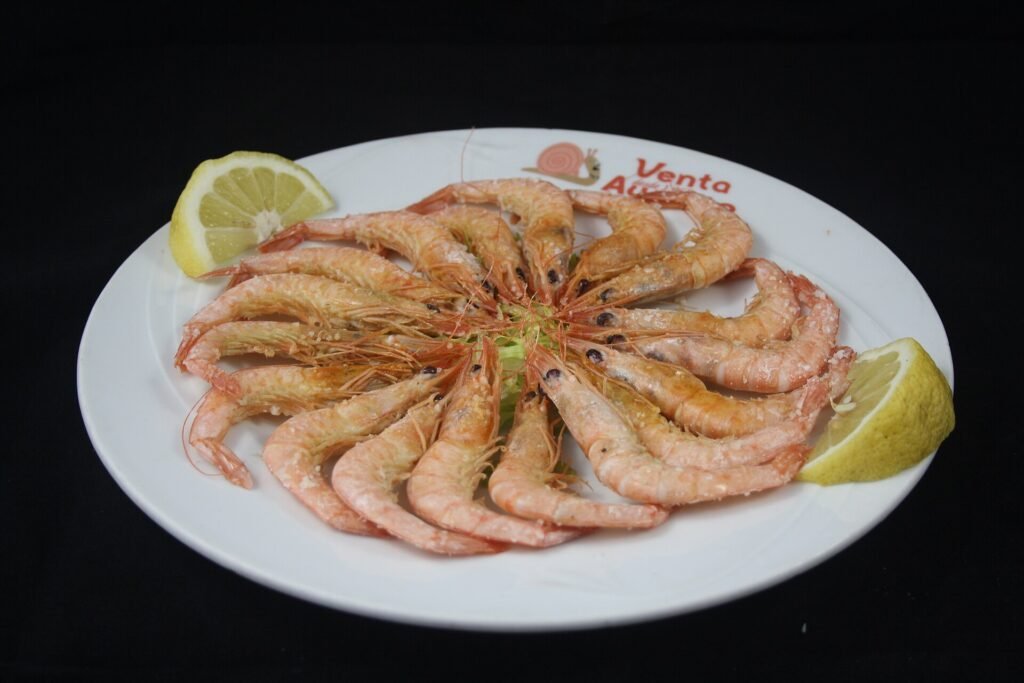
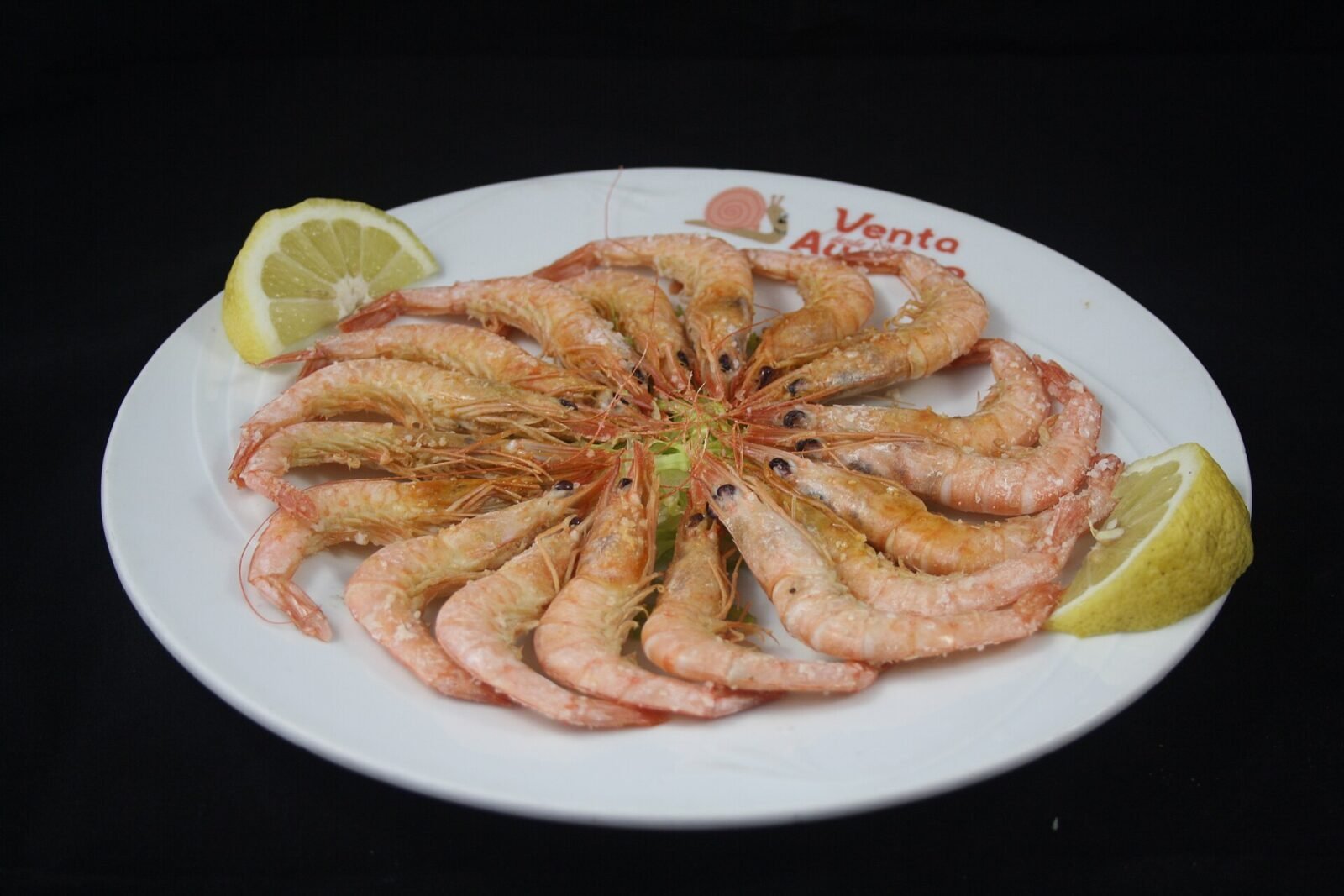
The gamba blanca is one of the best-known products associated with Huelva’s coast. Often served simply cooked and salted, it benefits from a restrained presentation that lets the texture and flavour do the work. It is tempting to judge it by size, but freshness and careful handling matter more than ordering the largest portion.
Try it at a seafood restaurant or market-oriented establishment and ask about portion size, whether it is served by weight and what is available that day. A plate labelled “gambas” is not automatically a claim that the shrimp was caught locally.
Where to explore: Huelva’s Mercado del Carmen is an approachable place to see the local seafood trade, even if you eat somewhere else afterwards.
Choco: cuttlefish, beyond the fried version
In Huelva, choco means cuttlefish, and the word has such a strong local identity that inhabitants of the city are affectionately known as choqueros. You may find it cut into pieces and fried, cooked with broad beans as chocos con habas, or prepared as fish-cuttlefish patties and meatball-style dishes.
If you have eaten only battered seafood before, look for a stewed preparation: it reveals a softer, more domestic side of the cuisine. The broad beans are especially connected with spring cooking, though restaurant availability varies.
Ordering tip: Ask whether the dish is a small tapa, a half-portion or a larger plate; portions vary substantially between establishments.
Coquinas and other shellfish: food made for sharing
Coquinas are small clams associated with the sands of the Andalusian Atlantic coast. In the kitchen they are often prepared in a pan with garlic, oil and perhaps herbs or wine. Part of the pleasure is a plate in the middle of the table, eaten slowly while the shells accumulate.
The coast also offers razor clams, other clams and seasonal shellfish. Availability can change according to harvesting conditions and food-safety rules. Never assume that all local shellfish can be collected independently from the beach.
Ordering tip: Ask about the source and price if the menu lists a catch of the day. Shellfish naturally may contain sand; reputable preparation and handling are important.
Fish from the coast: acedías, sardines and tuna
The coastal communities of the province have a fishing tradition reflected in restaurants and preserved products. Look for acedías (a small flatfish), sardines cooked simply, and seasonal tuna dishes. In Ayamonte and Isla Cristina, preserved fish is also part of the wider food heritage.
A good way to appreciate this tradition is to try a simply cooked fish rather than always choosing a heavy sauce. The local recipe may be fried, grilled or stewed; none is inherently more authentic than the other. What matters is the ingredient and the cook’s handling of it.
Ordering tip: For whole fish, ask whether the advertised price is per portion or per weight before confirming the order.
Jabugo ham: the mountain product with a protected name
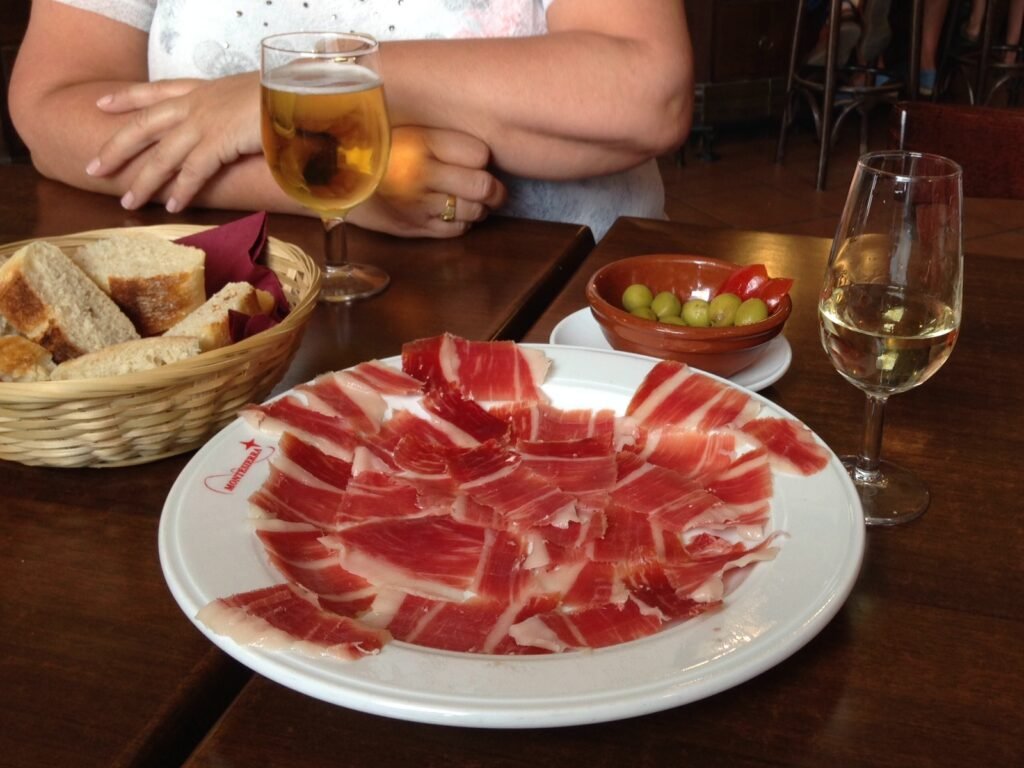
Jamón de Jabugo connects food with landscape. The protected designation of origin applies to products meeting defined conditions, including specified Iberian pig requirements and traditional elaboration in the designated area. It is not a synonym for every cured ham sold in Jabugo or elsewhere.
For a tasting, choose a modest plate and let it reach an appropriate serving temperature rather than eating it straight from a very cold fridge. The flavour is concentrated; pairing it with bread and a simple drink can be more satisfying than combining it with many strong ingredients.
Buying tip: Look for the DOP “Jabugo” identification and an appropriate producer label. The Ministry of Agriculture publishes the denomination’s rules, useful if you want to understand what a certified product actually means.
Iberian pork and mountain stews
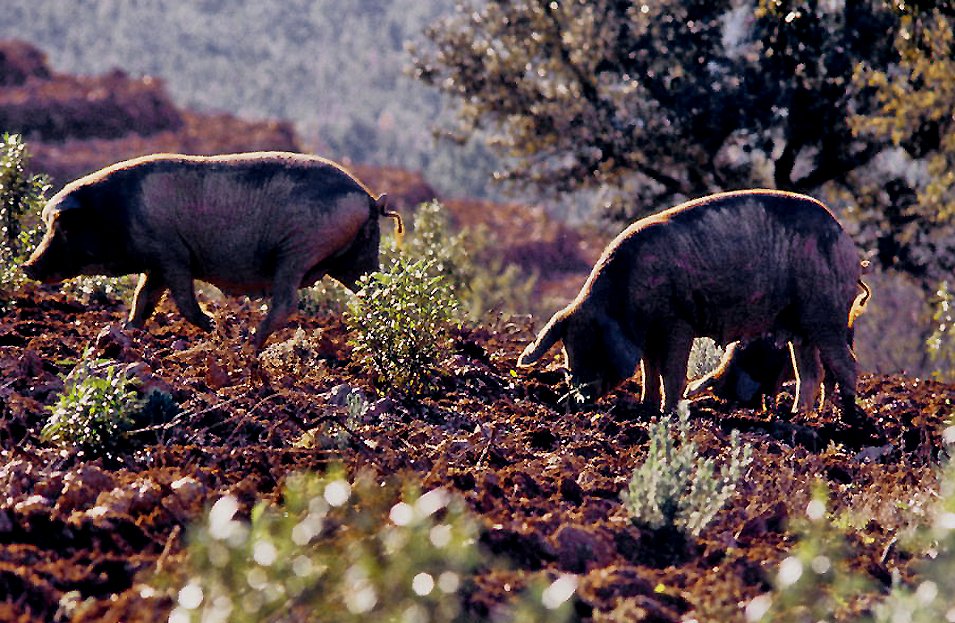
The sierra has more to offer than cured ham. Iberian pork appears in fresh cuts and slow-cooked dishes; in some villages, hearty soups, casseroles and game dishes are part of the colder-weather repertoire. The mountain table can be quite different from a lunchtime seafood spread at the coast.
Ask for a seasonal house speciality rather than searching only for a particular cut on every menu. If a restaurant offers a stew, find out whether it is served as a small plate or as a full main course—it may be much more filling than the tapas you were expecting.
Ordering tip: Distinguish a genuine local preparation from a generic “Iberian” item on an otherwise international menu. Ask how it is cooked and what accompanies it.
Gurumelos and other seasonal mushrooms
After suitable rains, wild mushrooms become an important subject in the inland food culture, particularly in the Andévalo and Sierra. The gurumelo is especially associated with the province, alongside other edible mushrooms that appear in market stalls and local cooking.
Season and weather matter here more than an appealing photograph in a menu. If you find a dish made with mushrooms gathered locally, ask which species it uses and whether it is in season. A plate of mushrooms can be a simple way to taste the surrounding countryside without needing an elaborate tasting menu.
Safety: Do not forage yourself unless fully knowledgeable and permitted to do so. Some poisonous mushrooms resemble edible species. Buy and eat mushrooms from reputable sellers and cooks.
Habas enzapatás and the Andévalo pantry
In the Andévalo, broad beans can appear in preparations distinct from the better-known chocos con habas. Habas enzapatás are associated with beans and aromatic pennyroyal, a humble dish rooted in local seasonal cooking. The area also has traditions of meat stews and sweets that rarely appear on the most tourist-oriented coast menus.
If you see a regional dish you do not recognise, ask how it is served. These foods often make most sense when eaten as part of a meal rather than judged as isolated “must-try” snacks.
Safety: Pennyroyal is an aromatic herb; do not interpret the presence of a traditional herb in cooked food as advice to consume concentrated essential oils.
Strawberries and red fruit from agricultural Huelva
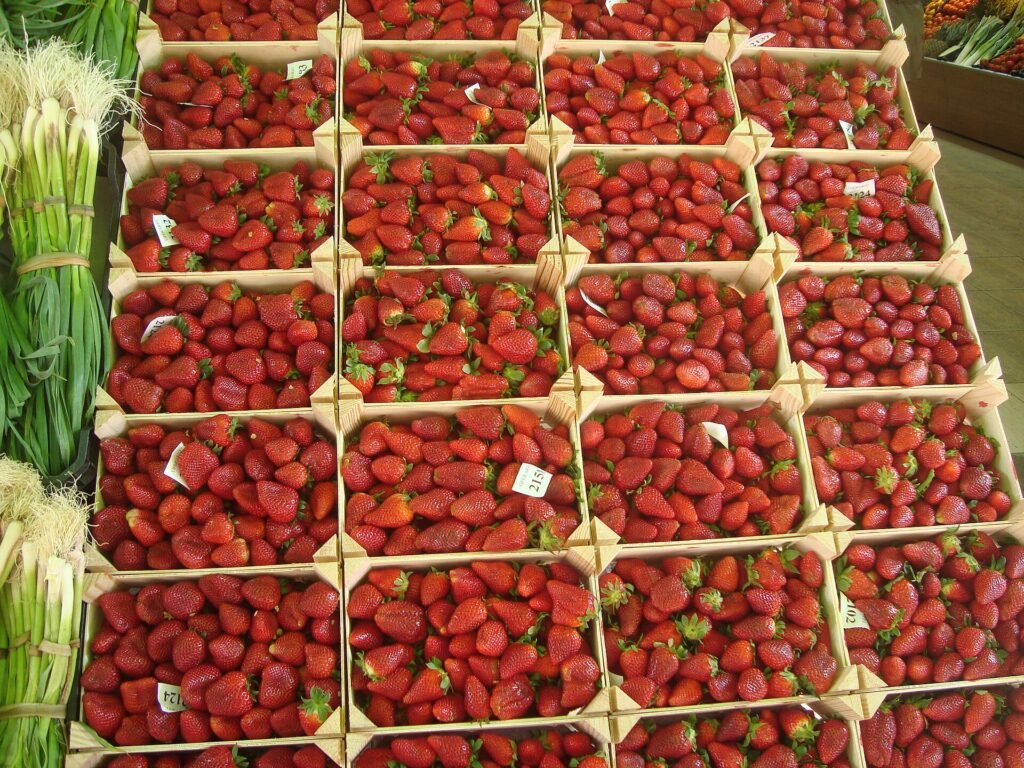
The Province of Huelva is an important Spanish centre for strawberry and other berry cultivation. Around Moguer, Palos de la Frontera and nearby agricultural areas, the crop gives the landscape a different character from either beaches or mountain villages.
Fresh berries are a straightforward local pleasure, but provenance matters: supermarket or restaurant fruit may be grown elsewhere, and growing practices differ among producers. Buy from a traceable vendor and avoid entering commercial fields to take photographs or pick fruit.
Seasonality: Fruit availability and quality vary with weather and harvest cycles. Ask the seller what is locally in season rather than assuming the same products are available all year.
Wines of the Condado: a regional pairing
The Condado district is linked to wine production, including products associated with the protected Condado de Huelva denominations. Styles and producers vary, and local wines can make a thoughtful pairing with seafood, cheeses or simply cooked meat.
A visit to a winery in or near Bollullos Par del Condado can add context about the landscape and winemaking methods. Do not assume that a tasting room is open for walk-ins; many producers have specific visiting arrangements.
Practical tip: If driving, keep tasting and transport separate. Alcohol is entirely optional, and the food traditions of the province stand on their own.
Where to experience the food traditions
- Huelva: the Mercado del Carmen and local seafood-focused restaurants are natural places to explore products from the coast.
- Isla Cristina and Ayamonte: consider fishing and preserved seafood traditions alongside the beaches and port setting.
- Aracena, Jabugo and neighbouring Sierra towns: look for cured ham, pork, seasonal mushrooms and mountain cooking.
- Andévalo settlements: ask about traditional stews, broad-bean dishes and local sweets.
- Bollullos Par del Condado and nearby wine-growing country: explore local wine producers and food pairings when visits are available.
The best plate is not necessarily the most famous one. If you are travelling slowly, choose one theme per stop—a market in the morning, a simple fish dish near the coast or a mountain lunch after a walk. This will teach you more about the province than ordering ten specialities in one sitting.
Useful ordering and dietary advice
In many bars, a tapa is smaller than a media ración (half portion) or ración (full portion), but there is no universal size. Ask about portion sizes and prices for seafood sold by weight. Confirm current kitchen hours with the establishment; a business appearing on Maps does not mean its food service runs all day.
For allergies, do not assume a dish is safe just because its main ingredients sound simple. Fish, shellfish, eggs, gluten and cross-contact can occur in shared frying oil or preparation areas. Tell staff your requirements clearly and ask for the allergen information provided by the business. No specific restaurant is endorsed here as allergy-safe.