The first voyage led by Christopher Columbus in 1492 is often reduced to three ship names and one famous date. Around the estuary of the Río Tinto, however, you can see how much the expedition depended on specific towns, sailors, religious communities and local maritime knowledge. The most useful way to visit these places is to connect them rather than treat the replica ships as the entire story.
This route stays in the Province of Huelva, linking Palos de la Frontera, the La Rábida heritage precinct and Moguer. These places tell different parts of the story: preparation and recruitment, the ships and people who sailed, and the region that remembered the expedition afterwards. They also provide an opportunity to consider its consequences for Indigenous communities in the Americas, not merely the ambitions of European navigators.
Start in Palos de la Frontera: the sailors behind the voyage
The departure port was not an anonymous point on a map. Palos was a maritime town whose seamen and shipowners knew Atlantic sailing. The Pinzón family, especially Martín Alonso and Vicente Yáñez Pinzón, played significant roles in organising and undertaking the voyage. Starting here makes the later museum displays easier to understand: you have met the community before seeing the ships.
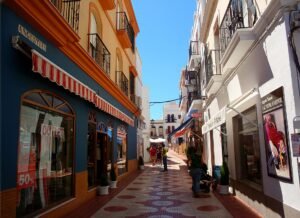
Walk the centre at an easy pace, paying attention to the relationship between the old streets and the estuary. Modern Palos is not a preserved fifteenth-century stage set; it is a working municipality whose historic monuments sit within an ordinary town.
Planning: Palos and La Rábida are separate clusters. Do not assume every Columbian landmark is within one short pedestrian loop.
Iglesia de San Jorge: where the 1492 order was read
The Church of San Jorge is especially relevant because the royal order connected with supplying vessels and mariners was read to local residents in its square in 1492. The church belongs to the Gothic-Mudéjar architectural tradition, so it is also worthwhile on architectural grounds rather than purely for its historical association.
Consider how a royal instruction would have affected the seafaring households of a small port. The voyage was not simply a personal idea turned into action: it depended on law, money, crews and ships. The church is a useful place to think about those less glamorous practicalities.
Planning: This remains a religious building. Entry to the interior can depend on worship and current arrangements; viewing the exterior is a reasonable fallback.
Casa Museo Martín Alonso Pinzón: an important family, not a footnote
The Pinzón house museum helps redress a common imbalance in the story. Accounts of the voyage frequently concentrate on Columbus while overlooking experienced local navigators whose support helped turn the plan into a real expedition.
The restored property presents material associated with the Pinzón family and the town’s maritime past. It is a compact cultural stop rather than a vast museum, making it best paired with San Jorge and the surrounding centre.
Planning: Check whether exhibitions and the interior are currently open before scheduling around them. Avoid using outdated ticket prices copied from old tourist listings.
La Fontanilla: the practical world of a sailing ship
The historic fountain known as La Fontanilla is traditionally associated with provisioning ships with water. It is a comparatively modest place, but that is precisely why it adds value: ocean voyages involved enormous amounts of ordinary work before any dramatic departure.
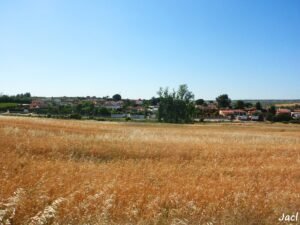
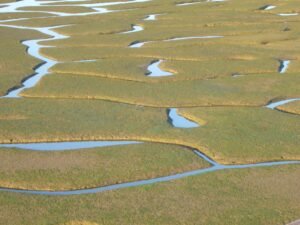
It also helps visitors imagine a shoreline and port environment very different from the present landscape. River channels, marshes and the ways people used this coast have changed over the centuries.
Planning: Treat La Fontanilla as a short stop along a wider Palos itinerary, not as a ticketed attraction requiring a dedicated morning.
Monasterio de Santa María de La Rábida: planning and persuasion
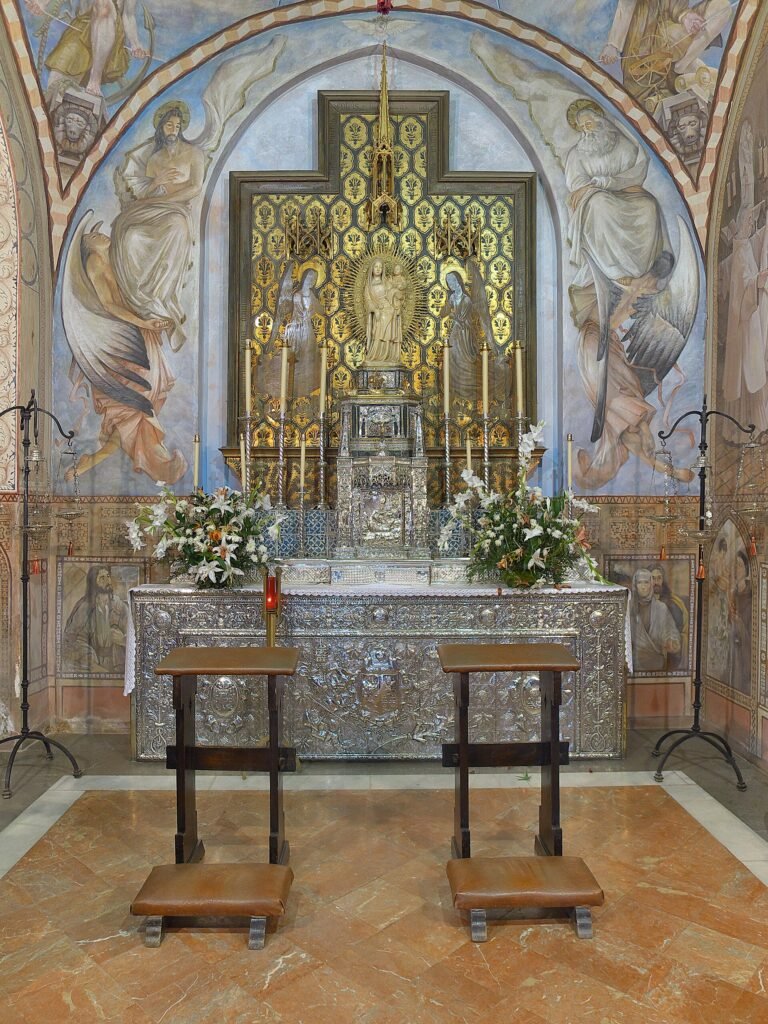
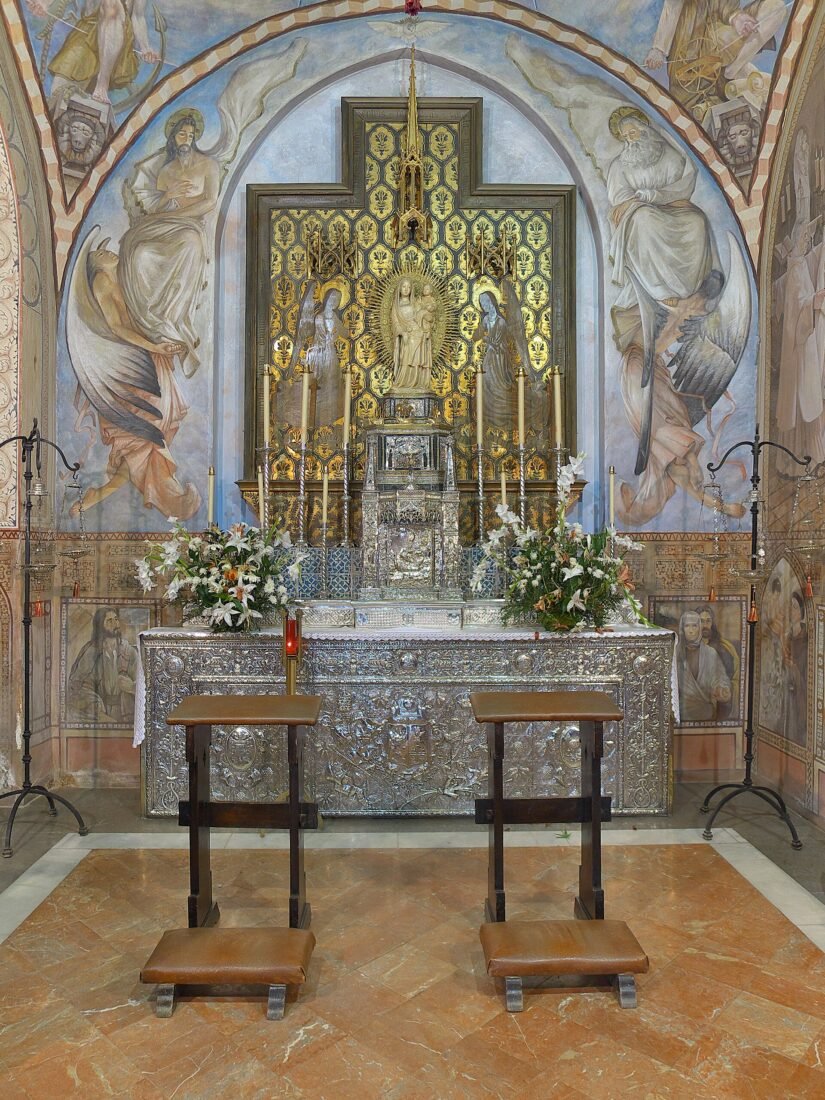
The Franciscan monastery at La Rábida is closely linked with Columbus’s preparations and the support he sought before the voyage. Its courtyards and Gothic-Mudéjar architecture make a quieter counterpoint to the more demonstrative replica ships nearby.
Look for the historic fabric of the building and, when accessible, the twentieth-century Columbus-themed murals by Daniel Vázquez Díaz. Their artistic interpretation is another reminder that history is shaped by the way later generations choose to represent it.
Planning: Confirm visitor entry through official local channels; conservation work, religious use and group visits can affect access. La Rábida lies in Palos de la Frontera municipality, not Huelva municipality.
Muelle de las Carabelas: compare the three vessels
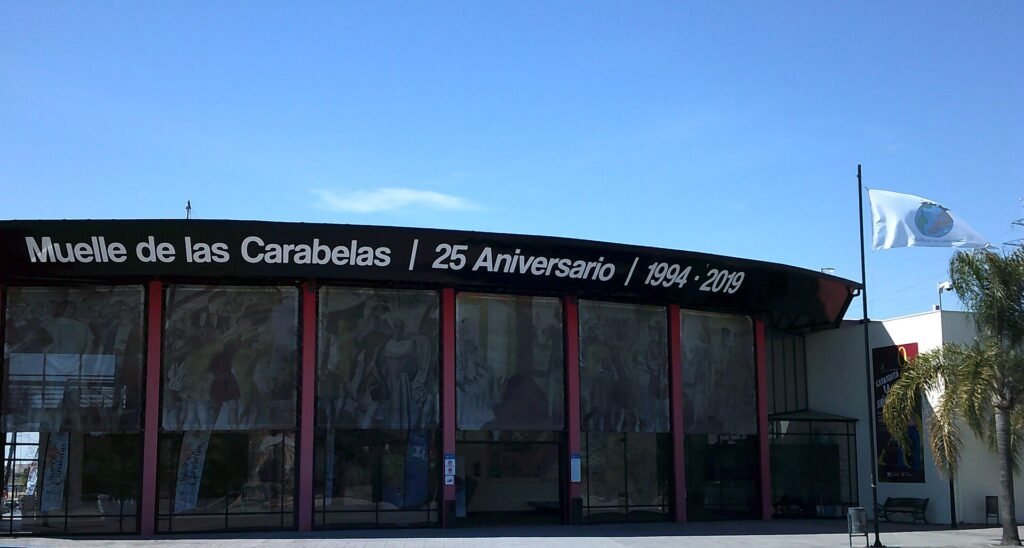
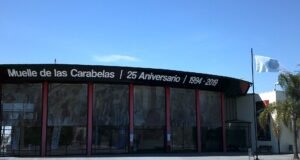
The replica ships at Muelle de las Carabelas were built for the five-hundredth anniversary of the voyage. They are modern reconstructions, not surviving originals. That distinction is important: what you gain here is a tangible sense of scale and shipboard constraints, not an untouched artifact from 1492.
The site includes reconstructions of the Niña and Pinta, both caravels, and the larger Santa María, a nao. Look at the proportions of the decks and imagine how crew, stores and equipment shared a limited space. The interpretation areas add context to the voyage and its historical setting.
Planning: This is the most obvious timed, ticketed stop on the route. The provincial authority publishes admission and visitor rules. The ship stairs are not equally suitable for all mobility needs; check access before booking.
Moguer and Santa Clara: the Niña connection
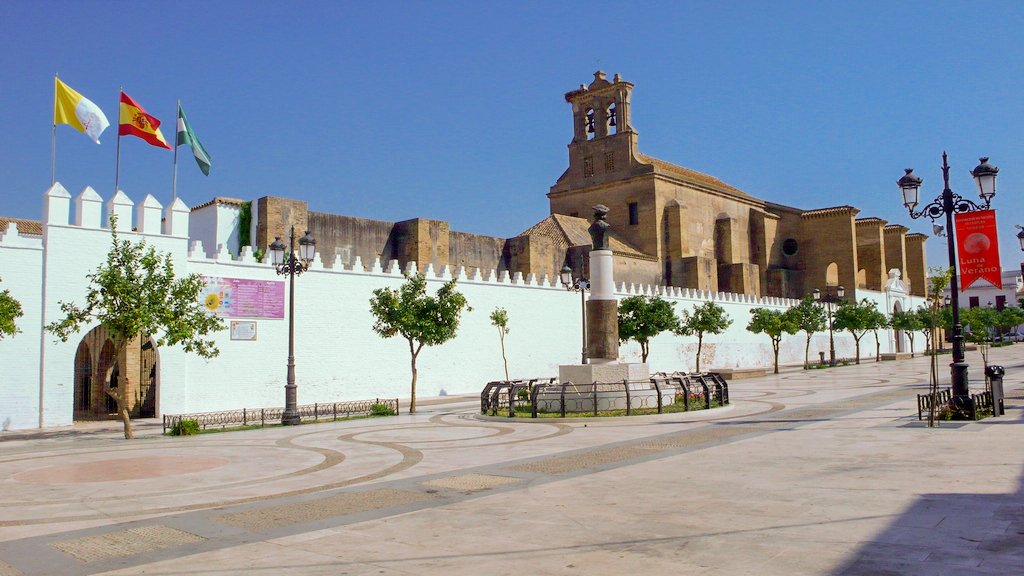
Moguer had its own maritime community. The Niña was closely associated with the Niño family, and its earlier name, Santa Clara, connects the vessel with Moguer’s convent. Visiting the Monasterio de Santa Clara brings the story back to religious life, local families and the network of communities behind the expedition.
Walk through Moguer’s historic centre rather than driving only to the monastery door. Its squares and streets offer a useful change of scale from the larger visitor attractions near La Rábida. Moguer is also associated with writer Juan Ramón Jiménez, although that belongs to a different period and deserves its own visit.
Planning: Confirm current guided access to the monastery. Arrive early enough to enjoy the town as well as the building.
How to plan the route in one day
Morning: Begin in Palos with San Jorge, the Pinzón house museum if open, and La Fontanilla. Continue to La Rábida for the monastery and nearby heritage precinct.
Midday and afternoon: Make the replica ships the centrepiece of the day, allowing a generous rather than rushed visit. Continue to Moguer for Santa Clara and a walk through its centre. If an interior is closed, shift that time to the streets or a longer museum visit instead of chasing another distant stop.
Transport: A car is the easiest way to connect the dispersed sites. Public transport and occasional organised excursions may help, but services must be checked for the specific day; do not count on simple point-to-point links between every monument. A shorter version is Palos plus La Rábida; a full day adds Moguer.
How to approach the history thoughtfully
These places are often marketed as the “Columbian Sites” or Lugares Colombinos. That local heritage terminology is useful, but a modern travel guide should not present the 1492 voyage as an uncomplicated triumph. The Atlantic crossing brought sustained European colonisation and devastating consequences for many Indigenous societies. The route becomes more meaningful when you can recognise both the ingenuity of the sailors and the much wider human impact of their journey.
For young visitors, consider asking practical questions: Who supplied the ships? Why were skilled local mariners essential? Why do modern replicas help us picture the journey, and what can they not teach us? Questions like these give the monuments a connection beyond photographs.