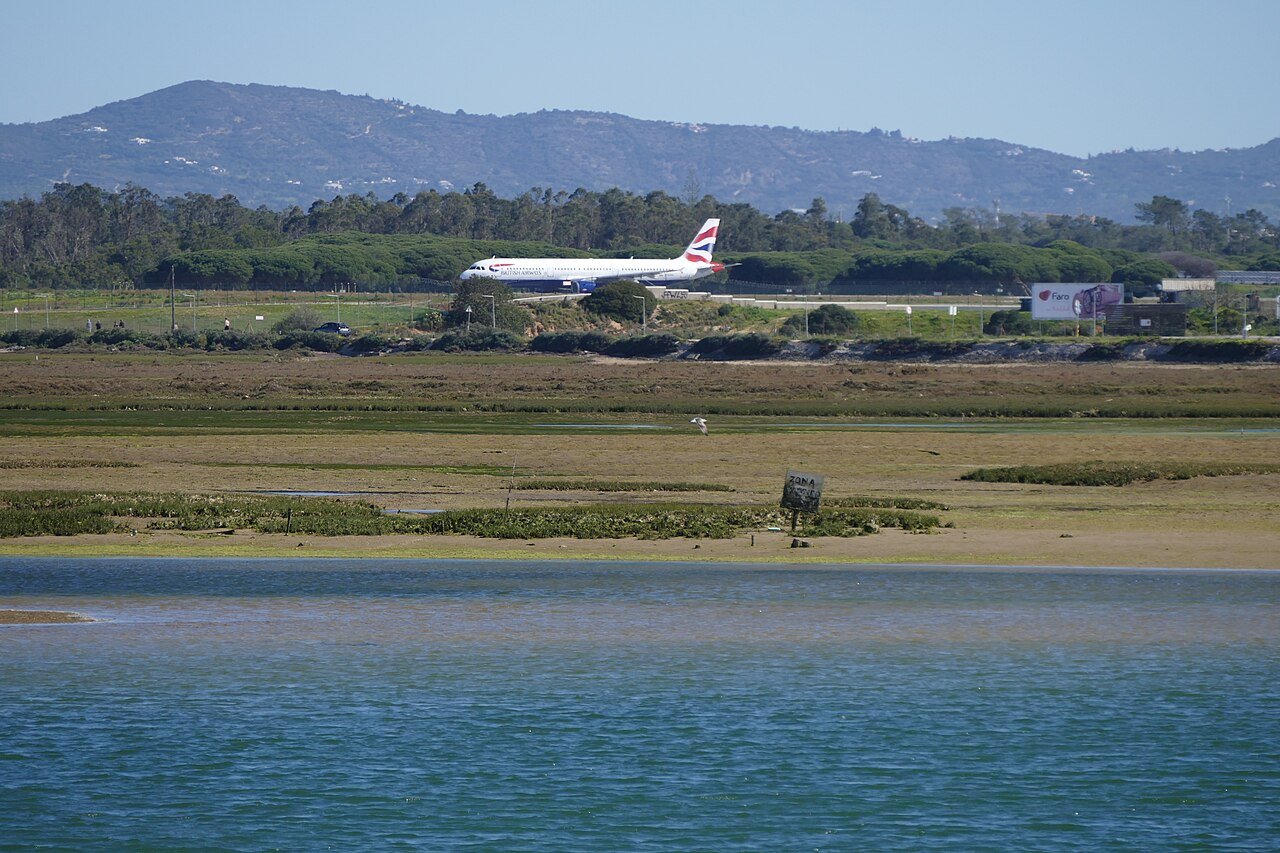
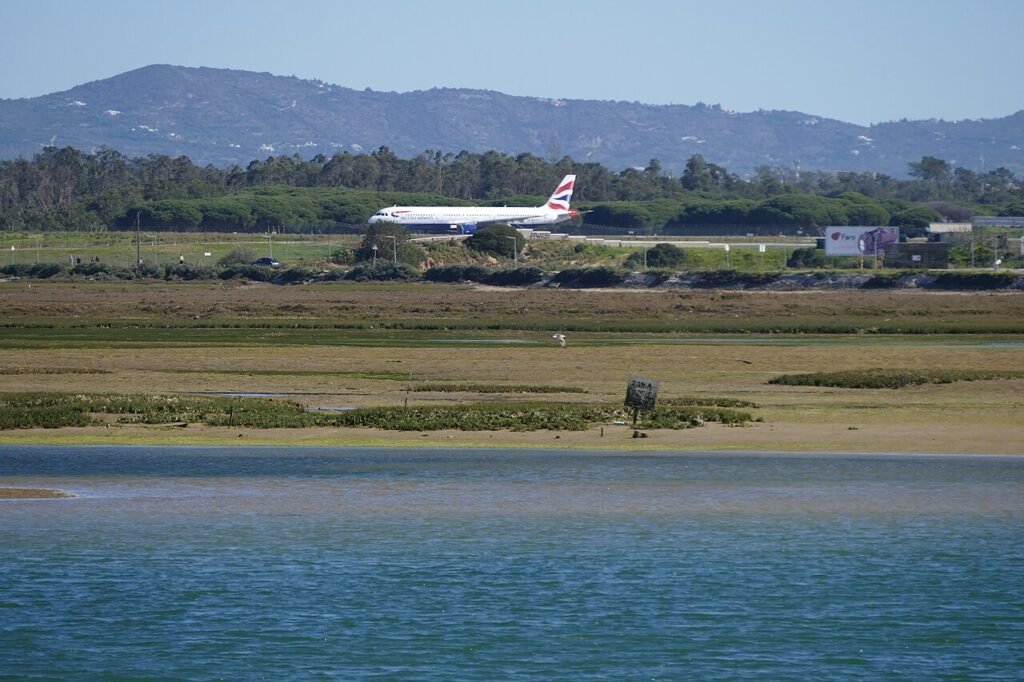
Flying into Faro can be a practical way to reach the western Costa de la Luz, especially accommodation around Ayamonte, Isla Canela and Isla Cristina. But Faro Airport is in Portugal, not Spain. The journey involves a border crossing, an important time-zone change and, for many coastal resorts, a final leg that public transport does not cover conveniently.
This guide compares an arranged door-to-door transfer, rental car and public buses without promising a direct airport shuttle to every beach. Choose your destination first: Isla Canela, Islantilla and El Rompido are separate places with different onward connections.
The essential detail: Portugal and Spain use different clocks
Mainland Portugal runs one hour behind mainland Spain. If your flight reaches Faro at 14:00 local time, it is already 15:00 across the border in Huelva. The time difference normally remains one hour through summer and winter because both countries adjust their clocks on the same seasonal dates.
This is particularly important when booking a hotel check-in, arranging a private driver or comparing bus timetables. Some transport sites display all their departures in the departure country’s local time; others convert when you choose a different language or destination. Never add an hour to the entire journey twice. Check which country’s clock each displayed departure and arrival uses.
A late flight may cross into Spanish evening even if you reach the Portuguese terminal during the afternoon. That can change whether local coastal buses are still running and whether someone will be present to provide apartment keys.
Private transfer: simplest for dispersed beach accommodation
A prebooked private transfer usually makes the most sense when several people are staying in an apartment or hotel far from a bus station. You can specify the exact address, luggage, child seats and flight details, and avoid changing vehicles in Faro and again in Huelva. The service should explicitly accept a Portugal-to-Spain journey and identify where the driver will meet you after arrivals.
Before paying, confirm whether the quotation includes border-related travel, motorway tolls, waiting time for delayed flights and return collection from your accommodation. Ask whether the quoted charge is for the entire vehicle or per passenger. Accessibility should be confirmed with vehicle dimensions, not a generic tick box.
Do not confuse a booked transfer to ‘Islantilla’ with one to Isla Cristina town; they may be some distance apart. A correct local street address is essential. Operators and prices change, so this guide does not endorse an unverified company or invent a fixed fare.
Public bus to Huelva: check the direct airport option first
The Alsa airport information page advertises connections linking Faro Airport with Spanish destinations including Huelva and Seville. That makes it a useful place to check for a cross-border coach on your travel date. However, mentioning a destination on a route page is not proof that a convenient departure will run after your particular flight, or that it stops beside your beach accommodation.
Search using Faro Airport as the departure point, not just the central Faro bus station. Compare the arrival stop in Huelva with the local bus station and allow time for immigration formalities where applicable, baggage reclaim and walking to the coach. Buy the right cross-border ticket, not a Portuguese local bus ticket.
From Huelva you may still need another regional bus, taxi or hotel pick-up for Islantilla, El Rompido or Nuevo Portil. For a late arrival, consider an overnight stay in Faro or Huelva rather than assuming the last local connection will wait.
The connection via Faro city: a fallback, not a guaranteed shortcut
Faro Airport also has local buses towards Faro city; the airport operator lists Proximo lines 14 and 16. From the city, travellers can look for other long-distance services, but that creates another transfer and may take substantially longer than a direct airport coach or private transfer. A train from Faro city does not take you directly to the beaches of Huelva: cross-border road transport is the more relevant option.
If you use the city transfer, note the final stop and the distance between the urban bus stop and the onward coach departure. Do not assume all services leave from exactly the same platform. Baggage, mobility restrictions and a short connection window can easily erase any fare savings.
For the return flight, avoid attempting a same-day chain of several infrequent buses unless you have a generous buffer. Missing the border coach can mean missing your flight.
Rental car: flexible, but check cross-border terms in writing
Hiring at Faro is attractive if you plan to explore beaches and smaller places along Huelva’s western coast. Airport rental desks are available, but not every contract permits taking a Portuguese-registered rental car into Spain on identical terms. Ask about written permission, cross-border insurance, assistance, the permitted return country and any extra fee before accepting the keys.
Also ask how electronic tolls are handled. The Algarve A22 has undergone major toll changes, and other Portuguese roads may have different rules; do not copy an old article’s instructions for paying a particular motorway. The rental company must explain current toll billing or electronic devices. Check the actual route with a map and operator advice.
A car is most useful when your hotel has confirmed parking and you intend to move beyond one resort. A week beside a beach with everything walkable may not justify rental costs, fuel and parking stress.
Choosing the right destination on the Huelva side
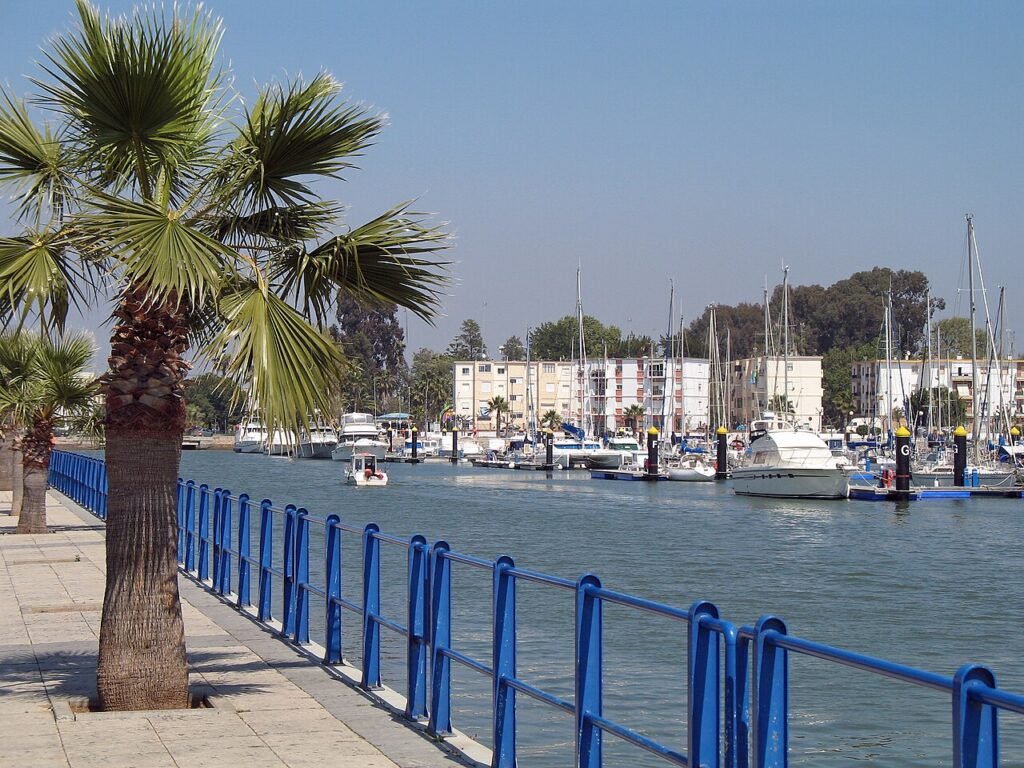
Ayamonte and Isla Canela: These are useful border-side destinations. Isla Canela is a beach area of Ayamonte, not Ayamonte’s town-centre bus station. Confirm the final transfer to the coast rather than assuming you can walk there with suitcases.
Isla Cristina and Islantilla: Isla Cristina is a municipality with its own urban centre and coast; Islantilla is a resort area shared with Lepe. A service to Isla Cristina town may not stop at Islantilla. Verify the exact bus line, stop and walking distance.
El Rompido, El Portil and Nuevo Portil: These farther-east coastal areas are less natural choices for a simple border arrival. El Rompido and Nuevo Portil belong to Cartaya; El Portil belongs to Punta Umbría. Each needs a destination-specific onward plan.
Mazagón: Much farther east of the border, so compare flying into Seville or Jerez as well as Faro rather than assuming the closest international airport for one resort will be best for all of Huelva.
Border documents and arrival logistics
Portugal and Spain are both in the Schengen Area, which usually makes the land-border experience simpler than crossing an external border. This does not mean travellers can ignore passports, residence requirements or potential temporary controls. Carry valid documents and check rules for your citizenship and route, especially if arriving from outside Schengen or travelling with children.
A carrier may enforce its own baggage and identification policy even when ordinary road checks are absent. Keep travel documents in hand luggage, not inside a bag stowed under a coach. If a child is travelling with one parent or a different adult, investigate the appropriate consent documentation for their nationality and circumstances.
It is also important to give drivers a working phone number with an international prefix. Mobile roaming rules may differ according to your home provider and plan; do not assume you will have data as soon as you land.
Return journey and practical booking checklist
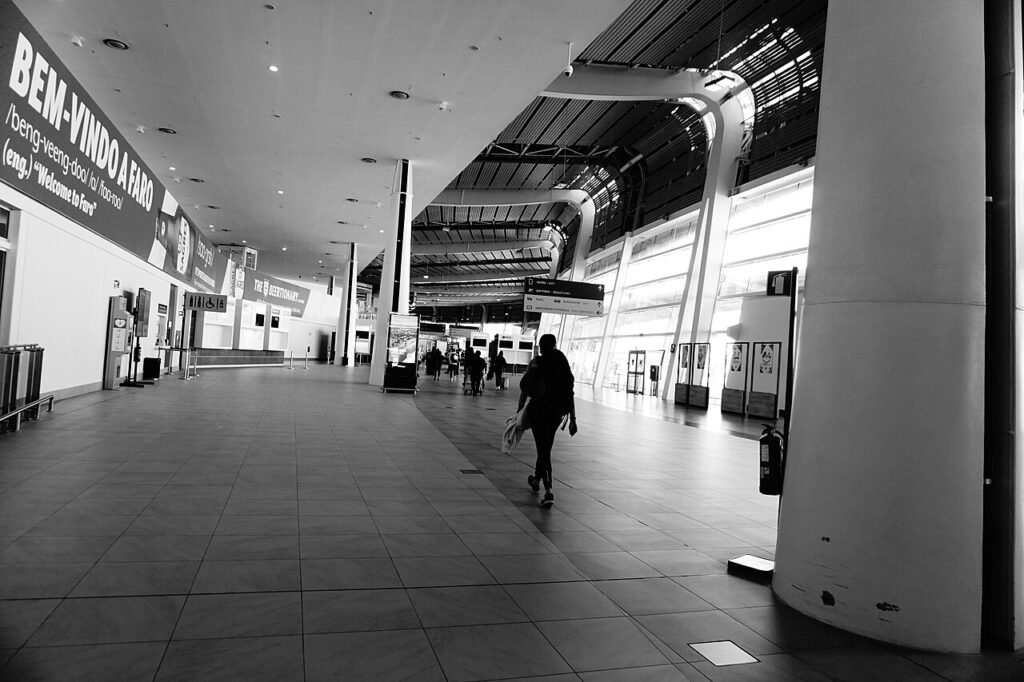
Work backwards from the flight’s recommended check-in time, not its take-off hour. Add realistic driving or coach time, traffic near the bridge, time-zone conversion, possible border issues, rental-car return and security queues. A transfer that was comfortable on the outward journey may be too risky for the return if the flight leaves early.
For families and groups, compare the total door-to-door price: a low-cost coach plus three onward taxis can exceed an all-in transfer, while a rental car is economical only if cross-border permissions and parking are straightforward. Solo travellers often value the bus when arrival and departure times match it.
Before paying, check the departure terminal, local times on both sides of the border, real coastal address, operator cancellation rules, luggage allowance and final transport from the bus stop. Use the official Alsa Faro Airport page and Faro Airport ground-transport page for current departures.
For more planning help, see our guide to where to stay in the province of Huelva.