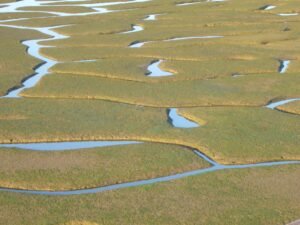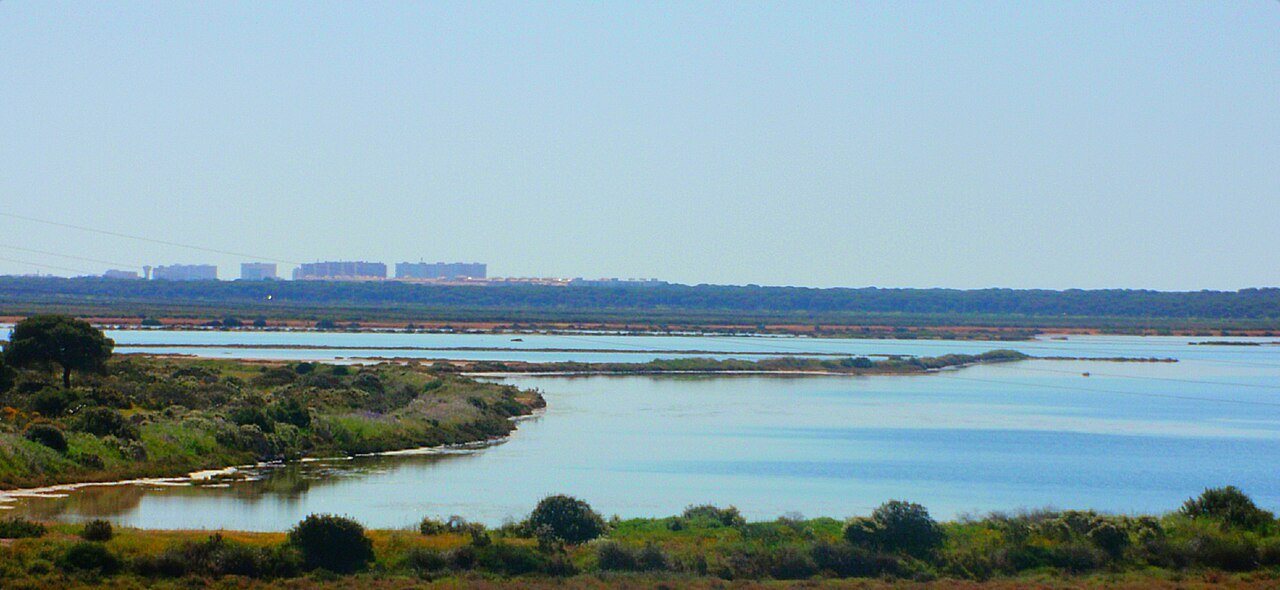
Only a short distance from the city of Huelva, the Marismas del Odiel are an intricate tidal landscape rather than a lake or ordinary park. Waterways, mud, saltworks, small islands and shallow pools change appearance with the tide. This is one of the most rewarding places in the province to spend time watching birds without turning the outing into a long-distance hike.
It is also a landscape that requires care. Some visitor facilities are open to the public; others belong to sensitive protected sectors, and older route descriptions do not always agree on access. This guide starts with the official visitor area, explains what to observe and helps you decide how much ground to cover.
What makes the Odiel marshes different from Doñana?
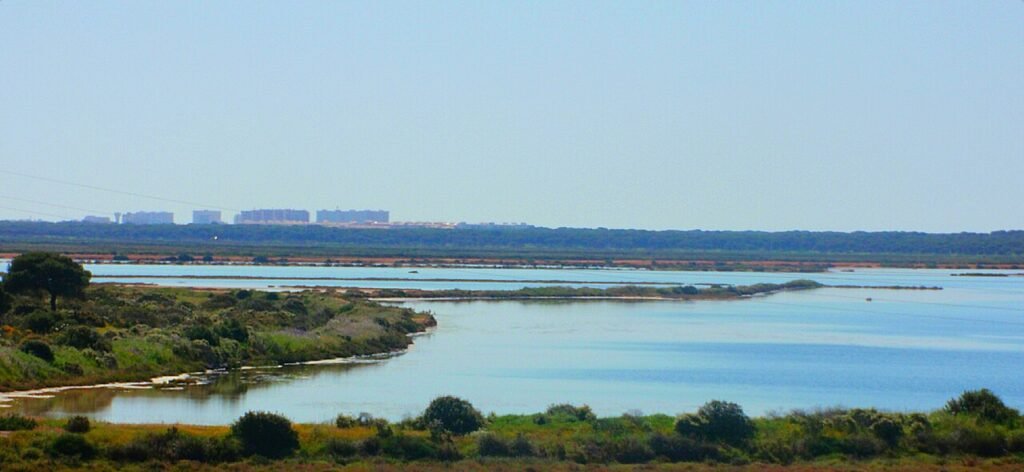
The Odiel estuary is a meeting place of saltwater, river influence and industrial history close to a busy port. Its mosaics of tidal mudflat, saltpan and marsh vegetation provide different habitats as the water rises and falls. The result is a landscape where a bird may be feeding on an exposed bank in the morning and resting on higher ground later in the day.
Doñana often dominates the conversation about wetlands in western Andalusia, but the Odiel marshes deserve attention in their own right. They include protected areas such as Isla de Enmedio and Marismas del Burro. These names on a map do not mean tourists can walk into the most sensitive areas: observation is generally organised from the margins and designated facilities.
Come to look at habitats and behaviour, not to collect sightings like trophies. Even on a quiet morning there is plenty to notice in the channels and changes of light.
Begin at the Anastasio Senra visitor centre
The best first stop for most visitors is the Anastasio Senra visitor centre in the Calatilla area. Huelva’s municipal tourism information describes exhibitions interpreting the tidal ecosystem and nearby facilities that introduce the marsh’s vegetation and wildlife. This helps you make sense of what otherwise might look like an endless flat landscape.
Ask staff which paths, observatories and viewing areas are accessible today. The centre is also the right place to ask about special activities, conservation closures and where to watch birds without disturbing them. Opening hours on some online directories are old; plan around current official information rather than a cached timetable.
If you are with children, the interpretive material gives them something concrete to look for outside. If you have reduced mobility, ask which visitor-centre areas and short outdoor routes are step-free; not every track has the same surface.
La Calatilla and the first look at the marsh
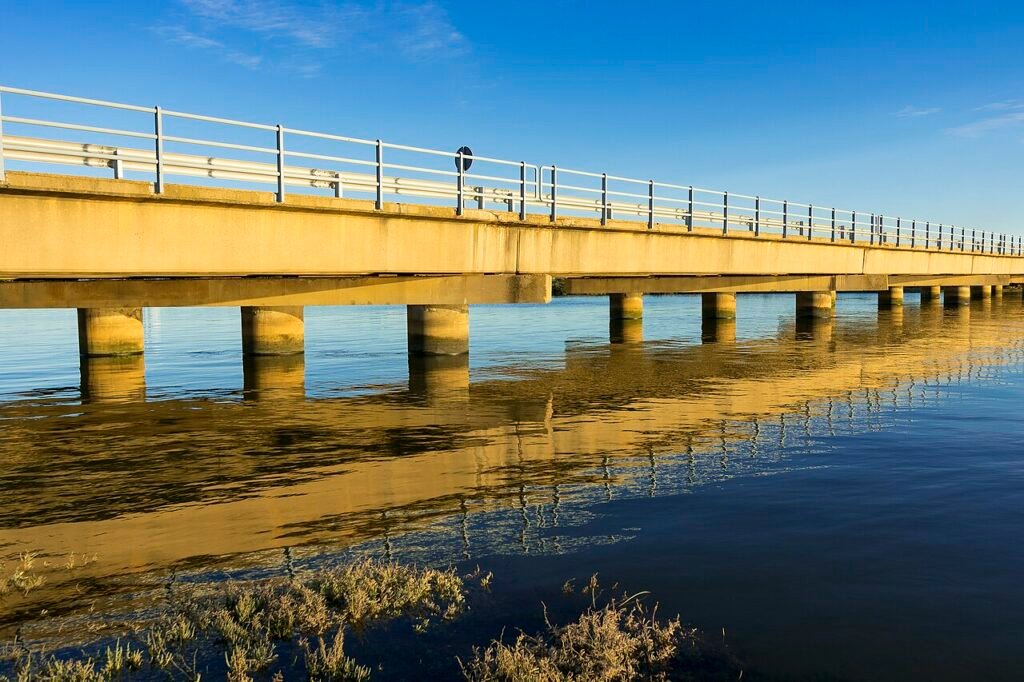
La Calatilla is valuable because it offers an introduction to the estuary without demanding a major expedition. Around the visitor area you can start to distinguish water channels, grassy or muddy edges and human-made saltwork structures. The official regional plan identifies the Calatilla recreation area and visitor centre as public-use facilities close to Huelva.
Observe before rushing onwards. During lower water, feeding birds may be spread across exposed flats; on a higher tide some may gather in shallower pools or at higher resting places. It is impossible to promise the same scene every day. A short, patient watch can teach more than passing rapidly through several viewpoints.
Roads through the wetland also carry vehicles. Only stop at authorised parking or viewing spaces, and never step into the carriageway for a photograph.
Understand the Salinas de Bacuta trail
The Salinas de Bacuta are especially interesting because they show how salt production and wetland ecology can overlap. Traditional saltwork basins and embankments create distinct water levels and feeding opportunities. The regional environment administration publishes an interpretive description of the Bacuta salinas route, including views from the Calatilla approach.
Do not rely on a route name alone. Some older walking guides label particular sections freely accessible while others show restricted entry. The published public-use plan distinguishes open routes from controlled ones. Confirm the exact permitted start, end and pathway before setting off; the existence of a viewing platform does not make nearby industrial property or conservation areas open.
Bring binoculars and choose a pace that allows stopping at designated lookouts. Stay on the path and keep voices low. Saltwork surfaces may look dry but can be slippery or fragile, and cutting across a basin is inappropriate.
Flamingos, spoonbills and what to watch for
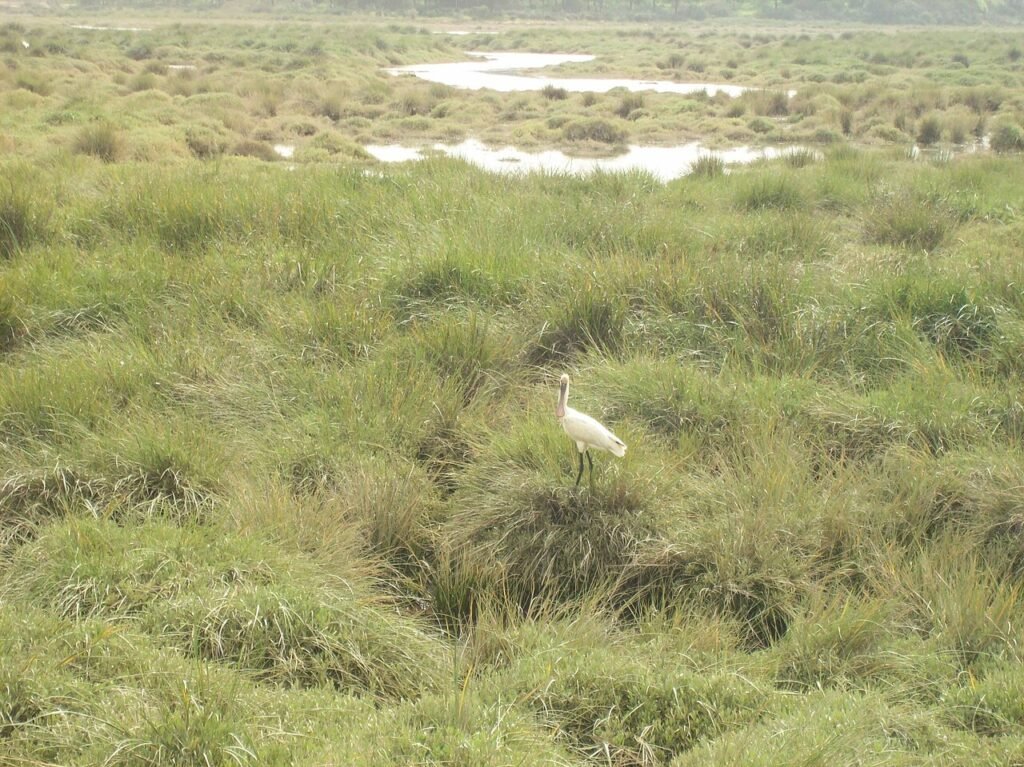
Greater flamingos are among the most recognisable birds associated with the Odiel marshes, but the area is not a permanent display with flocks in the same position every day. Look for the long-necked silhouettes working through shallow water and remember that distance, tide and season strongly affect their visibility.
Eurasian spoonbills are another important species. Their long, spatula-shaped bills sweep through shallows in a way that makes feeding behaviour especially rewarding to watch. Other waders, gulls, terns and waterbirds use different parts of the system at different times. Identification becomes easier if you begin with size, posture and feeding method rather than trying to memorise every species before you arrive.
A pair of moderate binoculars is more useful than an enormous camera lens for many first-time visitors. Keep your distance from nesting or resting birds, never use playback to lure them, and avoid drones unless expressly authorised under the applicable protected-area rules.
The tide matters as much as the time of year
The river mouths and tidal channels change through each tidal cycle. At low tide, mud and feeding areas can be exposed across a broad area; at higher water levels some species move towards more concentrated refuges. Neither state is universally ‘best’. A photographer hoping for reflective water may make a different choice from a birder who wants to see shorebirds feeding.
Check a local tide forecast before travelling, then allow enough time to observe how conditions change. Wind is also important: exposed hides and embankments can feel uncomfortable on a cool day, while reflected sun can be harsh in summer. Carry drinking water even if you are planning to remain near your car.
For a more peaceful visit, avoid the hottest part of a summer afternoon. Birds can be present year-round, but population mix changes through migration, breeding and wintering periods. Never publish a calendar promising one species in a particular week.
How long should you allow?
A short introductory visit might combine the visitor centre with one nearby lookout and unhurried observation. Allow around a half-day if you want to add an authorised marked route and compare different habitats. A full-day visit is reasonable for experienced birders, but doing more kilometres is not automatically the best use of time.
Travellers arriving without a car should verify local transport and the final approach to the visitor area; its location on the outskirts of the city is not equivalent to a central urban park. If driving, use established parking areas and expect parts of the road environment to be industrial or port-related.
Visitors should avoid planning to cross tidal channels on foot or improvise loops from satellite imagery. Waterways, private land and protected reserves can block apparently obvious shortcuts.
Accessibility, family visits and respectful photography
The visitor-centre area and some observation facilities are potentially the easiest approach for groups with varied needs, but details such as ramp slopes, hides, toilets and trail surfaces should be checked individually. The phrase ‘easy nature trail’ is not a guarantee of wheelchair accessibility. Families will usually do better with one or two short observation stops than with a long exposed march.
For photography, keep to public overlooks and be patient. A bird approaching naturally is more valuable than an image gained by disturbing its feeding area. Avoid leaving litter, do not enter saltworks or closed reserves, and respect conservation signs even if other people ignore them.
If the wind or visibility is poor, the interpretive centre can still make the journey worthwhile. The aim is to understand the marshes, not to force a particular wildlife experience.
Combine with Huelva only if it improves the day
Because the marshes lie close to Huelva, they can complement an urban stay: nature in the morning and city sights later, or the reverse when the tide and weather favour an afternoon watch. Do not assume the city and every marsh viewpoint are joined by a scenic pedestrian promenade; plan transport between the actual entrances.
The Odiel is also one of the clearest places to see the coexistence of industry, trade and protected nature. Let that tension remain visible in the story. This is a working estuary that supports wildlife, not a fantasy of untouched wilderness.