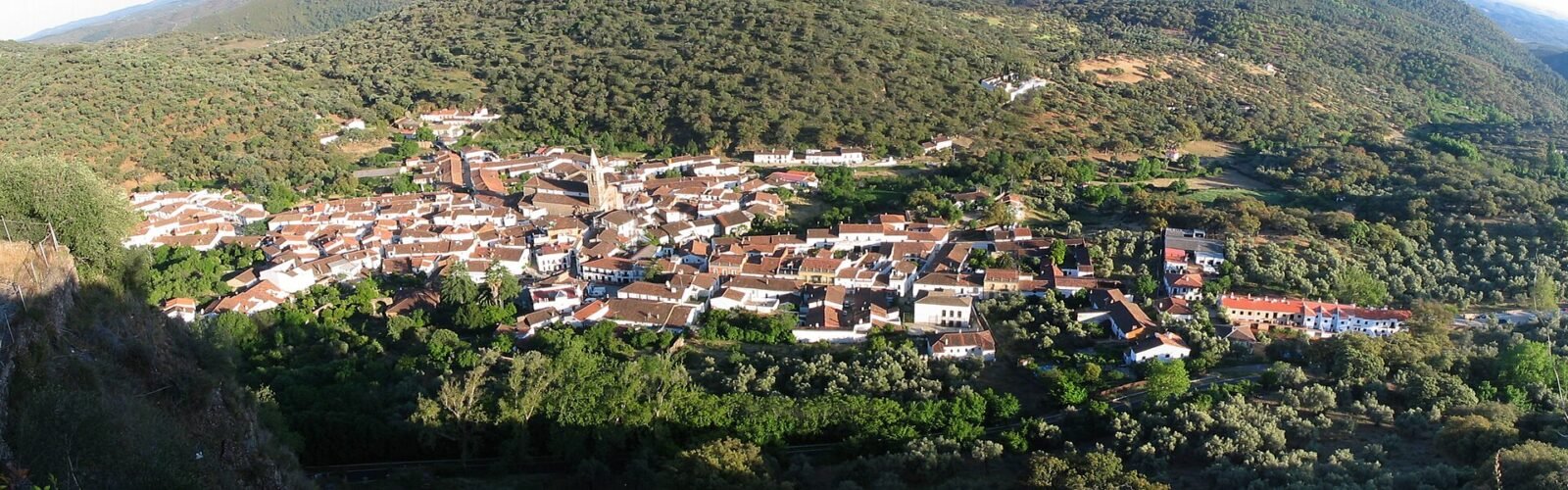
Understanding the Sierra: the landscape is the destination
The Sierra de Aracena and Picos de Aroche is northern Huelva’s great change of scenery. This protected landscape is not a single mountain with one entrance: it is a patchwork of villages, chestnut woods, streams, stone-walled tracks and dehesas—grazed oak country where traditional Iberian pig rearing helps shape the land. The pleasure of visiting comes from mixing one or two places with the countryside between them.
Aracena is a practical introduction, but staying only there misses the Sierra’s quieter personality. Give yourself time for smaller towns, a gentle walk and an unhurried lunch. The route advice below covers the natural park area within the Province of Huelva; attraction access and guided-tour rules vary between sites.
Aracena: caves under a living town
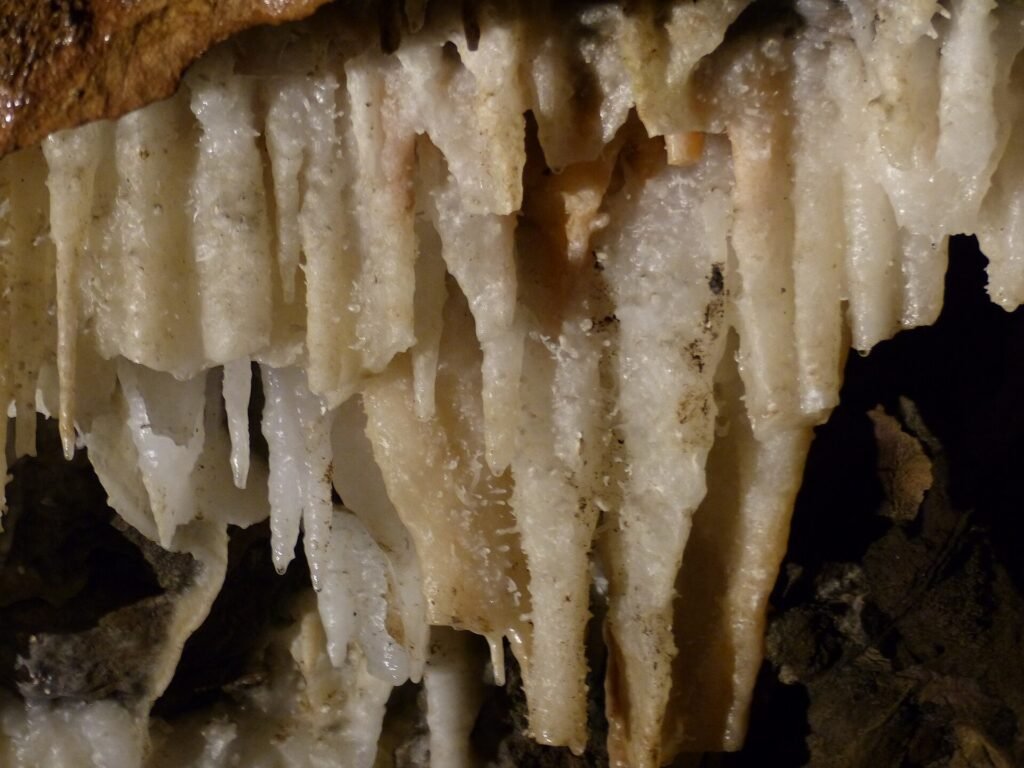
Aracena is the Sierra’s natural starting point for first-time visitors. Its headline attraction, the Gruta de las Maravillas, lies remarkably close to streets and squares in the town itself. Underground, the visit reveals limestone chambers, formations and reflective pools in a very different world from the sunny hills above.
Above ground, the castle hill and surrounding streets offer an opportunity to discover the settlement without making the cave your entire day. The municipal tourist office also provides local information and maps.
Visiting advice: Book the cave in advance through the official municipal website. Admission is controlled and arriving without tickets does not guarantee a place. Confirm the route’s physical demands and any restrictions if you have mobility or claustrophobia concerns.
Alájar and Peña de Arias Montano: the village and its overlook
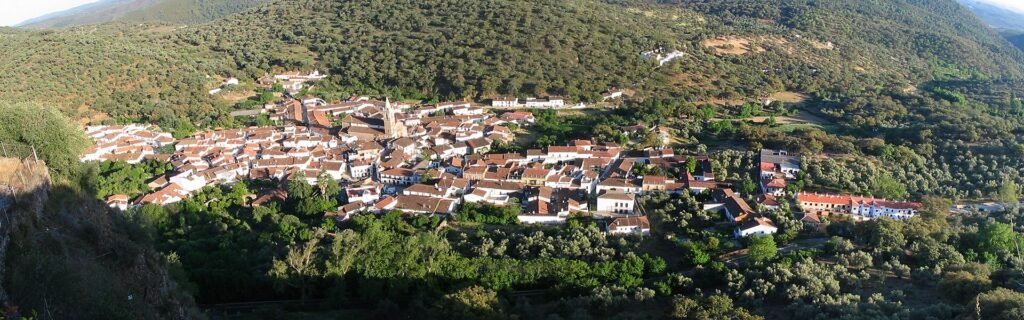
Alájar sits under the dramatic Peña de Arias Montano, where the landscape opens out beyond the tightly layered hills. It makes a good pairing: visit the elevated sanctuary and viewpoint, then spend time in the village’s streets rather than treating it as a quick parking stop.
The nearby countryside is threaded with designated footpaths. One official Arias Montano circuit starts up by the sanctuary, while other signed routes connect Alájar with villages such as Linares de la Sierra.
Visiting advice: The viewpoint is not the same thing as completing the longer walking circuit. Read the official route sheet before choosing a hike, and do not assume narrow rural roads or parking areas are designed for large vehicles.
Almonaster la Real: a building that tells several centuries of history
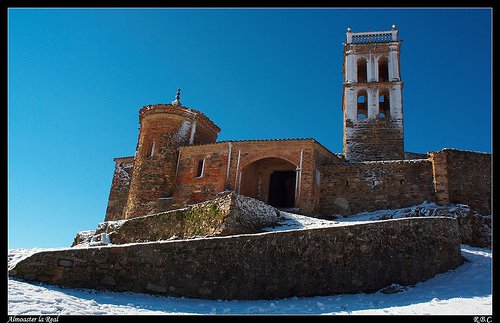
On a hill above Almonaster la Real, the mosque is one of the most unusual historic sites in western Andalusia. Its restrained interior and position within a wider hilltop enclosure offer a striking contrast to the monumental urban attractions elsewhere in the region.
The town also works as a base for a climb towards Cerro de San Cristóbal. If you are drawn by the architecture, consider staying long enough to enjoy the streets below the hill, too.
Visiting advice: Confirm monument access and any religious activity before entering. The final approach includes a hill, and local paving may be uneven. For the Cerro de San Cristóbal walk use the official park trail information.
Cortegana and Aroche: castles and a wider frontier story
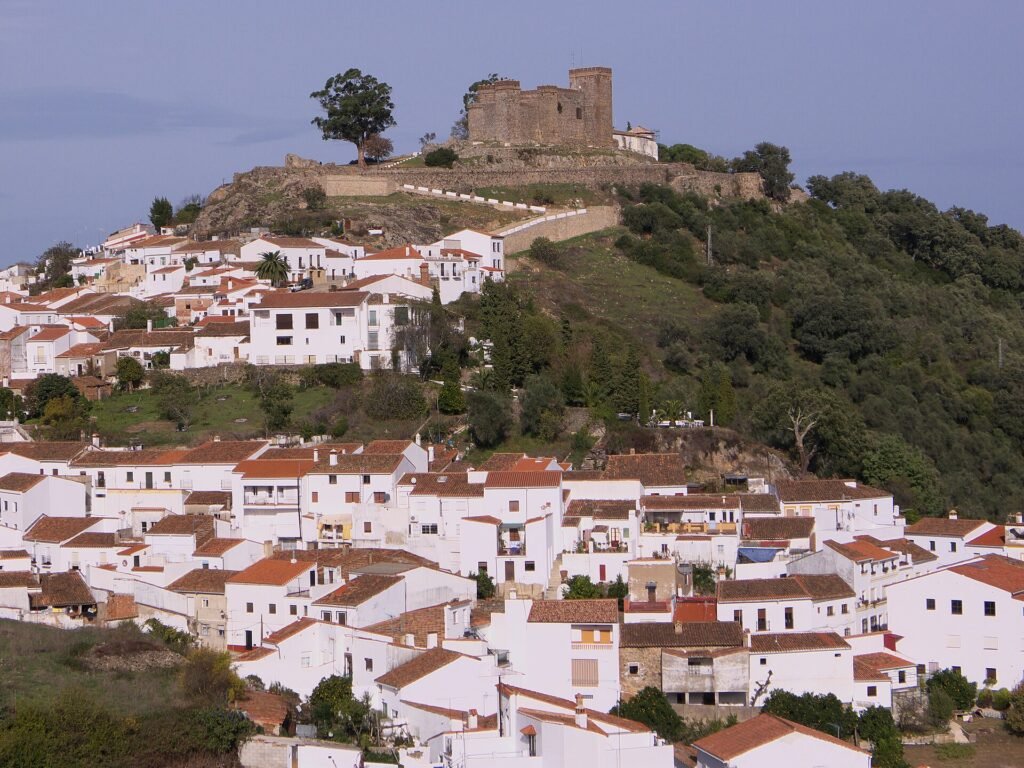
Cortegana’s castle dominates the skyline, and the town’s compact historic centre makes it easy to combine architecture with a relaxed walk. Nearby Aroche adds another aspect of the region’s story: a borderland with a long history and archaeological connections, rather than simply a string of pretty white villages.
These towns are most rewarding when visited for their own character, not as two hurried photos between long drives. Look at the small streets, public squares and connections to the surrounding agricultural landscape.
Visiting advice: Castle interiors, museums and archaeological sites may have limited opening schedules or guided access. Check each operator or municipality before driving specifically for an interior visit.
Galaroza, Linares de la Sierra and Castaño del Robledo: paths between communities
Some of the Sierra’s best scenery appears along ordinary routes linking its settlements. Around Galaroza, the Ribera de Jabugo trail follows a particularly lush streamside landscape towards Castaño del Robledo. Linares de la Sierra and Alájar are connected by old paths bordered by stone walls.
This is the area to slow down, examine the shape of traditional streets and consider a walk with a clear beginning and end. Choose one connection instead of trying to visit every village in a single afternoon.
Visiting advice: Many trails are linear; if you walk to a second village you may need to return on foot or organize collection. Maps to town centres do not replace the park’s downloadable trail plans.
Jabugo and the dehesa: understanding the food landscape
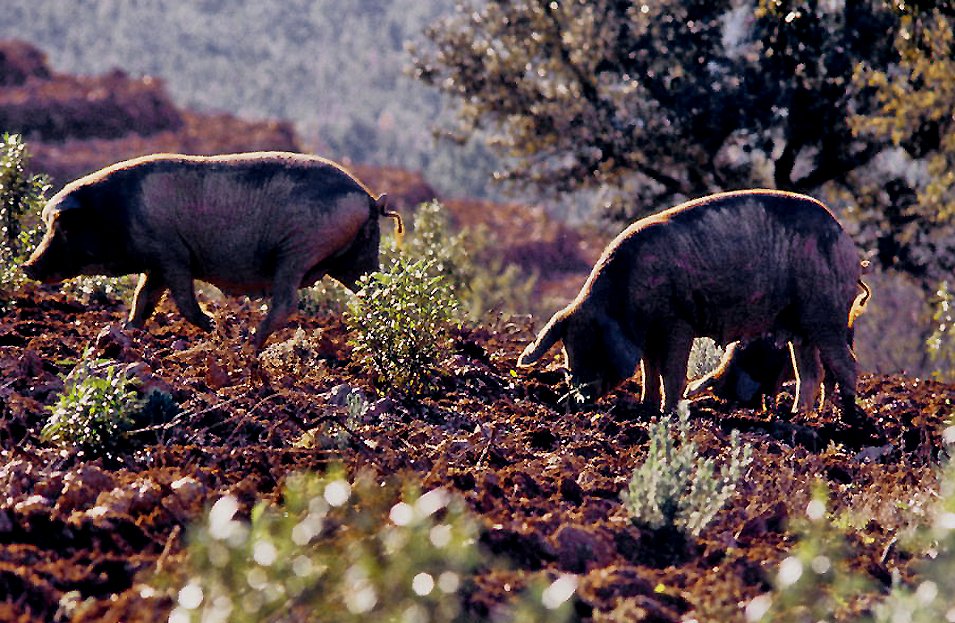
The name Jabugo is closely connected to Spanish cured ham, but it also belongs to an everyday mountain landscape of oak pasture, livestock and small producers. The traditional dehesa system helps explain why food and nature are so intertwined in this part of the Province of Huelva.
Look beyond a simple tasting plate. A responsibly operated producer visit can explain the curing process, while a walk through accessible countryside reveals how the land is used. The protected designation of origin “Jabugo” has defined production rules and should not be confused with a generic label used on any piece of Iberian ham.
Visiting advice: Arrange producer tours in advance and confirm whether a visit is open to the public. Never enter private farm plots or approach grazing animals. Check certification labels when buying protected-origin products.
When to visit and how long to stay
Spring brings new growth, greener paths and changing light over the villages. Autumn is another appealing time for walking, with woodland colour and a food culture that reflects the seasonal harvest. Winter can be beautiful but damp and cold in the hills. Summer still allows village visits, yet outdoor activity is better planned outside the hottest hours.
With one day, use Aracena and one nearby town as an introduction. With two or three days, add a dedicated walking route, Alájar or Almonaster, and time for a second part of the Sierra. With longer stays, consider Cortegana, Aroche and smaller settlements to the west.
A car is the most practical option for covering several separate towns. Public transport may be useful for arriving in a main settlement but does not guarantee convenient onward links or return journeys from trail endpoints.
A balanced two-day example
- Day one: book Gruta de las Maravillas in Aracena; have lunch in town; explore the old streets and castle-hill area. If you still have time, visit nearby Linares de la Sierra rather than racing far west.
- Day two: choose Alájar and Peña de Arias Montano, then head to Almonaster la Real for the mosque and village. If walking is the priority, replace one town stop with a signed Sierra trail.
Treat this as a flexible pattern, not a fixed schedule: travel speeds on hill roads, meal breaks and cave admission times all shape the day. A proper hike can replace several sightseeing stops rather than being squeezed in between them.
Responsible travel in the Sierra
Stay on signed routes, close gates after passing where appropriate, keep dogs under control and avoid disturbing livestock. Do not pick wild mushrooms unless you fully understand local rules, land ownership and identification risks. Mountain paths may be muddy after rain or poorly shaded on exposed slopes; carry water and check weather and trail notices.
The natural park is not uniformly wheelchair accessible. Historic village paving, stairs, hills and cave interiors have different limitations. Contact the attraction or visitor service about the specific section you hope to use instead of relying on a general “accessible” label.