El Portil and Nuevo Portil form a connected stretch of coast west of Huelva city, but they are not one municipality and not exactly the same kind of holiday base. The long beach, pine-framed landscape and nearby lagoon make this a particularly appealing part of the Costa de la Luz for visitors who want a quieter setting than a major urban resort.
The essential decisions are practical: where is your accommodation, how will you reach the beach, and will you have a car? El Portil belongs to Punta Umbría; Nuevo Portil belongs to Cartaya. You can walk or cycle between some neighbouring areas, but a beach holiday should not depend on a vague place label or unverified bus.
El Portil versus Nuevo Portil: which area should you choose?
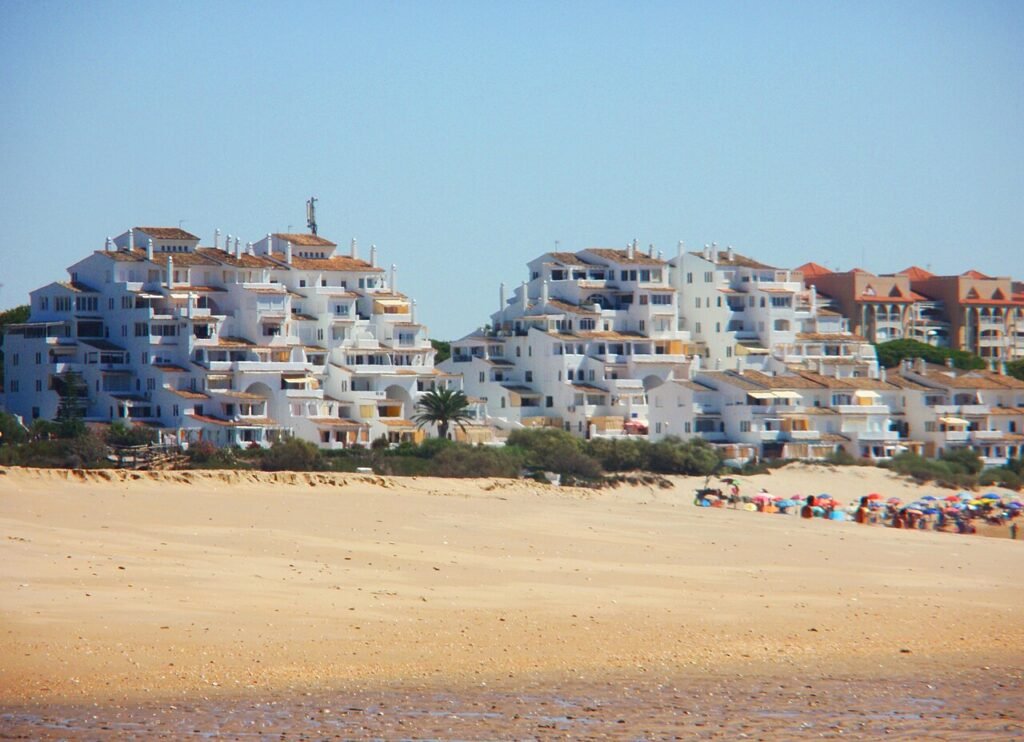
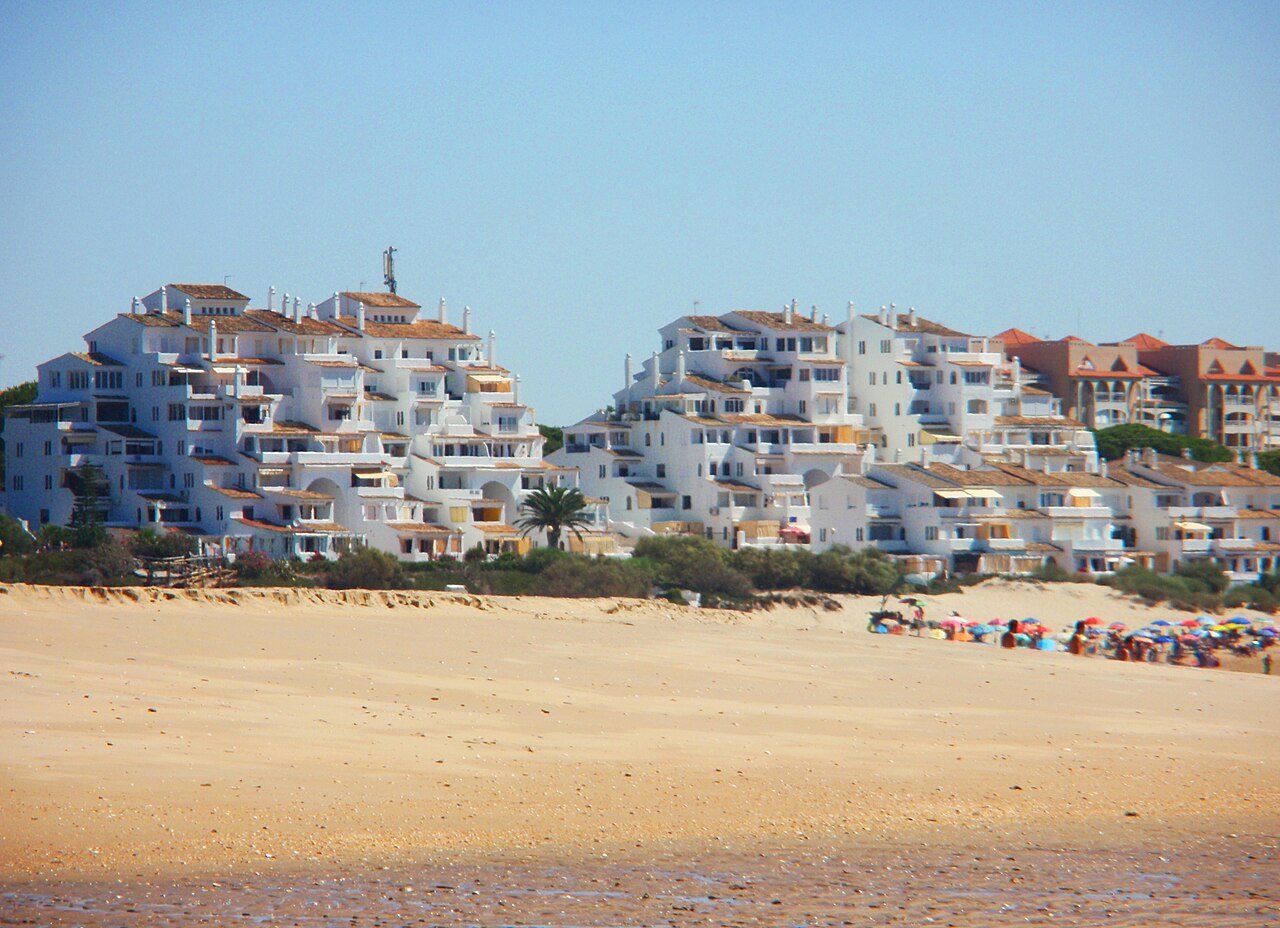
El Portil is the more established coastal settlement associated with Punta Umbría, while Nuevo Portil is the neighbouring development in Cartaya. Both share a continuous coastline and many holiday characteristics, so the better choice depends on the actual property rather than the locality’s reputation.
El Portil is useful when you want a straightforward beach routine and to be near shops or cafés around the older settlement. Nuevo Portil can suit visitors looking for accommodation close to pines, resort facilities or a quieter stretch of residential coast. This is not a fixed division: individual streets and seasons matter much more than promotional labels.
For either area, check how far the front door is from a legal beach access point. A straight line across a protected dune, road or golf-related property is not a walking route. Ask about the seasonality of supermarkets, restaurants and reception services, especially if you are visiting outside July or August.
The main beach: broad Atlantic sand and a long horizon
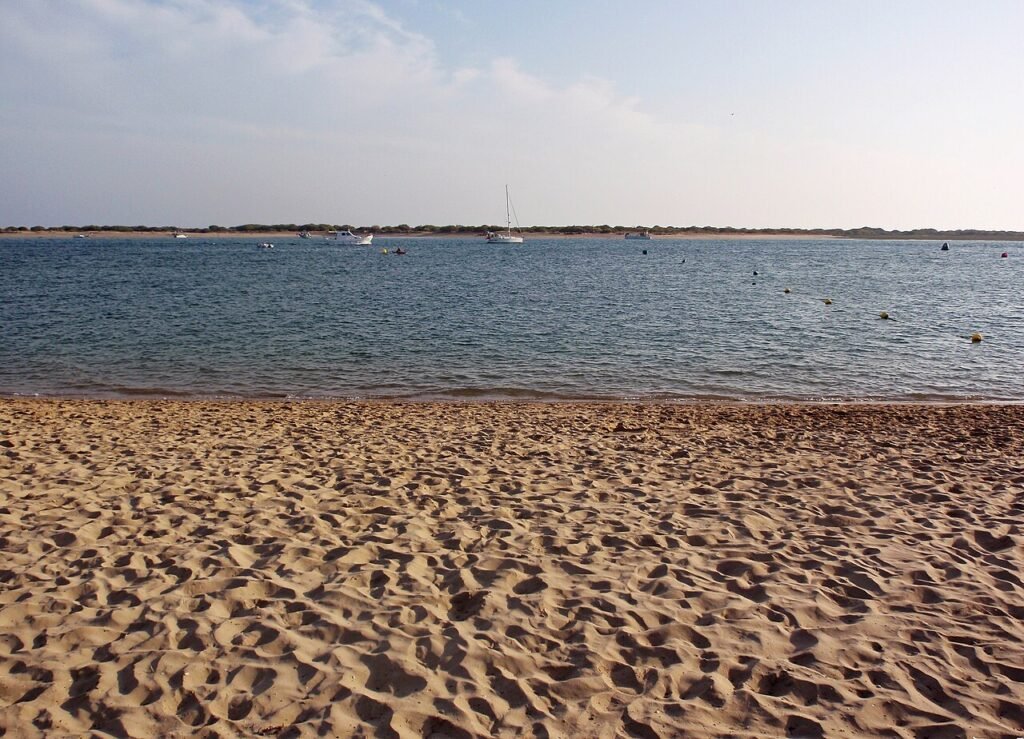
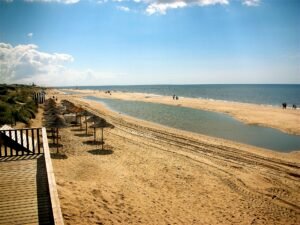
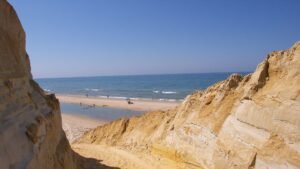
The Portil beach is a lengthy stretch of Atlantic sand used by both communities. Huelva’s official coastal tourism information describes it as an accessible urban beach environment close to natural reserves. The experience is often a simple one: mornings by the water, an afternoon walk and a casual meal without needing a packed sightseeing itinerary.
A serious safety issue needs checking before you choose an entrance: in July 2026, Punta Umbría council warned that erosion had made around 800 metres of the urban El Portil beach unsafe to access, with some walkways and entrances closed. The municipality then warned that tampering with closed access barriers could lead to sanctions. These were official July notices, not proof of the exact current situation. Check the council’s latest updates, use only currently permitted entrances and never climb over a closure or descend unstable sandy slopes. The restrictions concerned El Portil and should not be casually extrapolated to every access in neighbouring Nuevo Portil.
Do not assume the sand or sea behaves the same at every point. Tides can change the width of exposed beach, and wind can make an open coast uncomfortable even on a warm day. Seasonal lifeguard, toilet and adapted-bathing facilities vary between entrances and municipal management areas. Confirm the exact beach sector rather than expecting one municipality’s summer service announcement to apply to the whole shoreline.
Swimming decisions should follow posted flags and local safety information. The calm appearance of a photographed beach is not evidence of conditions on your travel day.
Laguna de El Portil: nature immediately behind the holiday coast
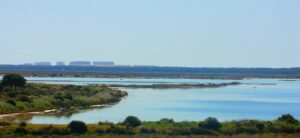
One of the area’s most distinctive features is the protected Laguna de El Portil, a freshwater lagoon close to the dunes and developed coastal neighbourhoods. This offers a very different environment from the beach: vegetation, birdlife, changing water levels and quieter observation. The official regional tourism route information describes a lagoon viewpoint near El Portil.
The lagoon is a reserve, not a swimming pool or a place to paddle. Use the established observation points, remain outside closed habitat areas and watch birds from a distance. The water level and species visible change with season and weather, so a quiet visit is not a sign that there is nothing to see.
Binoculars can improve the experience but are not essential. For families, a short stop at a viewpoint can add variety to the holiday without a long walk. Bring sun protection, and check the safe pedestrian approach from your accommodation rather than cutting across a road or dune.
Cycling and walking between the settlements
The Province of Huelva tourism network documents a shared pedestrian-and-cycle route linking Nuevo Portil with Huelva, including a branch towards Punta Umbría. The described route begins near the A-5052 in Nuevo Portil and passes through the neighbouring El Portil area. This makes a short local section attractive for visitors who want to cycle or take an evening walk beyond the hotel frontage.
The complete official route is not a casual ten-minute promenade: the Novo Portil–Huelva section is about 16 km, and the Punta Umbría branch adds its own substantial distance. Choose an appropriate short section if you are travelling with children or have limited time. The published description notes that most surfaces are dedicated cycling/pedestrian infrastructure but one short section uses road, so the whole itinerary should not be advertised as traffic-free.
Use current local signs and do not assume every crossing is suitable for children cycling independently. Strong sun, wind and occasional rain can change how demanding even a flat coastal route feels.
Where to stay: beachfront apartment, resort or quieter street?
For a short beach holiday without a vehicle, convenience matters more than a theoretical ocean view. Look for accommodation with a practical route to beach entrances, food shopping and at least one open eating place. Some beachfront descriptions refer to the wider locality and can hide a longer walk than expected.
Visitors bringing a car may prefer accommodation on a quieter residential street, but should verify parking rights and whether assigned spaces are included in the booking. Around busy summer weekends, the difference between a guaranteed private space and public street parking can make a substantial difference.
If you have reduced mobility, ask for pictures of the entrance and route to the sand. Dunes and loose-sand sections can be difficult even when the apartment itself is step-free. Check lift dimensions, wheelchair turning space and seasonal assisted-bathing services separately.
Food, cafés and seasonal services
Unlike a large city, the Portil holiday areas change character with the seasons. A street full of open restaurants in August can be much quieter on a winter weekday. Self-catering visitors should identify the nearest year-round food shop before booking, particularly when travelling without a car.
Huelva’s coastal food tradition makes fish, shellfish and regional fried dishes attractive choices, but there is no reason to presume that every restaurant serves locally caught seafood at all times. Ask what is on the menu and confirm prices for whole fish sold by weight. For dietary restrictions or children, look at the actual menu rather than relying on a generic ‘family-friendly’ listing.
An unhurried evening walk and dinner may be the best plan after a day in the water. You do not need to drive to Huelva city every night to have a worthwhile stay.
Day trips: Punta Umbría, El Rompido and the Río Piedras
Punta Umbría provides a more developed coastal town experience to the east; El Rompido, within Cartaya, offers a different setting along the Río Piedras estuary. Both can make interesting excursions if you want a change from the Portil beach. But the final distance between destinations may be inconvenient without a car, especially outside peak-season services.
The flecha or sand spit at El Rompido is a protected coastal formation. Boat crossings, when available, are dependent on operators, tide and weather. Do not assume that a particular ferry runs every day or that the protected spit is a car-accessible beach.
For visitors staying a week, one day exploring a neighbouring town and one short nature walk may be enough. A Portil holiday works best when the beach remains the main event rather than a daily departure point for increasingly distant drives.
Transport, parking and the practical family checklist
A car makes independent exploration straightforward, but public transport takes more care. The Huelva consortium has published lines and seasonal information relating to Punta Umbría and Cartaya. It also lists a route through some Portil-area stops for which no operating schedule was available at the time of research. Do not choose accommodation on the assumption that there is a frequent Portil shuttle.
For families, choose the exact beach entrance first, find a legal parking place or walking route, and verify the nearest toilets and lifeguard presence for your dates. Bring water, shade and suitable footwear for hot sand. For visitors who need accessibility support, ask municipal beach services about the specific access rather than assuming the whole connected shoreline is equipped identically.
The best time to come depends on what you want: summer for more seasonal services, spring and early autumn for calmer walks, and winter for a quieter coastline with fewer open tourist businesses. Check the weather, tides and local rules regardless of season.
For more planning help, see our Punta Umbría beach guide.