Mazagón is not a single, compact beach town with every attraction outside one central square. Its settlement, marina, pinewoods and long Atlantic coast spread across the municipalities of Moguer and Palos de la Frontera. That matters when booking a room: two properties advertised as being in Mazagón may lead to quite different holidays.
The real choice is between everyday beach convenience and a wilder-looking stretch framed by fossilised dunes and pine trees. Here is how to plan that choice, with time left for the coast itself rather than repeatedly moving your car.
Understand the coastline before choosing a beach
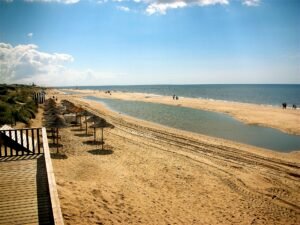
The shore closest to Mazagón’s built-up area is the practical starting point if you want to combine sand with food, shops and ordinary village life. Farther east, the landscape becomes more open, with long sandy stretches backed by the raised dunes commonly called the médanos. These are not two different seas: it is one coast with changes in access, services and atmosphere.
If you are travelling with children, mobility equipment or several bags, judge a beach by its actual entrance, not a place name on a booking platform. A beach visible below a cliff may still require a demanding approach. In peak summer the busiest accesses also concentrate parking pressure, so an earlier arrival or a base within walking distance can be more useful than searching for an allegedly secret beach.
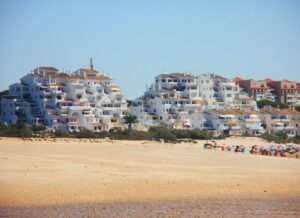
Choose the town-side beach for straightforward days
The urban-facing shore offers the clearest option for a low-effort beach day. You can arrange lunch and a return to accommodation without turning the day into a remote-coast expedition. Look at the specific stretch near your lodging and confirm where the nearest public boardwalk and supervised bathing area are; the word urban does not guarantee identical facilities at every entrance.
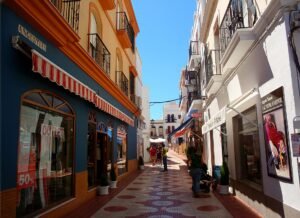
This is also the best place to keep plans flexible. If conditions turn windy, or someone in your group tires of swimming, there are alternatives closer at hand. During quieter months, confirm which cafés and shops are open rather than assuming summer operations continue throughout the year. The sand may remain attractive in winter, but the practical infrastructure changes.
Experience Playa del Parador and the wooded cliffs
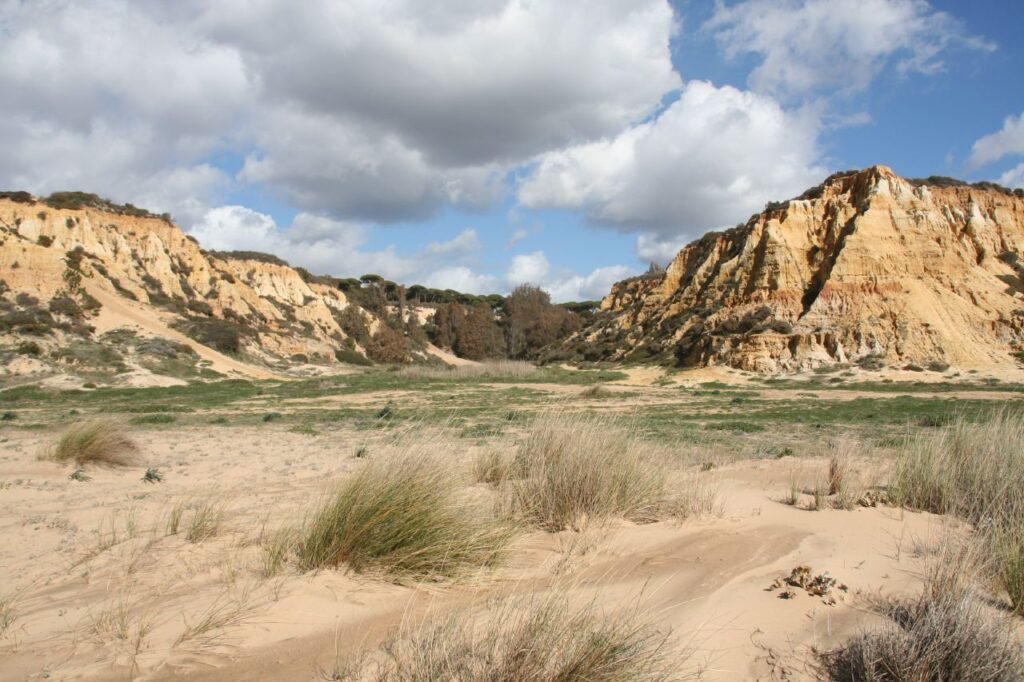
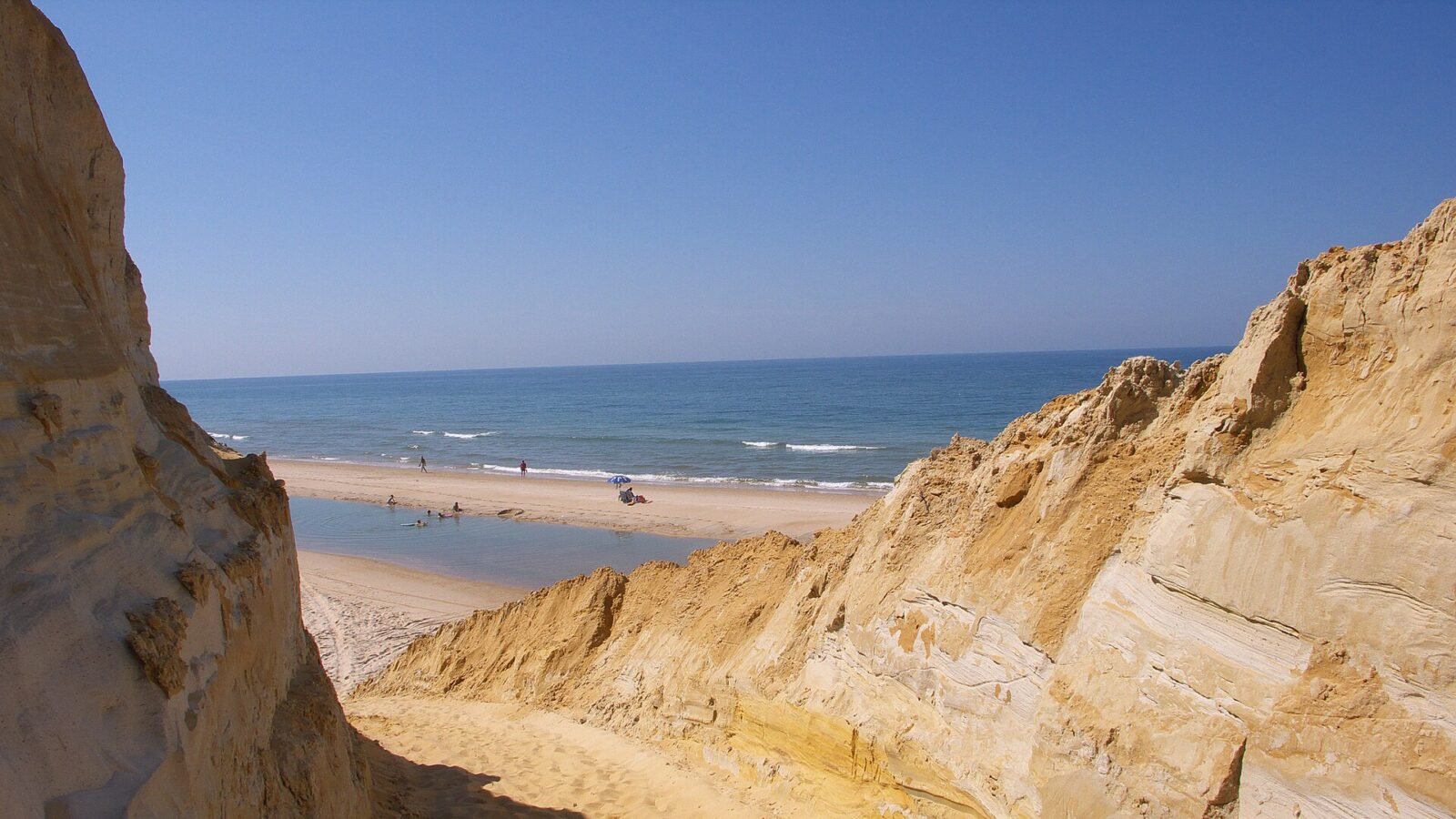
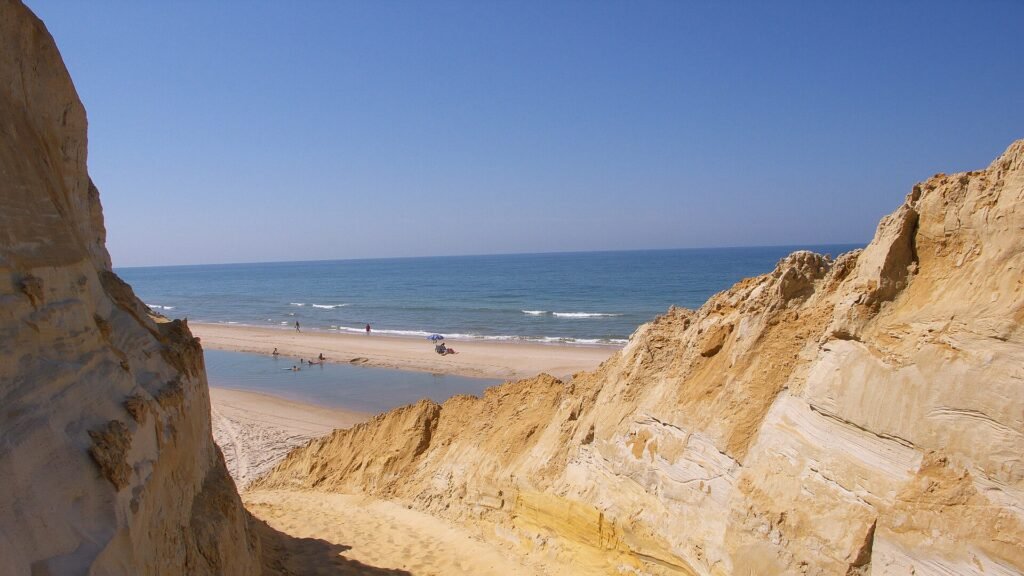
The Parador stretch is one of Mazagón’s distinguishing landscapes. The broad beach sits below a high sandy escarpment with pines above it; Moguer’s official tourism material describes the raised médanos as old dune formations that have become consolidated over time. Looking from the shore, the contrast between golden slopes, dark green trees and the Atlantic is unusually striking.
This is not an invitation to scramble down the cliff. Use authorised stairways and boardwalks, stay back from fragile slopes and avoid sitting immediately beneath unstable faces. Moguer describes access and beach services around the recognised Parador entrance; stretches farther away can feel isolated and may have little supervision. Carry water, protect yourself from the sun and remember that returning up a stairway can be harder than walking down it.
Walk the link towards the Parador, but plan your return
Moguer announced a wooden coastal walkway connecting Mazagón’s settled area towards the Parador beach sector. That improves the possibilities for visitors who enjoy a walk above or near the coast rather than a car journey between viewpoints. However, do not infer that every part of the wider shore is connected by a flat, step-free promenade.
Before setting out, check where the walkway begins, whether all sections are currently open and how long your outward and return journeys will take. Sand, exposed sun and unexpected detours can make a short-looking coastal route tiring. If you have reduced mobility, ask whether the particular walkway and beach descent are suitable; these are separate access questions.
There is no need to complete the whole stretch. A brief walk followed by a longer pause at one authorised viewpoint is often a better way to appreciate the landscape than rushing to a distant pin on the map.
Read the landscape: médanos, pines and erosion
Mazagón’s consolidated dunes help explain why much of the nearby coast looks different from a flat resort promenade. Wind, sea and sediment have formed a raised barrier, while pine woodland grows on the higher terrain. The shore continues to change, and erosion or conservation works can temporarily alter entrances that older photographs show as usable.
Keep to signed routes through the dune vegetation, especially where erosion has left tempting shortcuts. A worn informal path is not proof that access is safe or authorised. Avoid removing plants, driving on unmarked tracks or taking bikes across fragile sandy slopes. The best souvenir of this coastline is the landscape left intact.
See the Picacho lighthouse from outside
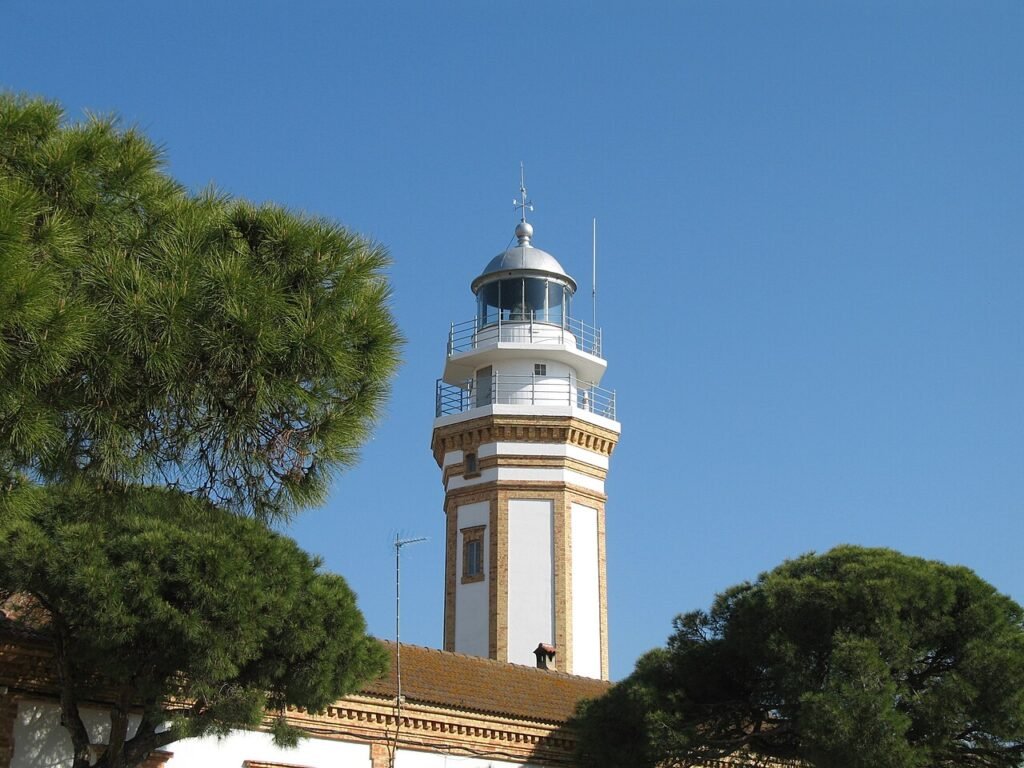
The Faro del Picacho adds a completely different note to Mazagón’s maritime setting. According to Moguer’s heritage description, the lighthouse began operating in 1902 and is associated with navigation towards Huelva’s port. Its form and position show that Mazagón is not only a holiday coast but also part of a working seaway.
Treat it as an exterior heritage stop unless a specific event or authorised visit is announced. An active lighthouse is not the same as a ticketed tower viewpoint. It fits well with a short walk through the local public park or a stop before dinner, especially for travellers interested in coastal infrastructure and the history of navigation.
Marina, food and a different side of Mazagón
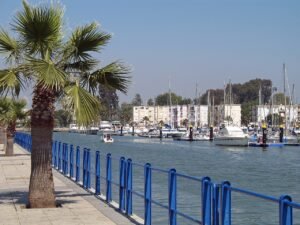
Mazagón’s port area is useful if you want a change from swimming. Boats, harbour activity and the sheltered side of the coast provide a contrast with open Atlantic surf. Keep to public sections rather than wandering onto docks or working areas, and ask current operators about any authorised excursions rather than assuming that tours depart every day.
For meals, seafood is the obvious regional starting point, but there is no reason to promise a particular catch or restaurant. Ask what is fresh, check opening times outside weekends and choose somewhere convenient to your accommodation. A long drive for a restaurant after a beach day may be less enjoyable than staying in your own area.
Where to stay: village convenience or quieter coast?
Stay near Mazagón’s more developed streets if walking to meals and getting supplies matters most. This is especially sensible for a short trip without a car. Choose accommodation closer to the Parador and eastern coastline if the natural setting is the main attraction, but check its exact access road, beach descent and the distance to everyday services.
Also check municipality assignments on addresses. Mazagón crosses Moguer and Palos de la Frontera; a resort labelled ‘Mazagón’ is not automatically walkable from another property with the same destination label. Search the address on a map and test the actual travel route rather than comparing straight-line distances.
Practical planning: seasons, accessibility and beach safety
A relaxed day can consist of one beach, the cliff landscape and an evening in the local area. Allow extra time only if you want a substantial walk or need to travel between separate entrances. A car gives flexibility, but parking can be difficult in busy periods and should never involve driving onto dunes or blocking emergency access.
Atlantic currents, waves and wind deserve attention even on sunny days. Use staffed bathing areas where possible, follow flag notices, and supervise children in the water. Lifeguard dates, adapted assistance and toilets depend on season and beach section; verify the current arrangements through municipal information before promising any specific facility. If travelling in very hot weather, plan walking in the morning or late afternoon.
For a wider comparison before choosing your base, see our guide to coastal towns in the province of Huelva.