Seville is a city best explored at a walking pace. Behind its monumental palaces and grand squares are quiet courtyards, neighbourhood markets, narrow lanes and leafy gardens. Its history stretches across Roman, Islamic and Christian periods, while its streets reveal a living culture shaped by ceramics, painting, flamenco and everyday Andalusian life.
This guide brings together ten worthwhile places entirely within Seville municipality. It balances famous landmarks with neighbourhoods, green spaces and cultural attractions, offering practical suggestions for making the most of your time. The maps below help you locate each stop and plan a route that suits your interests.
A rewarding visit does not have to be a race between monuments. Choose the experiences that interest you most, reserve the visits that need a fixed time and leave the spaces between them open for walking, a meal or a quiet break. The city is easier to appreciate when an impressive interior is followed by a street or garden where you can slow down. Use the numbered sections as individual ideas rather than an obligation to complete every stop in one day; the best route is the one that leaves you enough time to enjoy being there.
01 · ROYAL PALACE
Royal Alcázar of Seville
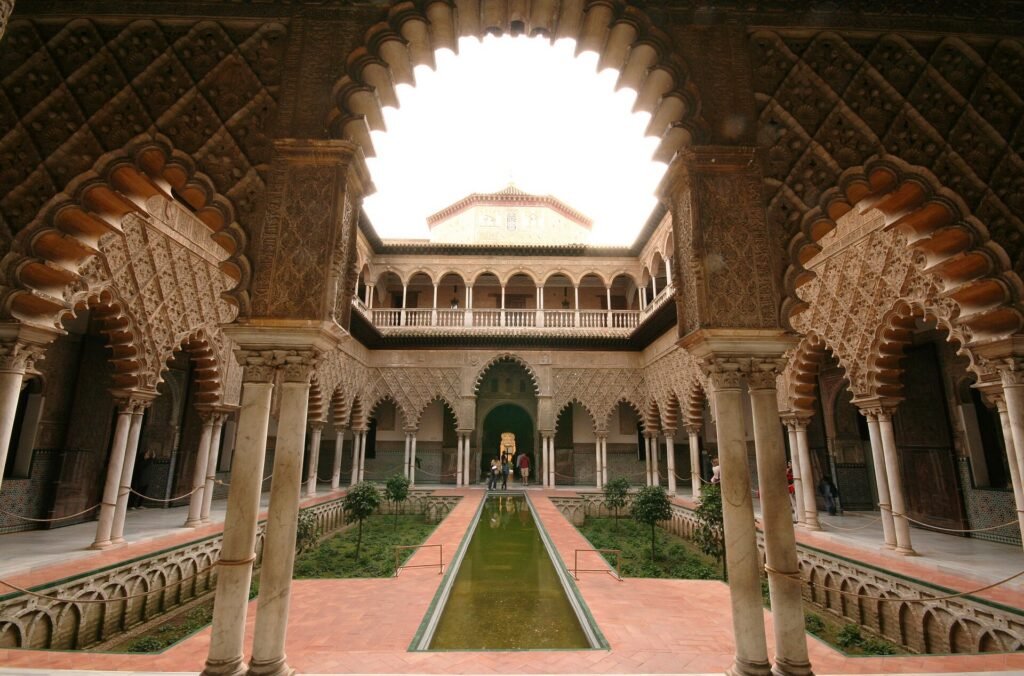
The Real Alcázar de Sevilla is one of the city’s most remarkable historic sites. This royal palace complex brings together architectural traditions developed over centuries, including Islamic, Mudéjar, Gothic and Renaissance influences. Elaborate plasterwork, colourful tiles and richly decorated ceilings make its interiors especially rewarding for visitors interested in architecture.
Look for the Patio de las Doncellas, the impressive Salón de Embajadores and the extensive gardens, where pathways connect fountains, courtyards and planted spaces. Rather than concentrating only on the main palace rooms, allow enough time to explore outdoors.
Give the palace and gardens their own place in your day instead of squeezing them between several timed bookings. The contrast between enclosed, carefully decorated rooms and the open garden paths is part of the experience. The official visitor page provides an audio guide and a downloadable plan; using either can help you understand where you are and notice details that would otherwise blend into the decoration. Build in some breathing room after your visit, rather than assuming you will want to leave as soon as you have seen the best-known courtyard.
Visiting advice: Reserve through the official Alcázar website, particularly during busy travel periods. Entry arrangements, seasonal opening times and additional palace-room access should be checked before visiting.
02 · HISTORIC LANDMARK
Seville Cathedral and La Giralda
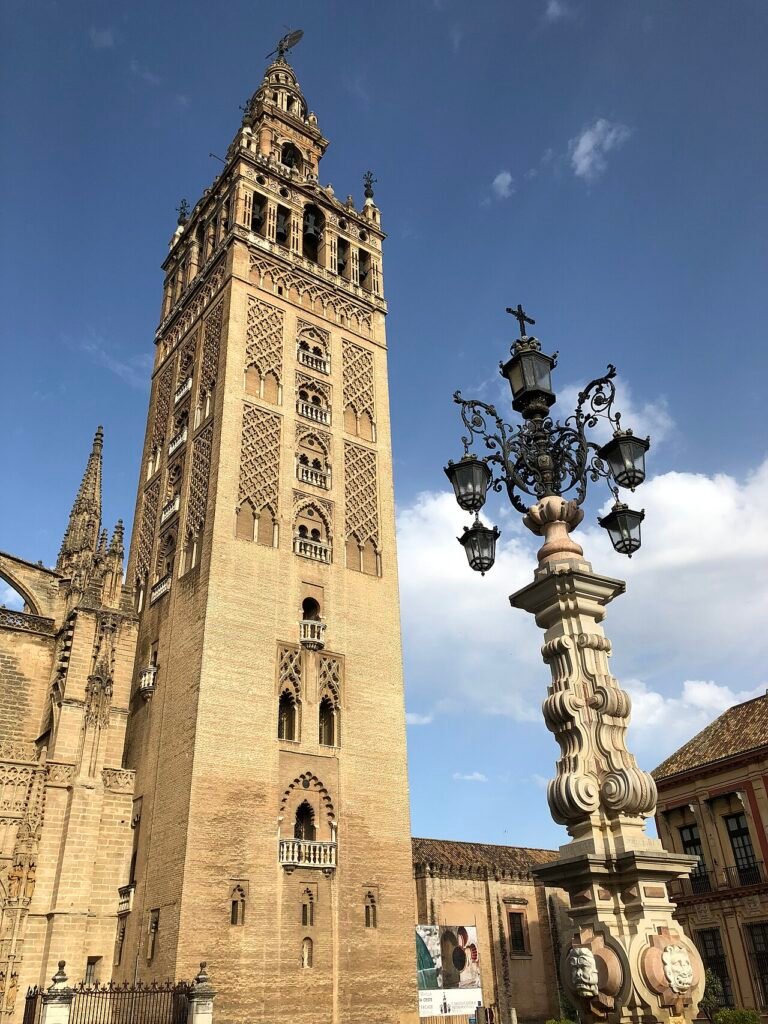
Seville Cathedral is celebrated for its monumental Gothic architecture, enormous interior and extraordinary collection of religious art. Its main altarpiece, chapels and choir reward careful attention, while the Patio de los Naranjos preserves an important connection to the site’s earlier Islamic history.
Beside the cathedral rises La Giralda, the former Almohad minaret transformed into a Christian bell tower. Its distinctive ascent uses ramps and a final section of steps. Visitors who can manage the climb are rewarded with elevated views across Seville’s rooftops and historic centre.
Think of the cathedral interior and the tower ascent as two different experiences. In the main building, choose a few chapels or works of art to look at closely rather than trying to absorb every detail at once. With so much decoration competing for attention, a slower visit can reveal differences in scale, materials and light that are easy to overlook. Before joining the Giralda ascent, consider your energy and comfort with an extended climb; seeing the cathedral does not have to mean taking on every part of the visit.
Visiting advice: Buy tickets through the official Cathedral website. The cathedral provides accessibility services, but the Giralda ascent is not suitable for wheelchair users or visitors with certain mobility limitations.
03 · ARCHITECTURE & PUBLIC SPACE
Plaza de España
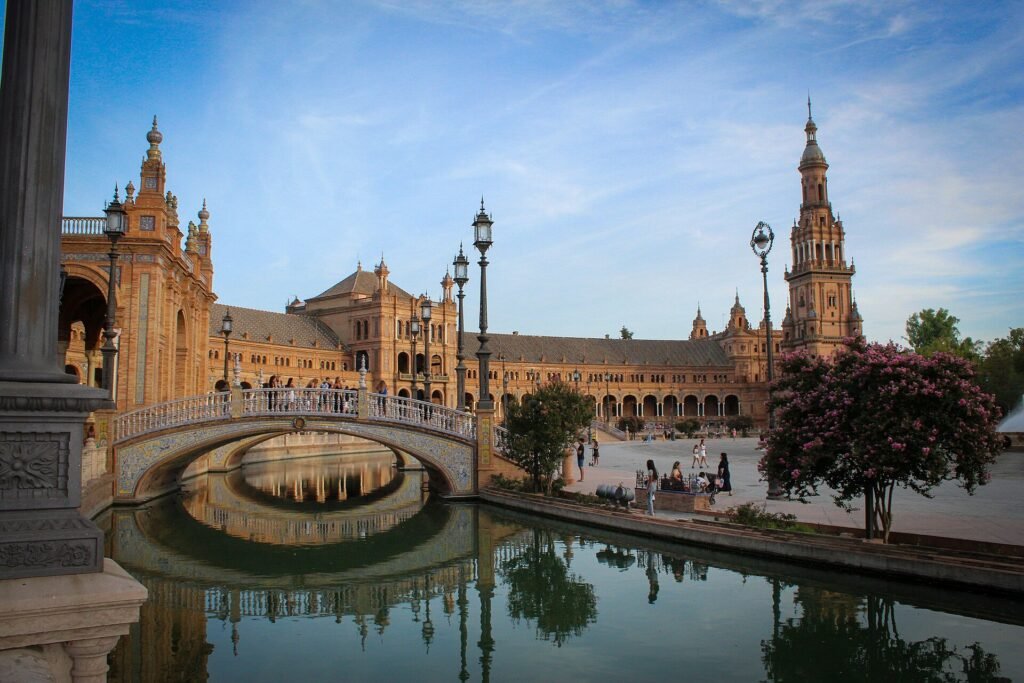
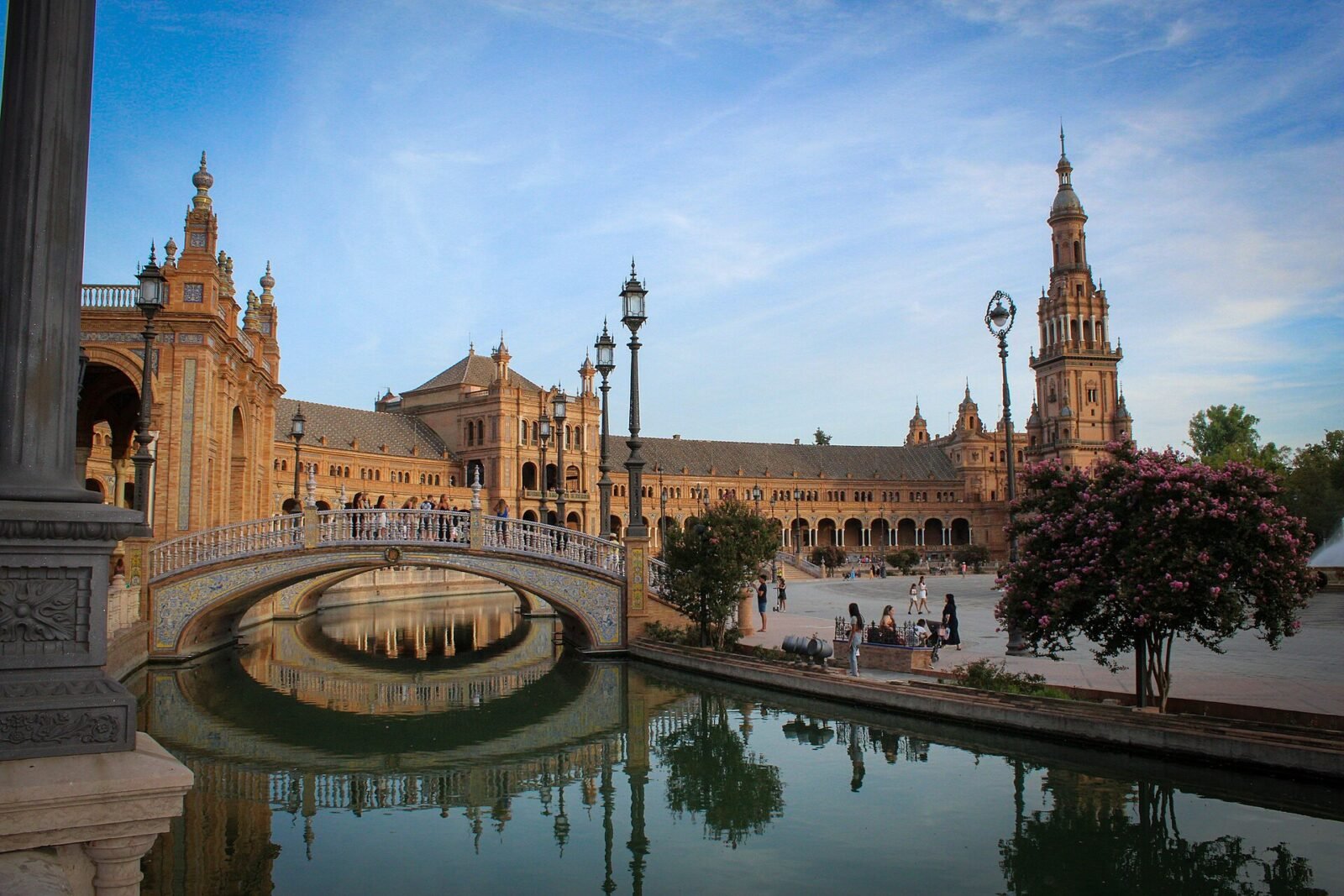
Designed by Aníbal González for the 1929 Ibero-American Exposition, Plaza de España is one of Seville’s most recognisable architectural spaces. Its sweeping semicircular building combines brickwork, ceramic decoration, arcades and towers around an expansive square and canal.
Follow the bridges crossing the water, explore the beautifully decorated tiled alcoves representing Spanish provinces, and admire the scale of the architecture from different viewpoints. Small boats may be available to rent on the canal, offering another perspective on the surrounding buildings.
The square rewards both a broad view and a closer look. Start far enough back to take in the curve of the building, then move towards the tiled benches and bridges to see how ceramics, brick and wrought iron work together. Comparing the scenes and patterns in several provincial alcoves is more interesting than stopping at only one. You can treat the canal as the centre of a leisurely circuit, with pauses along the arcades, rather than simply walking straight across the plaza and leaving.
Visiting advice: Early morning can be more comfortable for walking and photography, particularly in warmer months. General access to the square is free, but festivals, concerts or other events can temporarily restrict certain areas. Check local announcements if your visit coincides with a major event.
04 · HISTORIC NEIGHBOURHOOD
Barrio de Santa Cruz
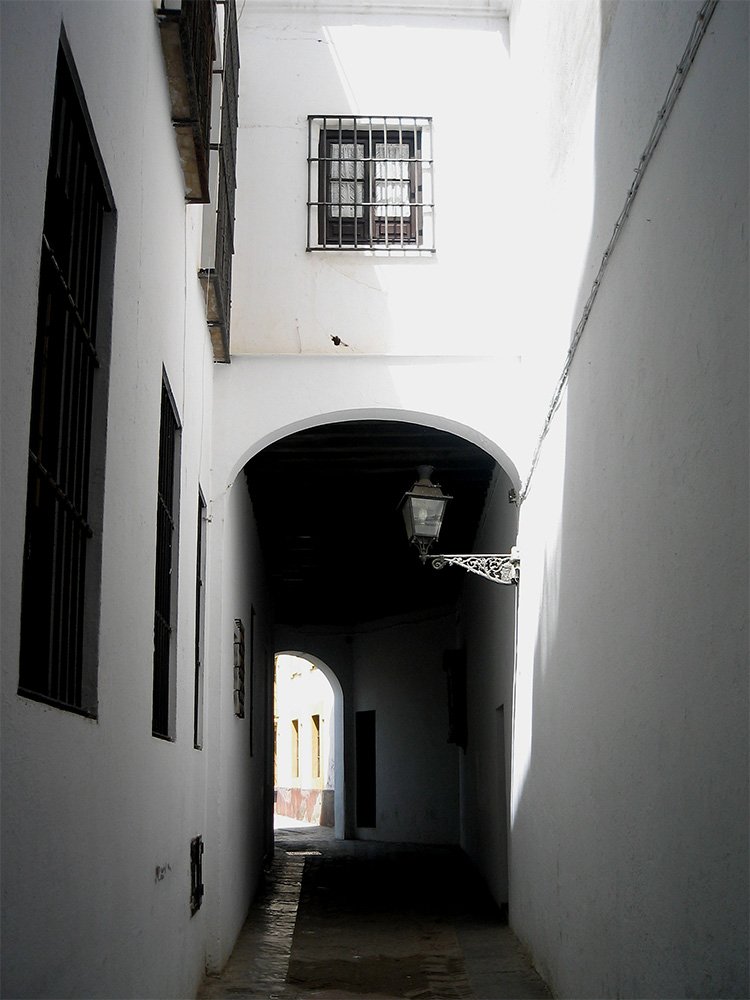
Santa Cruz is among the most atmospheric areas of Seville’s historic centre. Once part of the city’s medieval Jewish quarter, it retains a network of narrow streets, small squares, whitewashed buildings and traditional courtyards that contrasts with the open spaces around the cathedral.
Explore Plaza de Doña Elvira, Plaza de Santa Cruz and Callejón del Agua, paying attention to the intricate ironwork, ceramic details and unexpected corners between the buildings. The neighbourhood is particularly well suited to unhurried exploration rather than a strict sightseeing schedule.
Here, the pleasure is often in the small transition from one street to the next: a shaded passage opens into a brighter square, or a plain wall gives way to a carefully worked doorway. Use the map to keep a broad sense of direction, then put the screen away for a while and look around. Choose a square as a meeting point if your group separates. Remember that a visible courtyard or doorway is not necessarily a visitor attraction; enjoy the neighbourhood without entering spaces that are private.
Visiting advice: The district itself is free to explore. Some lanes are narrow and paved with uneven historic surfaces, so comfortable footwear helps. Santa Cruz is also a residential area: respect private entrances and avoid obstructing doorways when stopping for photographs.
05 · PARK & GARDENS
Parque de María Luisa
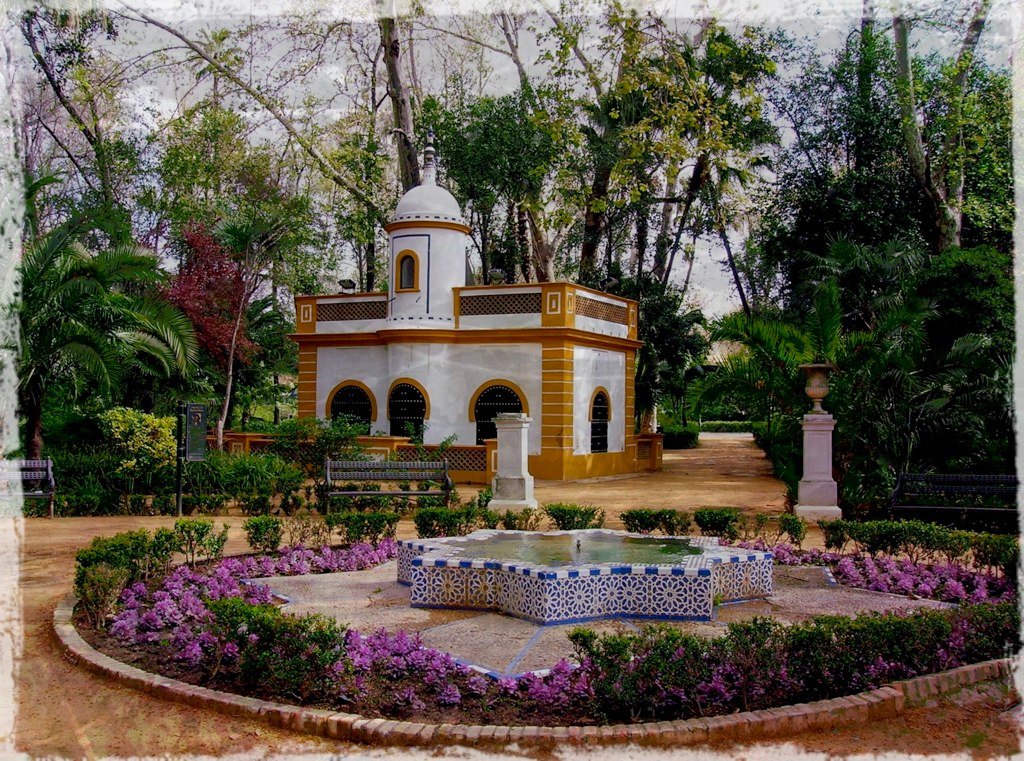
María Luisa Park provides a quieter, greener counterpart to Seville’s monumental streets. Originally associated with the gardens of the Palace of San Telmo, the park developed into an important public landscape and became closely connected with the 1929 Ibero-American Exposition.
Its tree-lined paths lead towards ornamental fountains, landscaped gardens, monuments and shaded seating areas. Plaza de América is especially worthwhile, surrounded by distinctive exhibition-era architecture. Look for the Mudéjar-style pavilion that houses the Museum of Popular Arts and Customs.
The park works especially well as a change of pace between more structured visits. Pick a short route that includes a garden, a fountain and a place to sit, rather than treating the entire green space as a checklist to complete. A circular walk can be more relaxed than following one long path without thinking about the return journey. Leave time to appreciate the surrounding pavilions from outside, and check separate visiting arrangements if you decide to continue into a museum. A pause here can make the rest of a walking day more enjoyable.
Visiting advice: Entry to the public park is free. It is a useful place to take a break between attractions, although Seville can become very hot in summer. Some paths have different surfaces and conditions, so visitors with mobility requirements should plan routes carefully.
06 · MODERN ARCHITECTURE
Las Setas de Sevilla
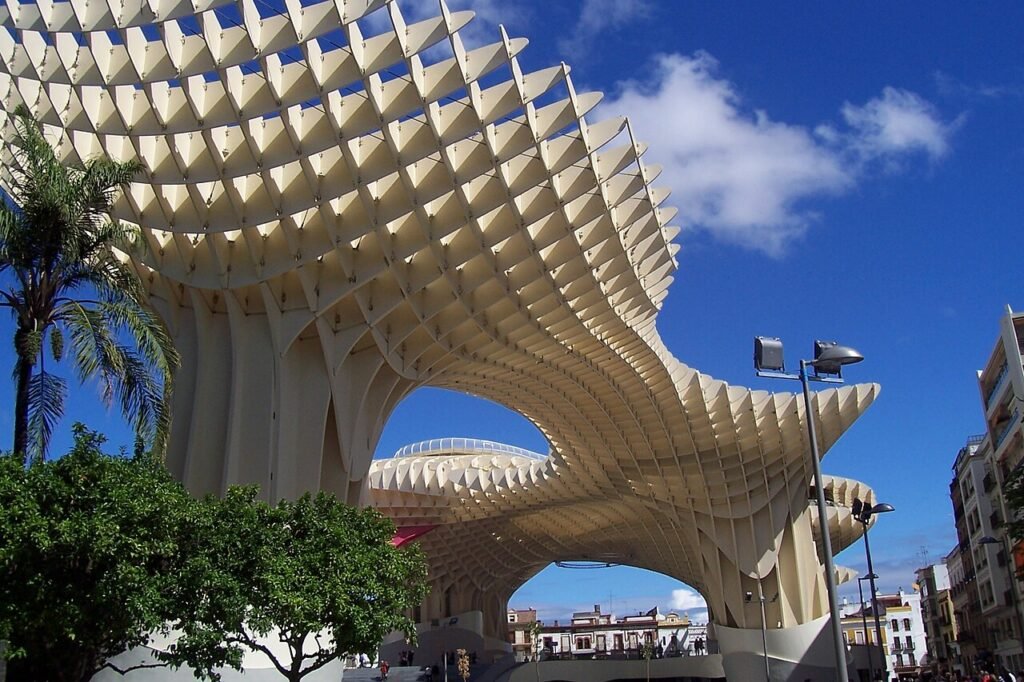
Known officially as Metropol Parasol, Las Setas is a striking contemporary structure above Plaza de la Encarnación. Its enormous mushroom-like wooden forms offer a dramatic contrast to the older buildings and churches surrounding the square.
The elevated walkway and viewpoint offer wide views across central Seville. At ground level, visitors can explore the Mercado de la Encarnación, while the nearby Antiquarium reveals archaeological remains from different periods of the city’s history. Together, these spaces show how modern architecture, traditional commerce and archaeology coexist in one location.
Decide which layer of the site interests you most: the public square, the market, the archaeology or the elevated views. They are close together, but they do not necessarily share the same opening arrangements or entry conditions. From the viewpoint, try to identify a few buildings you have already visited; the change in perspective helps connect streets that can feel disconnected at ground level. If the market is part of your plan, check its trading hours separately instead of assuming a late viewpoint booking will also give you time to browse the stalls.
Visiting advice: Access to the surrounding square is separate from the paid viewpoint experience. Check the official Las Setas website for tickets and current access arrangements. The traditional market generally operates earlier in the day.
07 · RIVERSIDE NEIGHBOURHOOD
Barrio de Triana
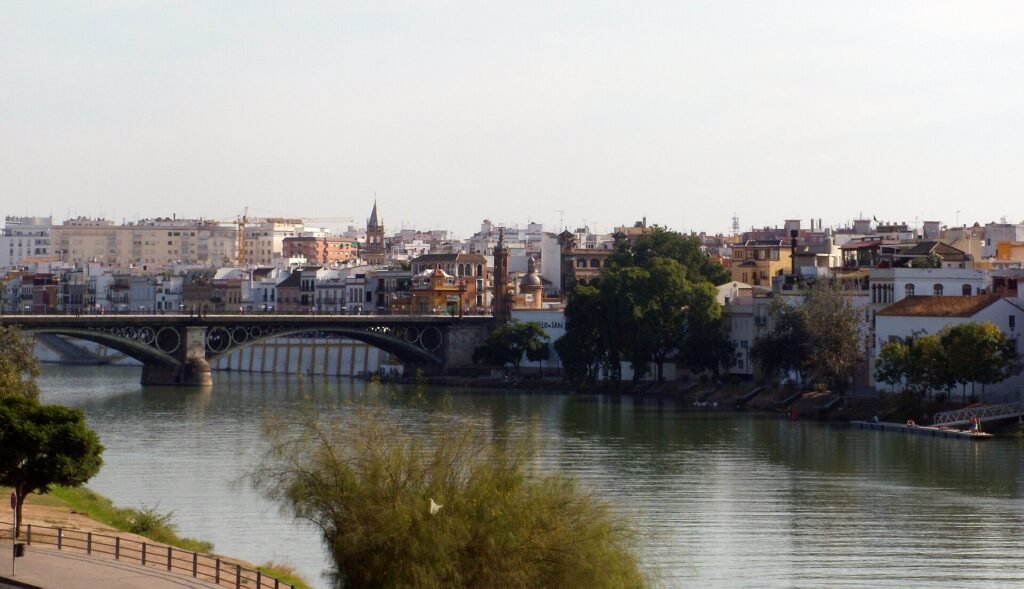
Across the Guadalquivir River, Triana has a distinct identity shaped by ceramics, maritime trades, flamenco and neighbourhood traditions. Crossing the Puente de Isabel II, commonly called Triana Bridge, is an excellent introduction to the area.
Visit Mercado de Triana for a glimpse of its food culture, explore the nearby ceramics heritage and walk along Calle Betis for views back towards the historic centre. Plaza del Altozano and the surrounding streets offer opportunities to discover local shops, traditional architecture and places to eat.
Allow the visit to extend beyond the first riverfront view. The ceramics tradition provides a useful thread to follow through shop windows, architectural details and cultural spaces, while the market gives the neighbourhood a different everyday rhythm. When choosing a place to eat, look at the menu and the setting rather than assuming that every riverside terrace offers the same experience. A ceramics purchase can also be a meaningful souvenir: ask about the maker and production method if buying local craft is important to you.
Visiting advice: The neighbourhood is free to explore. Go to the market during its trading hours if browsing food stalls is a priority, rather than assuming the whole market stays open through the evening. Follow a route through several streets instead of concentrating only on the riverfront.
08 · ART & CULTURE
Museo de Bellas Artes de Sevilla
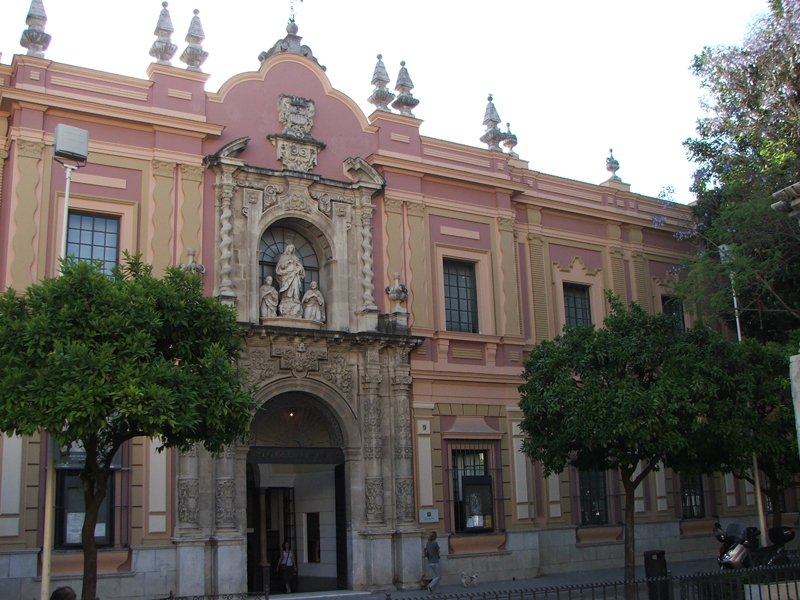
The Museum of Fine Arts offers a deeper understanding of Seville’s artistic heritage beyond its churches and palaces. Housed in the former Convent of La Merced, the building itself is an attraction, with historic courtyards, galleries and a former convent church.
The collection is particularly celebrated for Sevillian Baroque painting, including important works by Bartolomé Esteban Murillo, Francisco de Zurbarán and Juan de Valdés Leal. Visitors interested in painting can follow the galleries through different periods of artistic development.
You do not need to be an art specialist to enjoy this museum. Start by noticing how a painting directs your eye through light, faces, gestures or a strong diagonal, then read its label to place it in context. Comparing a small number of works can be more rewarding than rushing through every room. The former convent architecture is part of the visit, so look up from the paintings occasionally and notice the relationship between the galleries, courtyards and old church space. Give yourself permission to spend longer with a work that catches your attention.
Visiting advice: Allow sufficient time for both the artworks and the architecture. The museum provides wheelchairs, lifts and adapted toilets. EU citizens with appropriate identification qualify for free admission; consult the official museum information before travelling.
09 · HISTORIC PALACE
Casa de Pilatos
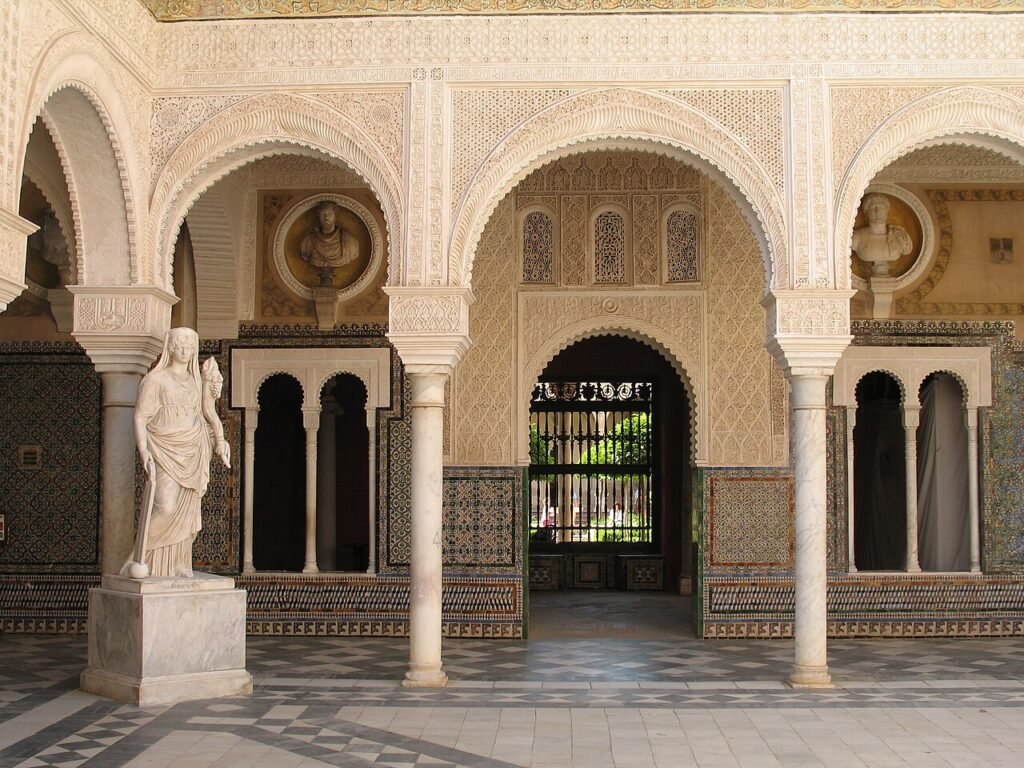
Casa de Pilatos is an aristocratic palace where Andalusian Mudéjar decoration meets Renaissance architectural ideas. Its central courtyard, marble columns, intricate ceramic tiles and classical sculptures create an absorbing setting for anyone interested in historic houses and design.
Look closely at the painted tiles, ornamental ceilings and detailed architectural transitions between rooms. The palace also has gardens and richly decorated spaces that reveal how European Renaissance influences were adapted within an Andalusian noble residence.
This is a good place to slow down and compare decorative details rather than searching for a single headline sight. The tiled surfaces, classical sculpture and wooden ceilings reward attention at different heights and distances. Look at how the courtyard draws these elements together, then follow the transition into the surrounding rooms and gardens. An audio guide or other interpretation, when available, can help explain the relationship between the building and its collections. Before booking, check whether your chosen visit includes only the lower spaces or additional upper-floor rooms.
Visiting advice: Casa de Pilatos is a ticketed attraction at Plaza de Pilatos, 1. Verify the areas included in your ticket and current visiting arrangements through the Fundación Casa Ducal de Medinaceli. Visitors with mobility requirements should confirm access to specific sections before purchasing.
10 · RIVERSIDE LANDMARK
Torre del Oro
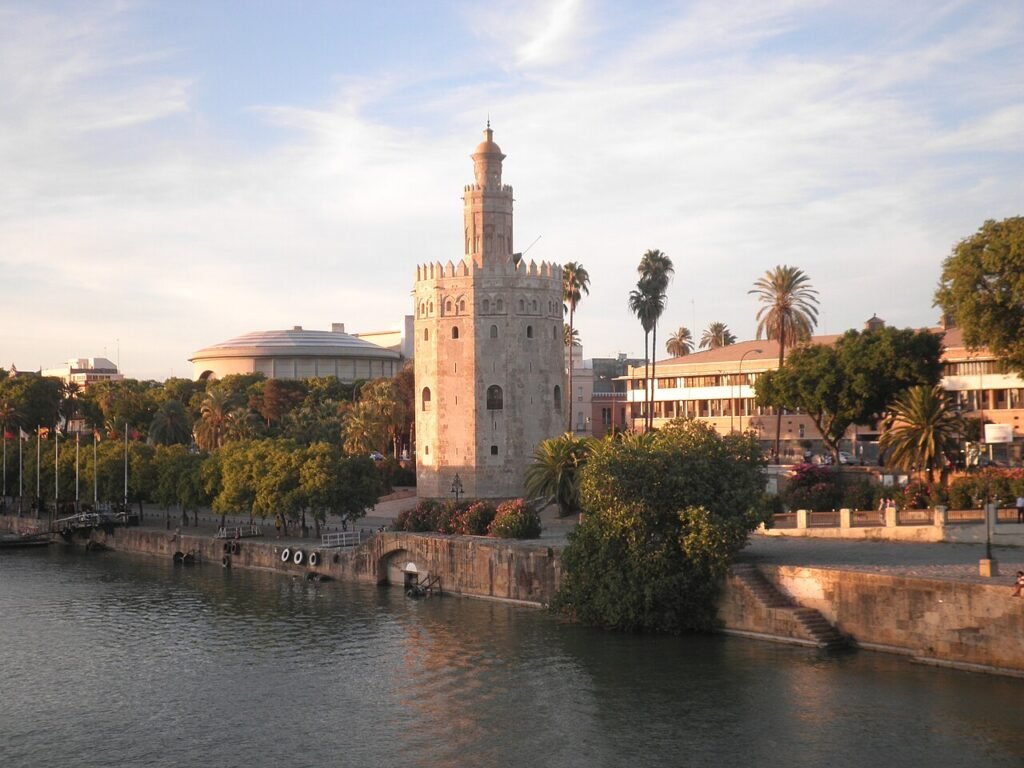
Standing beside the Guadalquivir, Torre del Oro is a reminder of Seville’s long relationship with navigation and trade. Built in the thirteenth century as part of the Almohad defensive system, the tower helped control access along the river.
Today it houses a naval museum exploring aspects of maritime history. Where visitor access permits, the upper level offers an opportunity to view the river and surrounding cityscape. Even without entering, the tower is an interesting stop along the riverside promenade.
The tower is also a useful landmark for understanding Seville from the river. Pause on the promenade and look at the relationship between the historic centre, the waterfront and the opposite bank before deciding whether to visit the interior. A walk here can serve as a quieter interval between more concentrated sightseeing stops. If you enter the museum, treat the exhibits and any upper-level access as parts of a historic building visit, with their own physical demands. You can still appreciate the tower and its setting from outside if climbing is not right for you.
Visiting advice: Combine this attraction with a walk beside the Guadalquivir or a crossing towards Triana. Check museum access and current visiting arrangements before entering, particularly if you need step-free access, as the historic structure contains changes of level.
Practical Tips for Visiting Seville
Plan by area. The cathedral, Royal Alcázar and Santa Cruz form a convenient historic-centre group. Plaza de España and María Luisa Park pair naturally, while Torre del Oro and Triana can form part of a riverside itinerary. Las Setas, Casa de Pilatos and the Museum of Fine Arts offer additional cultural stops elsewhere in the central city.
Reserve the major monuments. Popular ticketed attractions can have limited capacity. Always use official ticketing channels where possible and confirm entry conditions before paying a reseller.
Adapt to the weather. Seville’s summer heat can make long afternoon walks uncomfortable. Carry water, choose shaded routes and consider visiting outdoor attractions earlier or later in the day.
Check accessibility individually. Historic buildings, cobbled streets, towers and gardens present different challenges. Do not assume that accessible ground-floor facilities mean every upper-level attraction is accessible.
Keep plans flexible. Religious services, temporary exhibitions, restoration work and public events can affect access. Confirm current information through the official websites before visiting.
Leave space between bookings. A route that looks short on a map can take longer when you include queues, entry checks, uneven streets and the stops you actually want to make. Plan around one or two fixed appointments, then use nearby open spaces or neighbourhood walks to fill the rest of the day. It is better to enjoy fewer places properly than to spend the afternoon watching the clock.
Check the actual entrance. A map pin identifies a place, but a large palace, park or cathedral may have several gates or approaches. Read the instructions on your ticket and follow the visitor entrance indicated by the venue. Save your confirmation and check any identification requirements before leaving your accommodation. The embedded maps are useful for orientation; the attraction’s own instructions should guide your arrival.
Photo information
The photographs retain their original composition and colours. Rumbelia uses web-size versions and responsive resizing only, with no cropping or retouching. Photographer names link to the original image pages, which provide the work titles, sources and supplied attribution details. Each photograph keeps its linked Creative Commons licence.