
Seville is a city that rewards preparation without requiring a rigid schedule. Its historic centre is full of landmarks within walking reach of one another, while neighbourhoods on both sides of the Guadalquivir add markets, restaurants, contemporary culture and places to slow down. The biggest practical considerations are the weather, how you arrive and which attractions need timed admission.
This guide is designed for your first visit to Seville municipality. It covers when to travel, how to get into town, local transport, where to base yourself and how to plan a realistic stay. It deliberately does not repeat a numbered attraction ranking: use it alongside a dedicated sights or itinerary article when choosing exactly what to visit.
Seville at a glance
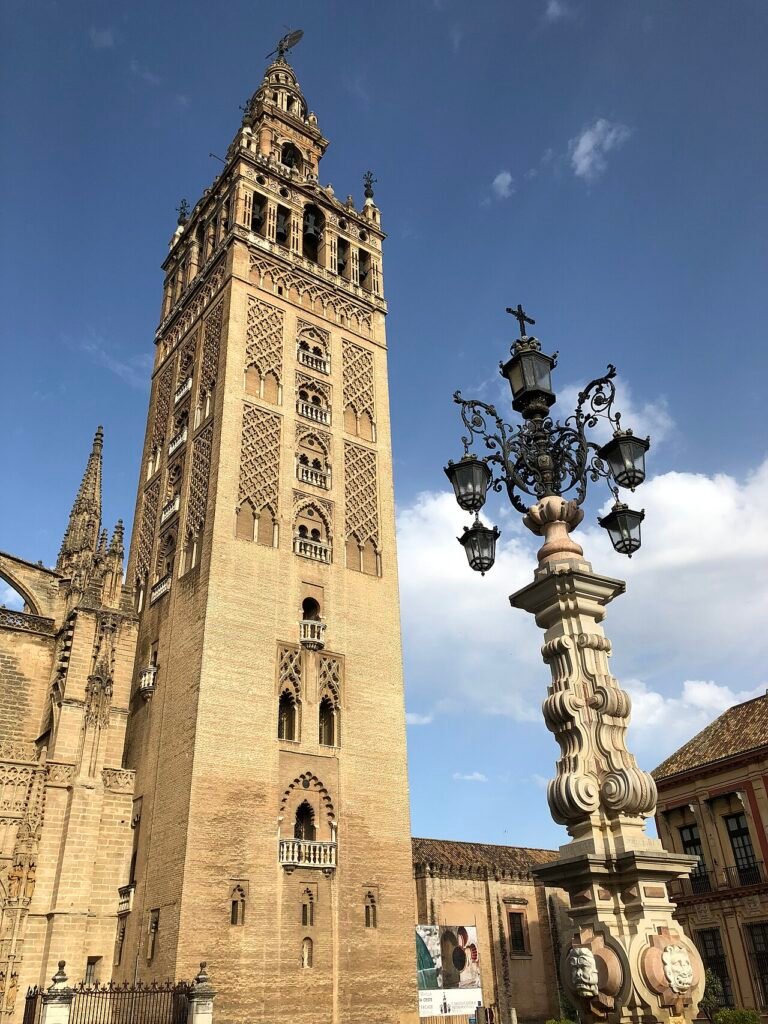
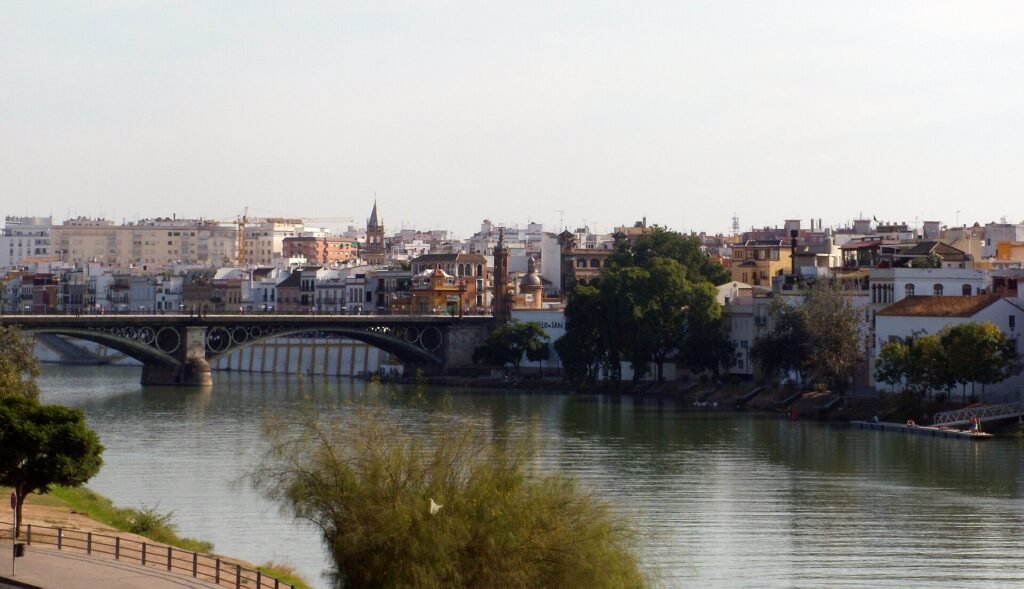
Seville is the capital of Andalusia in southern Spain. Its river, the Guadalquivir, runs past historic riverside landmarks and separates much of the old centre from Triana. The cathedral, Royal Alcázar and Archivo General de Indias form a UNESCO World Heritage ensemble, reflecting different eras of the city’s importance.
The city is not all medieval streets: there are broad parks and exhibition-era buildings to the south, modern architecture around Las Setas and more residential districts around Nervión and Los Remedios. You will enjoy Seville more if you think of it as a set of distinct neighbourhoods rather than a single compact monument zone.
Useful orientation: the historic centre is the main area for a first sightseeing day, Triana is across the river, and Santa Justa railway station lies to the east of the centre.
When is the best time to visit?
Spring and autumn are often comfortable choices for exploring on foot, although actual weather varies. Summer can be extremely hot, with conditions that make long afternoon walking routes unpleasant or unsafe for some visitors. If you travel then, build in indoor breaks, carry water and plan outdoor attractions for cooler hours.
Semana Santa (Holy Week) and Feria de Abril are major events in the city, but they can change accommodation availability, pedestrian movement, local transport and the atmosphere of entire neighbourhoods. Their calendar dates are not interchangeable from year to year; check the official event programme for your intended dates. Some visitors specifically travel for these festivities, while others may prefer quieter weeks.
Winter can be appealing for museums and food, but shorter daylight hours and occasional rain change the rhythm of a trip. Whatever the season, look at the forecast close to departure rather than relying on a monthly average as if it were a guaranteed temperature.
How to reach Seville by air
Seville Airport, also called San Pablo, serves the city. An official option is the EA airport bus, which connects the airport with stops in the urban area. Aena’s official airport page lists the service and current conditions, including ticket rules. Taxis are another option, particularly if you have heavy luggage or accommodation inconvenient for the bus route.
Important: do not use an old travel-blog airport fare or timetable as a booking guarantee. Before flying, consult Aena’s Sevilla Airport bus page for current fares, operating hours and stops.
After deciding on the arrival stop, check the last part of the journey to your accommodation. In the historic centre, a short straight-line distance may still involve cobbled streets, pedestrian-only lanes or a longer accessible route.
Arriving by train or intercity bus
Sevilla-Santa Justa is the principal railway station for longer-distance services, including high-speed connections. It is not in the tightest part of the old centre, so plan a local bus, taxi or a realistic walk to your accommodation. When purchasing a train ticket, check the exact operator and station printed on it; avoid assuming all regional services arrive at the same platform or terminal.
For buses, Plaza de Armas is an important station for intercity services, while Prado de San Sebastián handles other routes. The correct departure station depends on your ticket, not simply on which one appears closest to your hotel.
Practical tip: keep the full address of your accommodation available offline and review the last kilometre before arriving. It is easier to decide how to handle luggage at home than while standing outside a station in unfamiliar heat.
Getting around Seville
Walking is an excellent way to connect many central places. For longer journeys, Seville has TUSSAM urban buses, a central tram service, and a metro line useful for particular corridors. A transit map will tell you far more than the generic advice that “everything is walkable”: Santa Cruz and Nervión, for example, offer very different journeys to an attraction.
Use official transport information or the operator’s tools to check a service on the day. During festivals, processions and street works, central stops and routes may change. If a route involves a wheelchair, stroller or significant luggage, verify the accessible stop, vehicle and pavement route rather than assuming a nearby map pin guarantees step-free travel.
Driving: a car is usually unnecessary for a trip focused on the historic centre. If you bring one for a longer Andalusian journey, ask your accommodation about parking, restricted approaches and the practical route to its entrance before setting off.
Choosing an area to stay
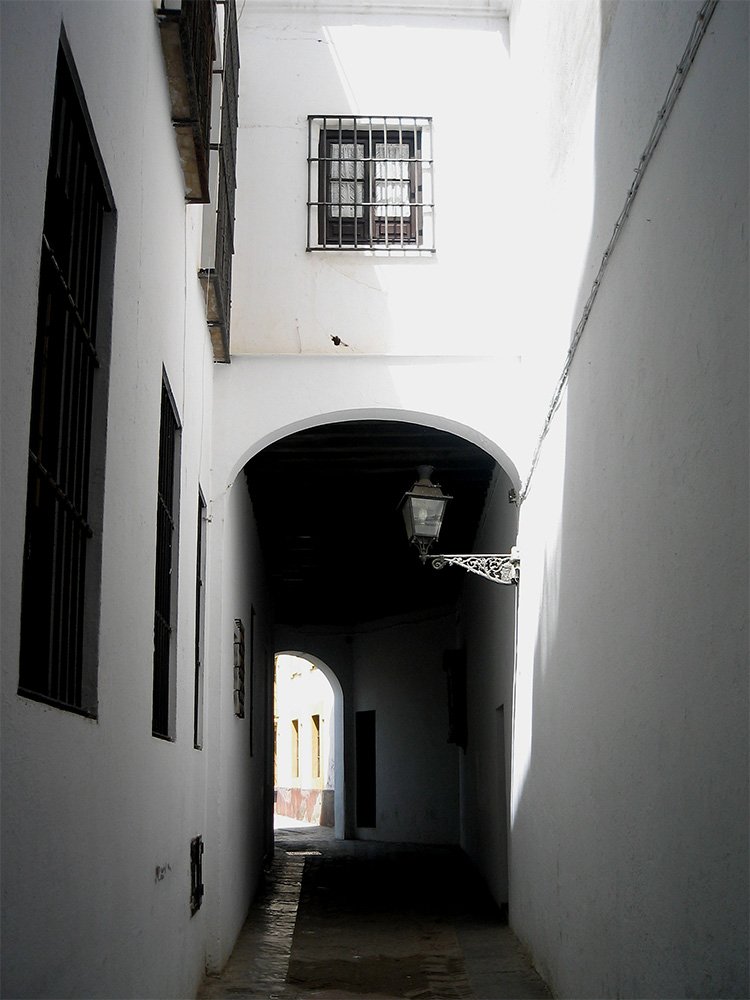
Santa Cruz suits visitors who want to be very close to the main monuments, provided they accept busy pedestrian streets and the possibility of stairs. El Arenal is useful for mixing central sightseeing, dining and riverside walks. Triana offers a distinct neighbourhood across the river, and Alameda/San Lorenzo suits travellers who enjoy cafés, bars and an evening atmosphere.
Nervión or the Santa Justa area may work better for train journeys and modern urban services, while Los Remedios can be a more residential base depending on the precise address. The difference between two hotels in the same district can be larger than the difference between districts: always compare a map route, not just neighbourhood branding.
For a short first trip centred on architecture, a reasonably quiet historic-centre property is often the most convenient. For a longer visit, transport access, room comfort and noise may matter more than being steps from the cathedral.
What deserves advance booking?
The Royal Alcázar and the Cathedral/Giralda are major ticketed visits where planning ahead is wise. Buy through each attraction’s official channel and check the time shown on your confirmation. The cathedral specifically warns that services and special activities can affect cultural visits, and the Giralda ascent places physical demands on visitors.
Flamenco performances and some palace tours also benefit from reservations, but do not fill every hour with paid entry. Build one firm appointment into a half-day and leave space for markets, parks or a neighbourhood walk. That gives you flexibility if queues, heat or a particularly interesting exhibition alter your plans.
Official information: Royal Alcázar visitor guidance and Cathedral/Giralda tickets and schedules. These should take precedence over old third-party prices.
How to divide a two- or three-day visit

First day — historic centre: arrange one timed monument visit, then explore the streets around Santa Cruz and the cathedral at a comfortable pace. Choose your food stop by the area you finish in rather than returning to a fixed restaurant across town.
Second day — broad spaces and river: walk around Plaza de España and María Luisa Park, taking breaks in shade when needed. Later, move towards the Guadalquivir and cross to Triana if you have the energy. It is better to enjoy both places properly than to rush through five distant appointments.
Third day — your interests: pick art at the Museum of Fine Arts, modern architecture near Las Setas, another historic palace or a longer exploration of Macarena and Alameda. A family may prefer science or the aquarium; a food-focused traveller could centre the day around markets and a deliberate tapas meal.
Use this as a flexible structure, not a minute-by-minute schedule. Opening days, time slots and weather should decide the final order.
Food, water and practical spending
Seville’s traditional tapas bars, restaurants and markets give you different ways to eat. Learn a few menu words—tapa, media ración, ración—so you know the amount you are ordering. A short menu with a few familiar dishes can be a good fit for a quick lunch; a longer sit-down restaurant meal is a different experience.
Budget for the whole day rather than assigning a fixed “average Seville price” that will be misleading across seasons and venue types. Account for accommodation, entry tickets, transport, meals, drinks and anything special you want to book. Read the final price and cancellation rules of a service before paying.
In warm conditions, prioritise hydration and breaks. Never assume that simply because a street looks close on the map, you can comfortably cross the city on foot at any hour of a summer afternoon.
Culture, safety and accessibility
Seville’s churches and historic buildings are active cultural and religious spaces. Dress respectfully where required, follow photography rules and avoid interrupting services. In residential lanes, do not enter a courtyard unless it is clearly open to visitors.
Use the same precautions you would in any busy tourist city: keep valuables secure in crowds, verify payment terminals and follow licensed transport information. No district should be labelled categorically “safe” or “unsafe” on the basis of a travel stereotype. If something goes wrong, Spain’s emergency number is 112.
Accessibility varies. The Cathedral publishes details of wheelchairs, adapted toilets and visitor support, but that does not mean La Giralda is wheelchair accessible. For hotels, museums and transport routes, check the precise facility and route that you need rather than relying on a general accessibility symbol.
A final planning checklist
- Confirm your flight, train or intercity bus station and the last leg to your accommodation.
- Book one or two priority monuments through their official websites, leaving other time flexible.
- Check major religious festivities or fair dates if travelling in spring.
- Use a neighbourhood-based plan to reduce unnecessary backtracking.
- Check the weather shortly before departure; carry water and appropriate sun or rain protection.
- Save offline your hotel address, travel tickets and relevant accessibility contacts.
- Verify the entrance location printed on your ticket: a map marker may identify the building, not the correct gate.
A well-planned Seville trip is not a race to see everything. Organise the essentials, then give yourself time to enjoy the contrasting districts and the atmosphere between destinations.
Photo information
Photographs are displayed as web-size responsive copies without cropping or retouching. Photographer links lead to original file pages containing the work titles and source details. Each photo retains its linked licence.