At La Rábida, a short journey from the centre of Palos de la Frontera, two very different places tell connected parts of a story. The Franciscan monastery belongs to the world in which the 1492 Atlantic voyage was planned. The Muelle de las Carabelas is a modern museum built to help visitors picture the ships and circumstances of that crossing. Seeing them together makes more sense than treating either as a quick photograph.
It is also worth approaching this history with care. The voyage opened enduring contact between continents, but the expansion that followed brought conquest, colonisation and severe consequences for Indigenous societies in the Americas. A good visit examines how the expedition was organised, what is original, what has been reconstructed and how its legacy has been interpreted over time.
1. Begin at the Monasterio de Santa María de La Rábida
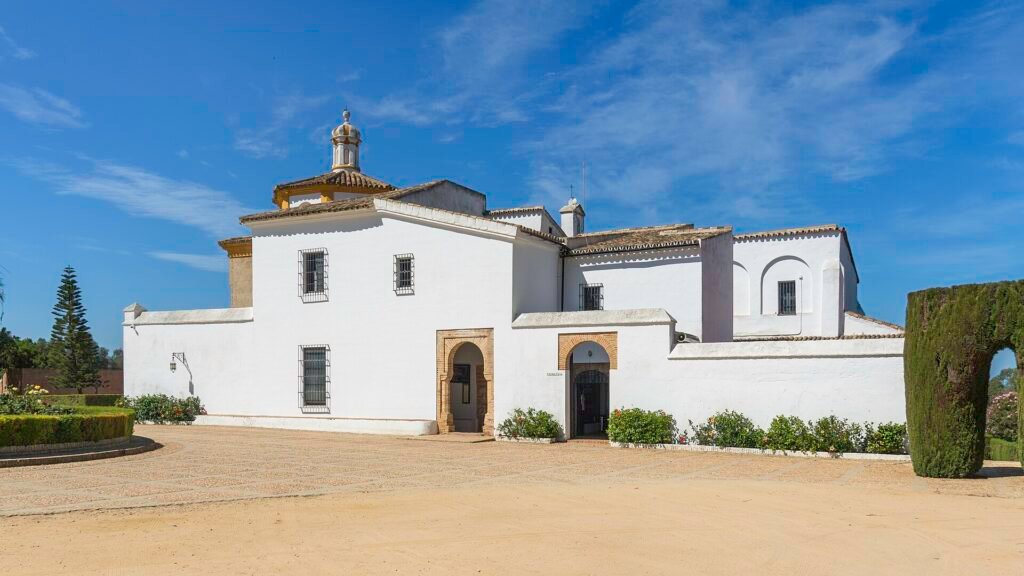
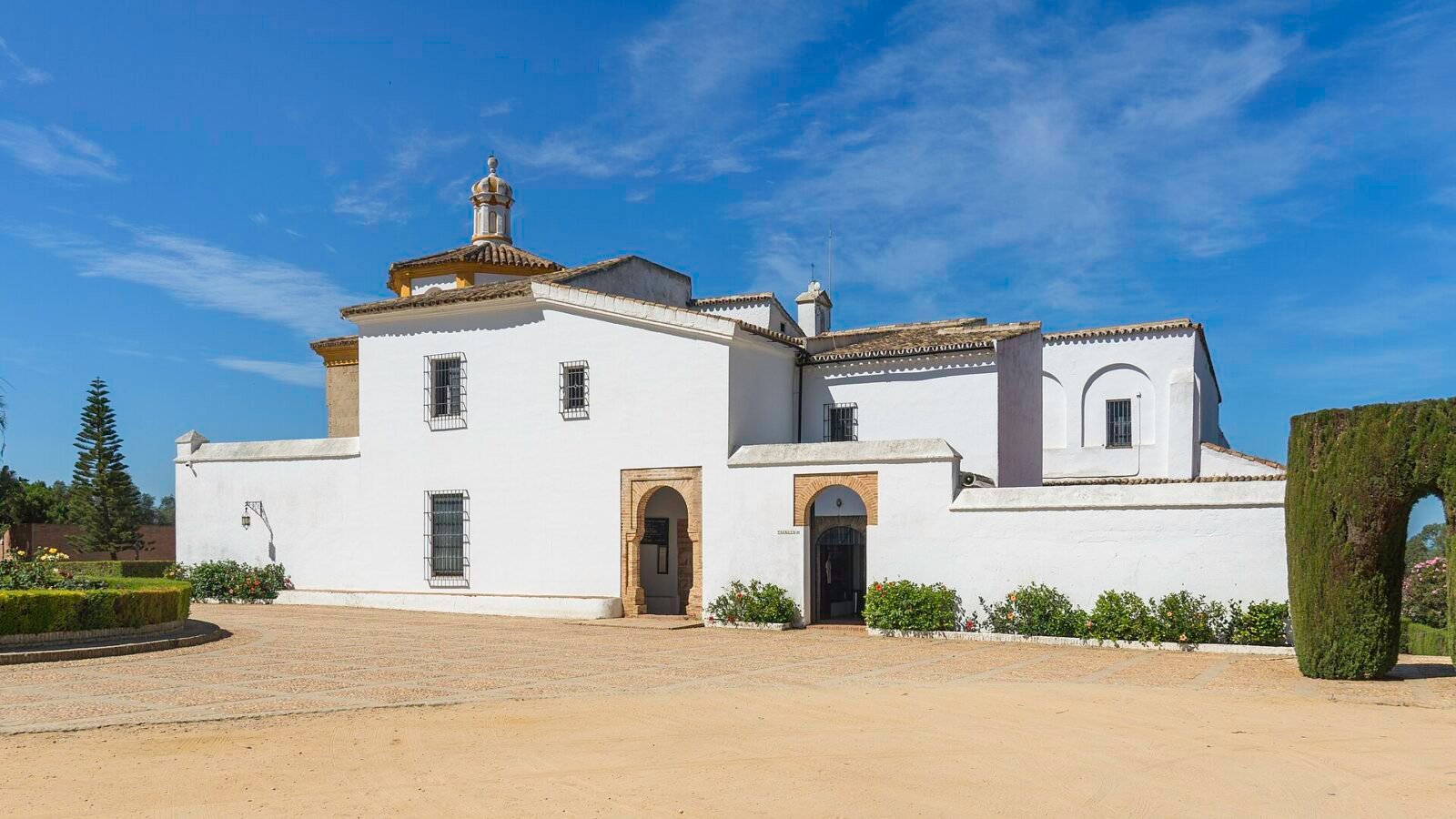
The modest whitewashed monastery is closely associated with Columbus’s search for support before his first Atlantic expedition. Franciscan figures connected with La Rábida helped him make contacts within the Castilian court. The site is therefore most interesting as a place of persuasion, religious life and political connections, not as a grand palace where the ships were built.
Its small scale can be surprising if you arrive expecting an enormous monument. Allow the architecture to speak for itself: the exterior is restrained, and the richness of the visit lies in the cloisters, chapels and material that places the monastery in its historical context. The site remains a religious community, so visitor access can be affected by worship and ceremonies.
2. Look closely at the Mudéjar cloister and monastery church
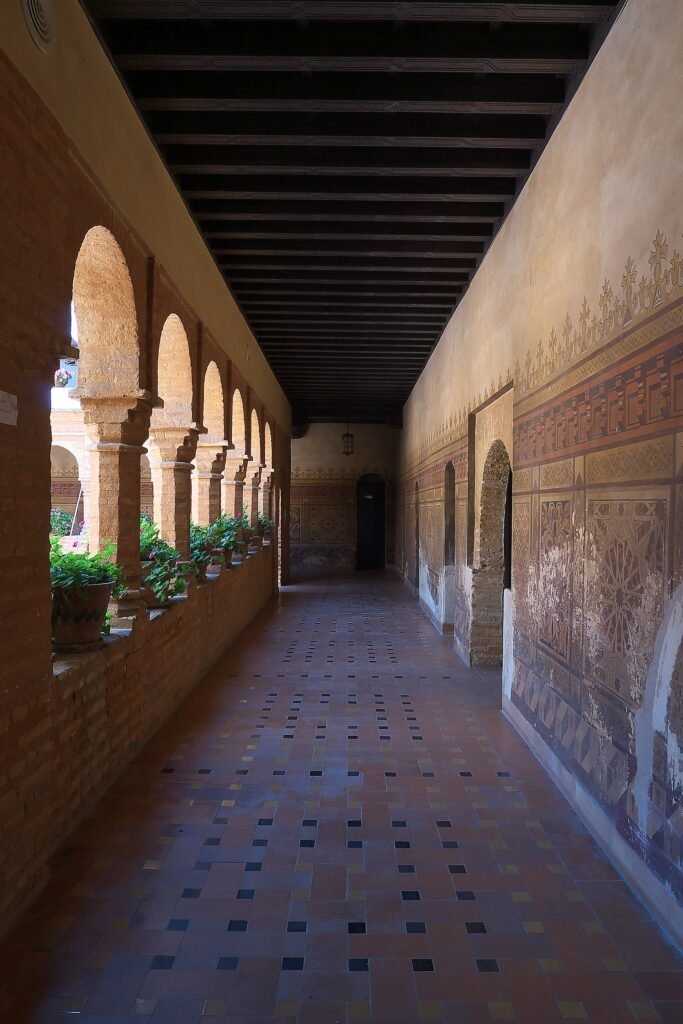
The cloister brings together brick arches, patterned surfaces and intimate proportions that help make the monastery more than a name in the Columbus story. Inside, the church and the devotional spaces reveal the site’s continuing religious role. Some historic decoration and artworks belong to much later periods, and the visitor experience should not be imagined as a perfectly untouched room from 1492.
Ask whether the audioguide is available in your preferred language. The monastery’s official website lists several languages and provides practical visitor information. When reading historical displays, distinguish the contemporary fifteenth-century evidence from paintings and commemorations commissioned centuries afterward.
3. See the three reconstructed ships at the Muelle de las Carabelas
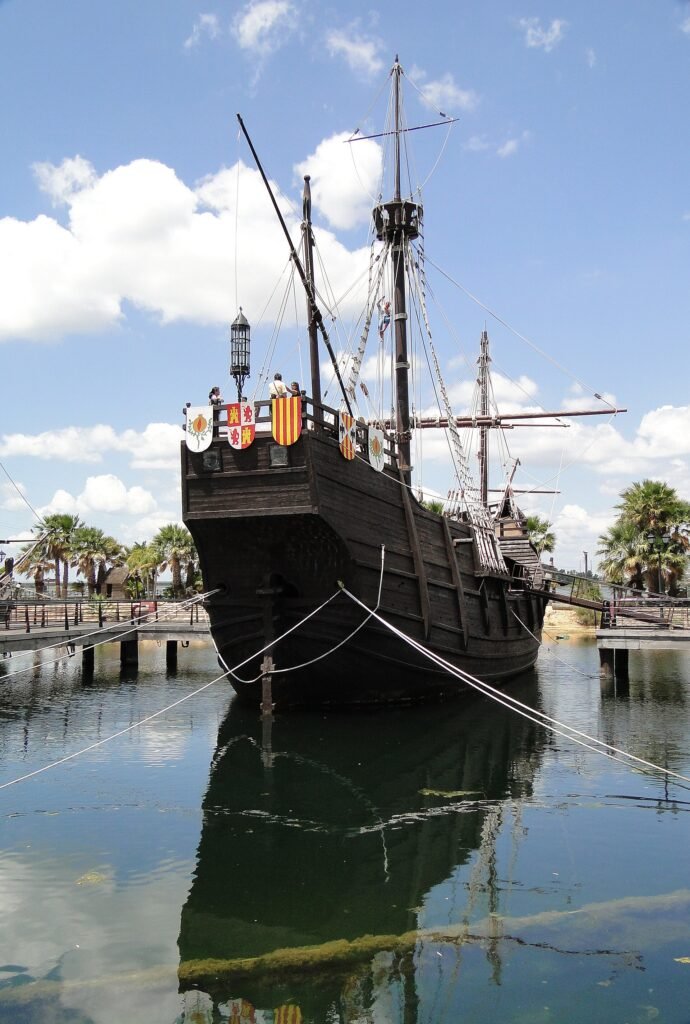
The central attraction at the Muelle de las Carabelas is a group of replicas constructed for the 1992 fifth-centenary commemorations: the Niña, Pinta and Santa María. The first two were caravels; the Santa María was a larger ship generally described as a nao. Despite the museum’s collective name, they were not all technically caravels.
The reconstructions are especially useful for understanding space. Compare the vessels’ proportions, look at how limited the room aboard would have been, and consider the storage, crew and navigational challenges implied by the voyage. They are an educational interpretation based on historical research, not original fifteenth-century hulls, so their layouts should not be mistaken for definitive replicas of every historical detail.
4. Explore the harbour exhibition and the re-created settings
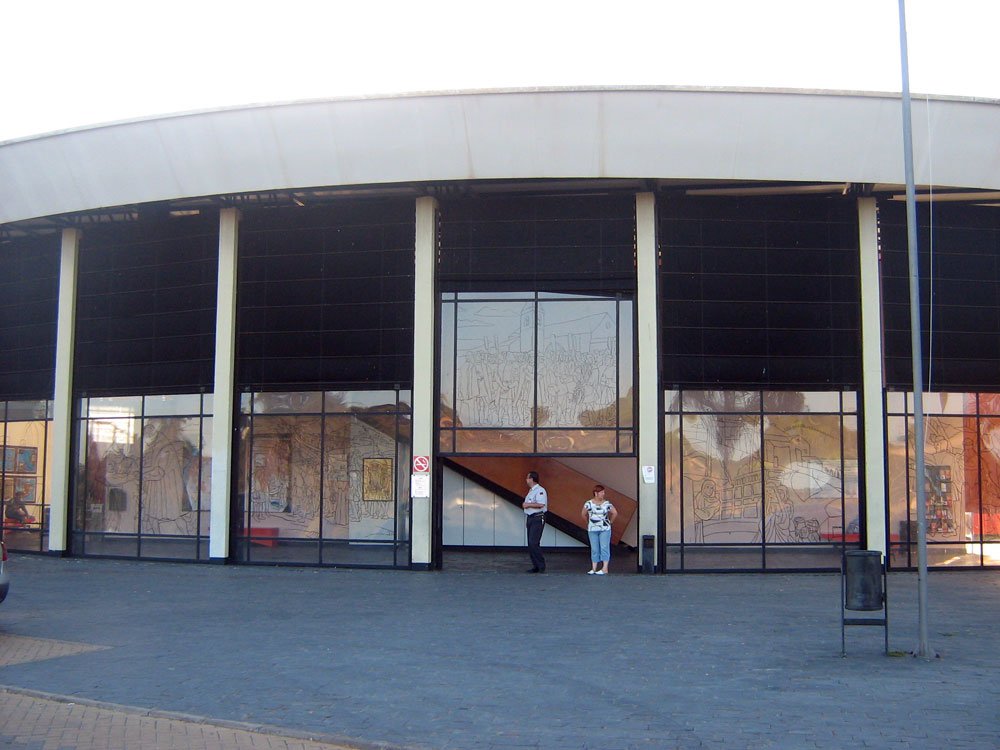
There is more to the Muelle than the three vessels. The museum complex includes exhibition spaces, a recreated medieval neighbourhood and an interpretive area associated with the encounter across the Atlantic. Together, these exhibits provide context for the ships without asking you to imagine an entire society from a single deck.
Allow time to read the interpretive material, especially if you are travelling with older children who are studying the period. Treat reconstructions as models for conversation: how were sailors recruited, what resources did they take, and what might different groups have understood by “discovery” or “encounter”? This approach avoids presenting a modern museum set as an original town that has survived unchanged.
5. Know the practical differences between the two ticketed sites
The monastery and Muelle de las Carabelas are separate attractions with their own entry arrangements. The monastery’s official website currently lists public visiting days from Tuesday to Sunday and says it closes on Mondays, with religious holidays and services potentially affecting access. The Muelle’s provincial operator also lists a Monday closure and seasonal schedules.
Check the operators directly before leaving. The provincial Muelle page says ticket-office purchases are card-only or can be made online, but payment policies and availability may change. It also states that boarding the replicas is prohibited in rain for safety reasons. Do not rely on a single combined ticket being offered. The monastery’s official visitor information and the Muelle operator page are the best places to check the latest details.
6. See the Monumento a los Descubridores without confusing it with Huelva’s waterfront monument
Outside the monastery, the Monumento a los Descubridores commemorates the four-hundredth anniversary of the 1492 voyage. It belongs to La Rábida’s later history of remembrance rather than the original maritime preparations. Its setting among gardens helps explain how the area became an important commemorative landscape.
This is not the same monument as the Monumento a la Fe Descubridora near Huelva city. If you are planning a route using photographs from travel sites, check the precise map pin before driving to a monument that looks similar in description but is located elsewhere.
7. Take a breather in the José Celestino Mutis Botanical Park
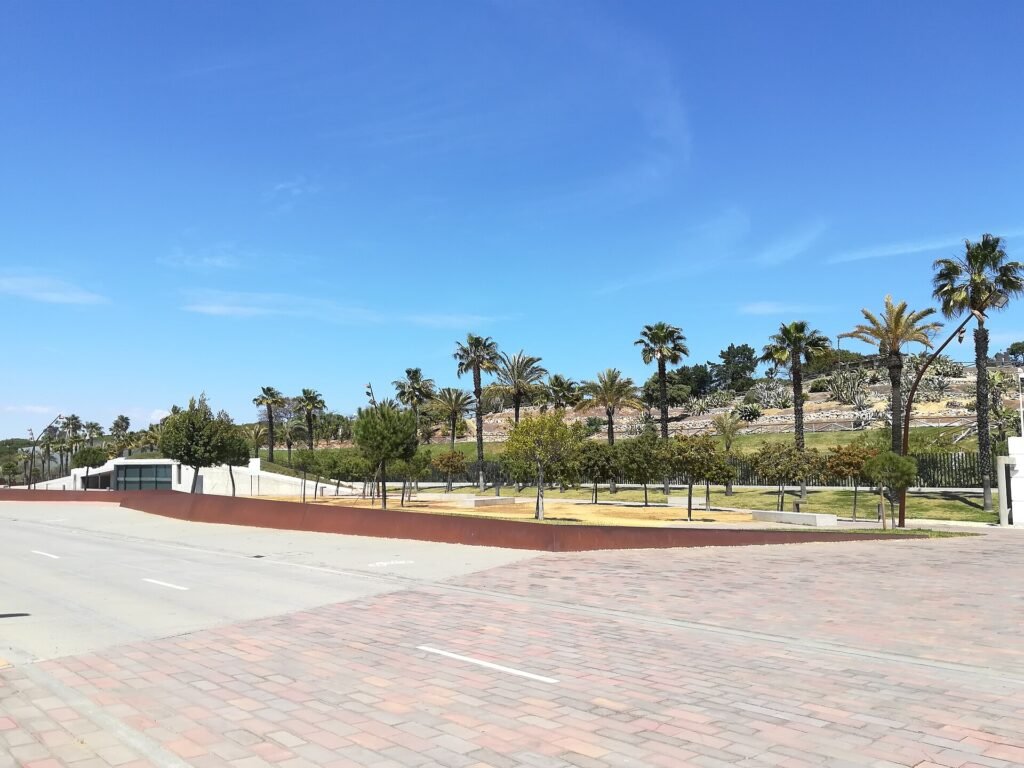
La Rábida’s botanical park broadens the day beyond strictly maritime history. Named for the eighteenth-century botanist who led a major scientific expedition in what is now Colombia, the gardens present plants connected with the Iberian world and the Americas. They create a different way to think about transatlantic relationships: through living collections, ecology and the history of scientific exchange.
The provincial authority describes access to the outdoor park as free. It also currently warns that the greenhouse is closed for maintenance until further notice. Do not plan a special trip to see the greenhouse without checking for an updated notice. Bring water and allow for exposed areas during hot weather.
8. Put La Rábida into the geography of the original departure
It is tempting to describe the monastery, ships and old port as though they were all the same site, but the history is more geographically layered. La Rábida was a religious and social centre linked to the preparations. The historic port lay by the town of Palos, close to San Jorge and La Fontanilla, and its original waterside appearance is no longer preserved.
If time allows, complete your understanding by visiting those two town landmarks, not by searching for a medieval harbour beneath the modern Muelle museum. The modern replicas stand at La Rábida because the museum was created there for interpretation. They are not moored at the original departure point of 1492.
How to organise a visit to La Rábida
If you have only a few hours
Choose the monastery and the Muelle de las Carabelas, but check their separate opening arrangements before you travel. Start with whichever has the earlier closing time on your chosen date. Focus on the monastery’s historical role and allow unhurried time at the replica ships rather than aiming to see every display at speed.
If you have most of a day
Add the Monumento a los Descubridores and the botanical park, then consider the town-centre landmarks on a separate stop. These are nearby parts of the same municipality, but not one compact indoor exhibition. A car or prearranged transfer is generally more convenient for combining La Rábida with the town; check public transport options if you do not drive.
With children or limited mobility
The life-size ships can be fascinating for children who like hands-on history, but narrow decks, steps and historic interiors may limit access. The monastery has different rooms and surfaces; accessibility cannot be assumed from a photograph of its entrance. Ask both attractions about step-free routes, prams, assistance and any mobility restrictions before buying tickets.
What to remember
La Rábida is most rewarding when the buildings and exhibits are treated as evidence of different eras: the monastery’s older fabric, nineteenth-century commemoration and twentieth-century reconstruction. Each tells you something valuable, provided you know which is which.