Some writers describe places. Juan Ramón Jiménez also made a place part of the way readers imagine his work. Moguer is threaded through Platero y yo: its paths, gardens, people, remembered animals and uneasy mixture of affection and sorrow. The town has changed since the poet’s childhood, but several houses and public spaces still offer a way to explore the relationship between what he lived and what he wrote.
A literary visit is most interesting when it includes Zenobia Camprubí, too. Her work as a translator, editor, educator and cultural organiser was far more substantial than a supporting role in her husband’s career. The museum in Moguer brings both lives into view. This route takes you from the family home and birthplace to outdoor literary markers, then beyond the central streets if you have time.
Begin at the Casa Museo Zenobia y Juan Ramón Jiménez
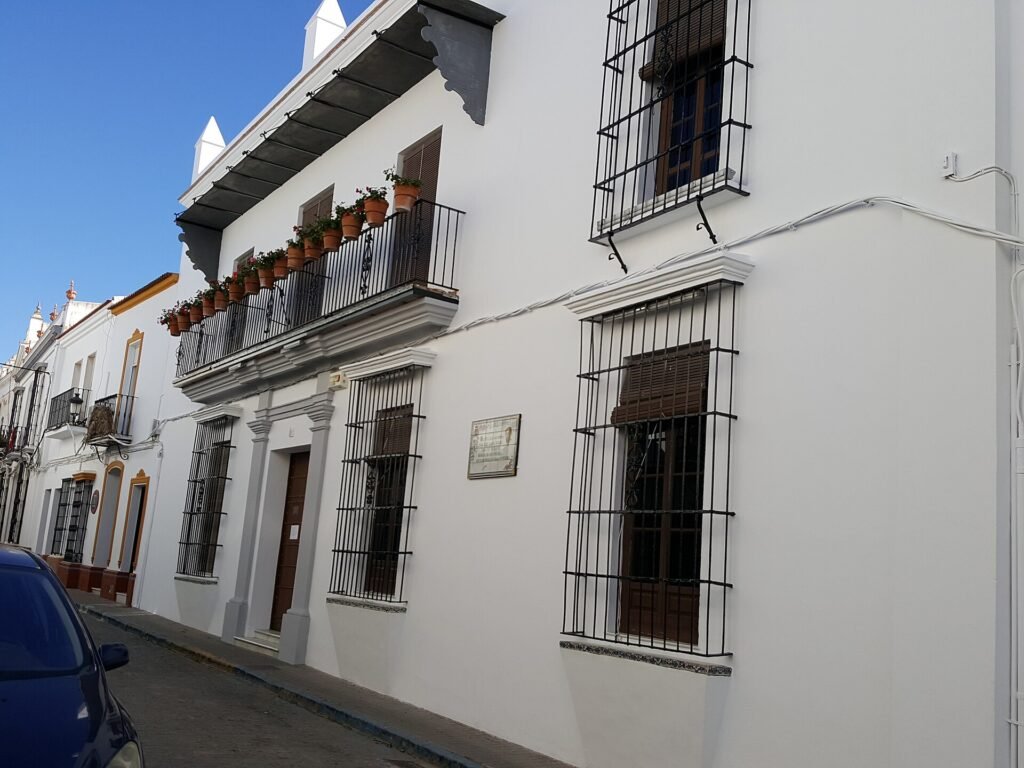
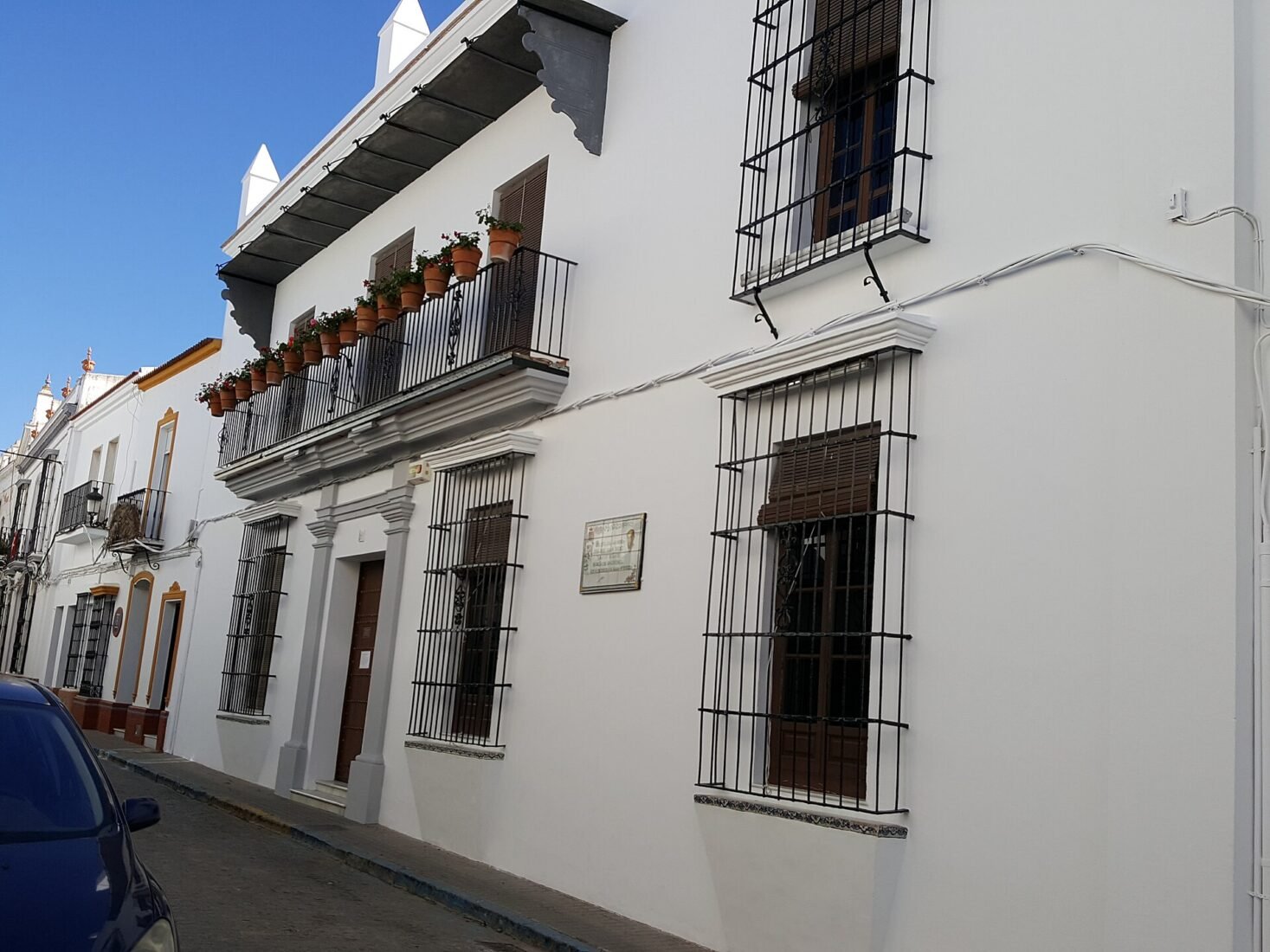
The most useful first stop is the Casa Museo, at Calle Juan Ramón Jiménez, 10. This was the house where Juan Ramón spent much of his childhood and youth, after his family moved from his birthplace. Its domestic setting makes a meaningful difference: a poem’s sense of memory is easier to understand when you are walking through rooms associated with daily life rather than seeing manuscripts in an anonymous gallery.
The museum preserves books, correspondence, furniture, personal effects and materials connected with both writers. Focus not only on individual objects but also on the relationship between the household, Moguer’s educated professional families and the wider Spanish-speaking literary world. The museum’s collections can also help explain how the couple’s work continued well beyond Andalusia.
Visiting advice: The official visitor page recommends booking or calling ahead on +34 959 37 21 48. It notes a visitor lift and restrictions on flash photography. Confirm the current schedule and any group arrangements, especially around local holidays.
Give Zenobia Camprubí her own place in the story
Zenobia is sometimes introduced simply as the poet’s wife. That shorthand misses the reason the museum bears both names. She translated major works of Rabindranath Tagore from English into Spanish, worked on publishing projects and participated in cultural and educational initiatives. Their joint editorial life is part of the story, but her career and interests deserve attention in their own right.
When examining the museum, seek out material relating to Zenobia’s correspondence, translations and work. Her relationship with the wider world offers a useful contrast with the local Moguer landscapes that are so prominent in Juan Ramón’s writing. Together, they show how one literary household was connected both to a small Andalusian town and to international intellectual networks.
For interested readers: The Foundation publishes a detailed account of her translation work. It is worth exploring before or after the museum if you want more than a brief biographical overview.
Find the Casa Natal on Calle Ribera
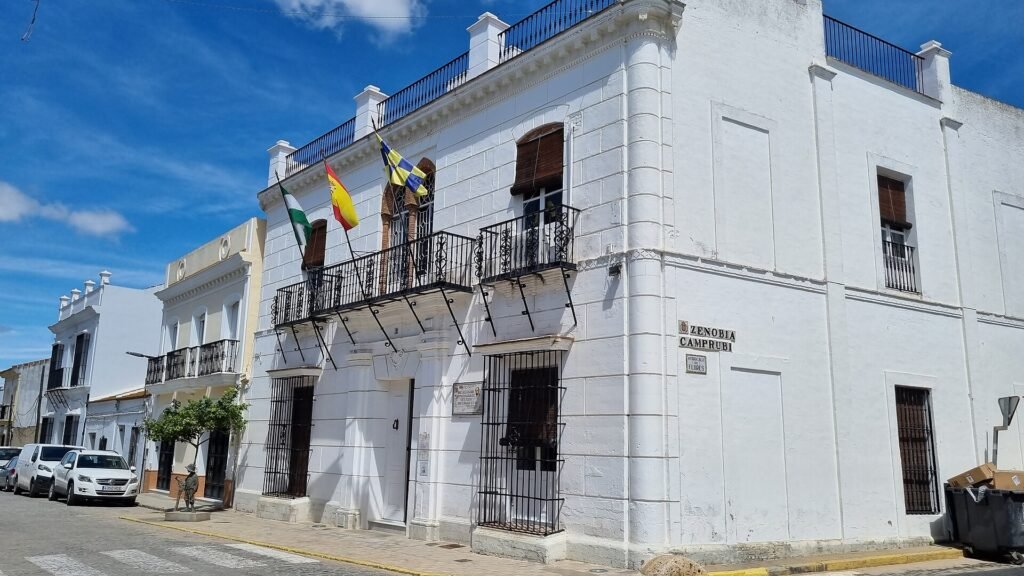
The poet’s birthplace is a different building from the Casa Museo. Juan Ramón was born on 23 December 1881 at Calle Ribera, 2, and lived there until he was about four years old. The house reflects a Moguer linked to river trade and the wine business: its position suited the commercial activities of the Jiménez family near the old port route.
The Casa Natal now serves as a museum and interprets aspects of the town that surrounded the young poet, including the economic activity that connected Moguer to the Río Tinto. Visiting both houses helps avoid treating his entire early life as if it took place in one building. The birth house recalls the family’s commercial beginnings; the later home provides the stronger connection with his growing literary imagination.
Visiting advice: Access to the Casa Natal is managed separately from the main Casa Museo. Check current opening days and prices through Moguer’s official visitor information. Do not assume that admission to one property covers the other.
Read Moguer through its Platero sculptures
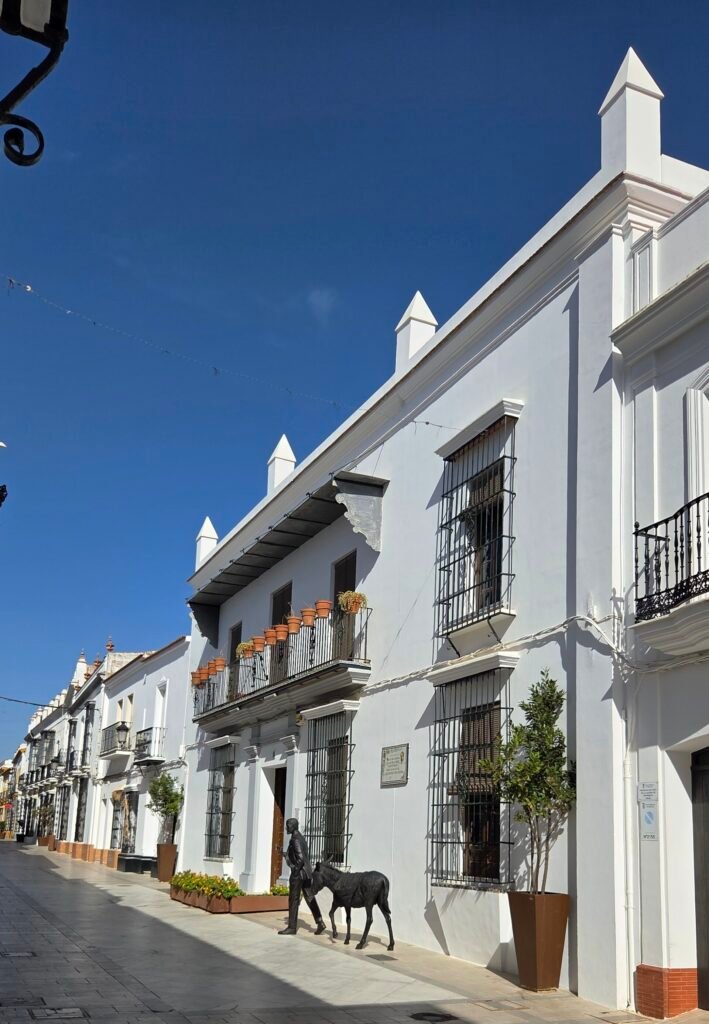
The town has turned part of its literary inheritance into an outdoor experience. The Platero EScultura project places works of sculpture around Moguer, drawing on episodes and imagery from Platero y yo. One recent work outside the Casa Museo pairs the poet with the donkey, but the idea is not to stop at one photograph: other works form a scattered route through the town.
Consider reading a chapter or two before setting out. The book is composed of short, lyrical prose pieces, not a conventional children’s adventure with a straightforward plot. Some pages are tender; others are uneasy or elegiac. Recognising that range makes the sculptures feel less like mascots and more like responses to a complex book.
Look as well for the ceramic plaques containing passages from Jiménez’s writing. They attach words to actual streets, which can be an effective way of noticing ordinary details that a faster sightseeing visit might miss.
Visiting advice: The exterior sculptures and plaques can be enjoyed without an admission ticket. Ask the tourism office for the latest locations of the works; the collection has expanded over time.
Open the sculpture route’s museum starting point in Google Maps
Understand what happened at Fuentepiña
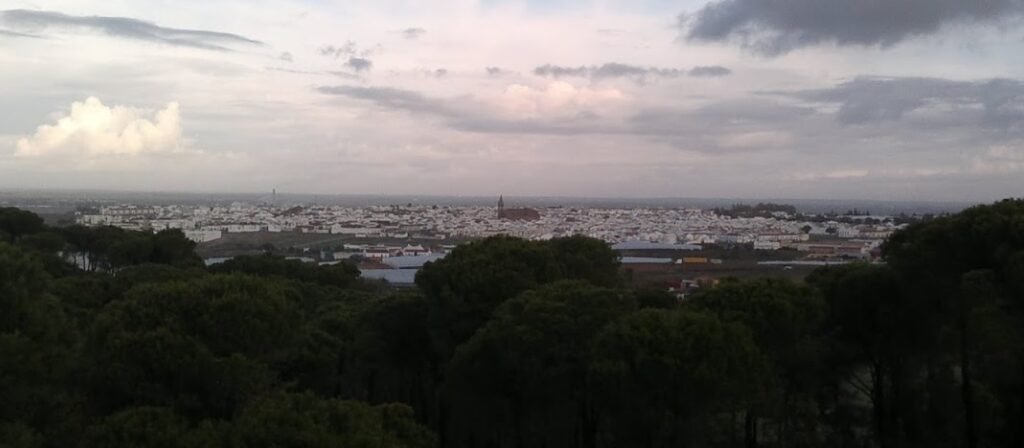
Just outside the built-up centre, the Fuentepiña countryside was deeply important to Jiménez’s memories of Moguer. He spent time at the family’s rural property and drew on the surrounding landscape when writing about Platero. The site became associated in local tradition with the resting place of the donkey that inspired the book.
There is an important change that older travel guides may miss. The famous historic pine at Fuentepiña was damaged and brought down during a severe storm in March 2025. After attempts to preserve it, the municipality began removing the fallen tree in January 2026. The council has discussed preserving elements of the wood as a memorial and replanting a descendant of the pine. Do not plan your trip expecting to see the old tree still standing.
The area remains meaningful for understanding how rural surroundings shaped the writer’s imaginative world, but it is not equivalent to a managed public museum. The setting lies beyond the town centre, and reaching or entering the property may involve access restrictions.
Visiting advice: Confirm current access with the local tourism office before travelling to Fuentepiña, and respect private land, agricultural tracks and any temporary works. The included photograph is a view of Moguer from the Fuentepiña/Nazaret area, not a photograph of the historic pine.
Visit the cemetery respectfully
Juan Ramón Jiménez and Zenobia Camprubí are buried in Moguer’s parish cemetery. For readers of his poetry, a visit can complete the geographical arc from birthplace to family home, remembered countryside and final resting place. Unlike the large monuments elsewhere in the town, the cemetery is a quiet place where the purpose of visiting should determine your behaviour.
Give yourself time to approach respectfully, keep noise low and avoid photographing mourners or private graves. The Foundation’s literary route includes the cemetery as one of its significant sites, but ordinary cemetery opening arrangements can change independently of museum schedules.
Visiting advice: Confirm access hours locally and remember that the cemetery is foremost a place for families to remember the dead, not an attraction operated for continuous tourism.
A simple literary itinerary
Start inside the Casa Museo, where the couple’s lives and collections give you a framework for everything that follows. Then make the short move to the outdoor sculptures and use the town’s literary plaques as invitations to wander. Continue to Calle Ribera for the Casa Natal, comparing the two very different phases of the family’s history.
If you have extra time and confirmed access, consider Fuentepiña as a separate journey rather than squeezing it into the central walk. The cemetery is another optional stop, best approached with the appropriate respect and timing. This leaves room to experience the town in between the formal sites rather than racing from pin to pin.
What to know before you go
- Read a little first: A handful of Platero y yo chapters can transform the way you notice the streets and countryside.
- Do not mix up the houses: The Casa Museo at number 10 Calle Juan Ramón Jiménez and Casa Natal at number 2 Calle Ribera are separate institutions.
- Check two sets of visitor information: Tickets and hours may differ between the two properties.
- Include Zenobia: Her translations, letters and independent work make the museum far richer than a single-author display.
- Verify Fuentepiña access: The fallen pine is no longer a standing landmark, and the rural property should not be approached as unrestricted public space.
Literary Moguer is not only about identifying a familiar name on a plaque. It invites a slower kind of reading: comparing the town’s buildings and landscapes with the layers of memory, tenderness and loss that Jiménez set down on the page.