Ayamonte feels different from the resort towns further along the coast. Here the Guadiana River meets the edge of the Atlantic, Portugal is visible across the water, and the historic centre spreads between an open riverside and steeper lanes uphill. A day can be divided between church towers, tiled squares and a ferry crossing; with more time, you can reach wide beaches and wetlands without leaving the municipality.
This guide concentrates on experiences actually in Ayamonte municipality. Isla Canela and Punta del Moral are part of Ayamonte, not separate municipalities. The places below work as individual stops rather than a race around a checklist; several are best appreciated from the outside, and access to cultural buildings can depend on events or worship.
1. Start in Plaza de la Laguna
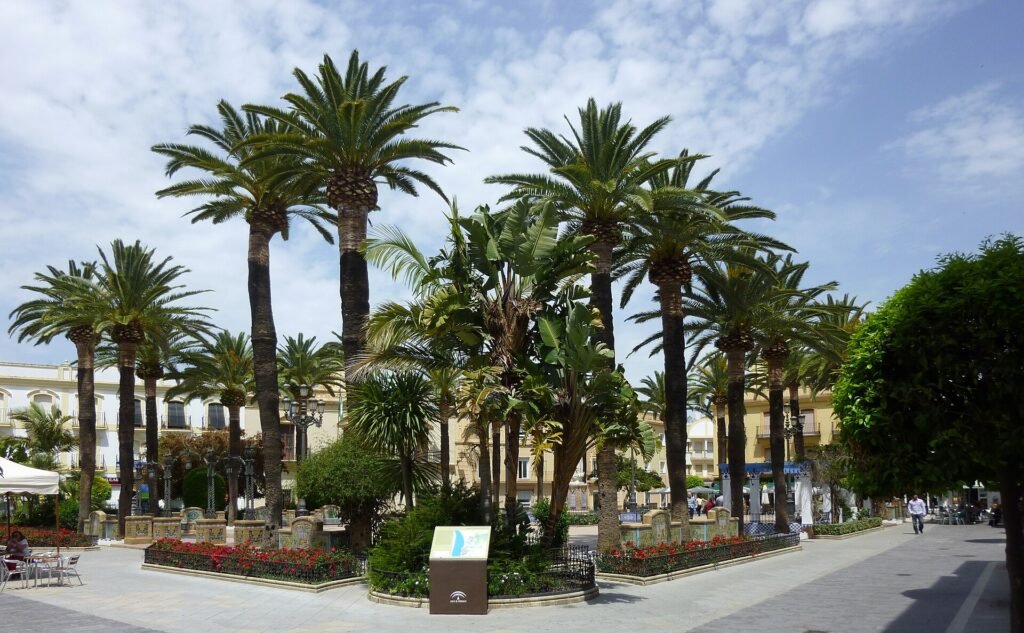
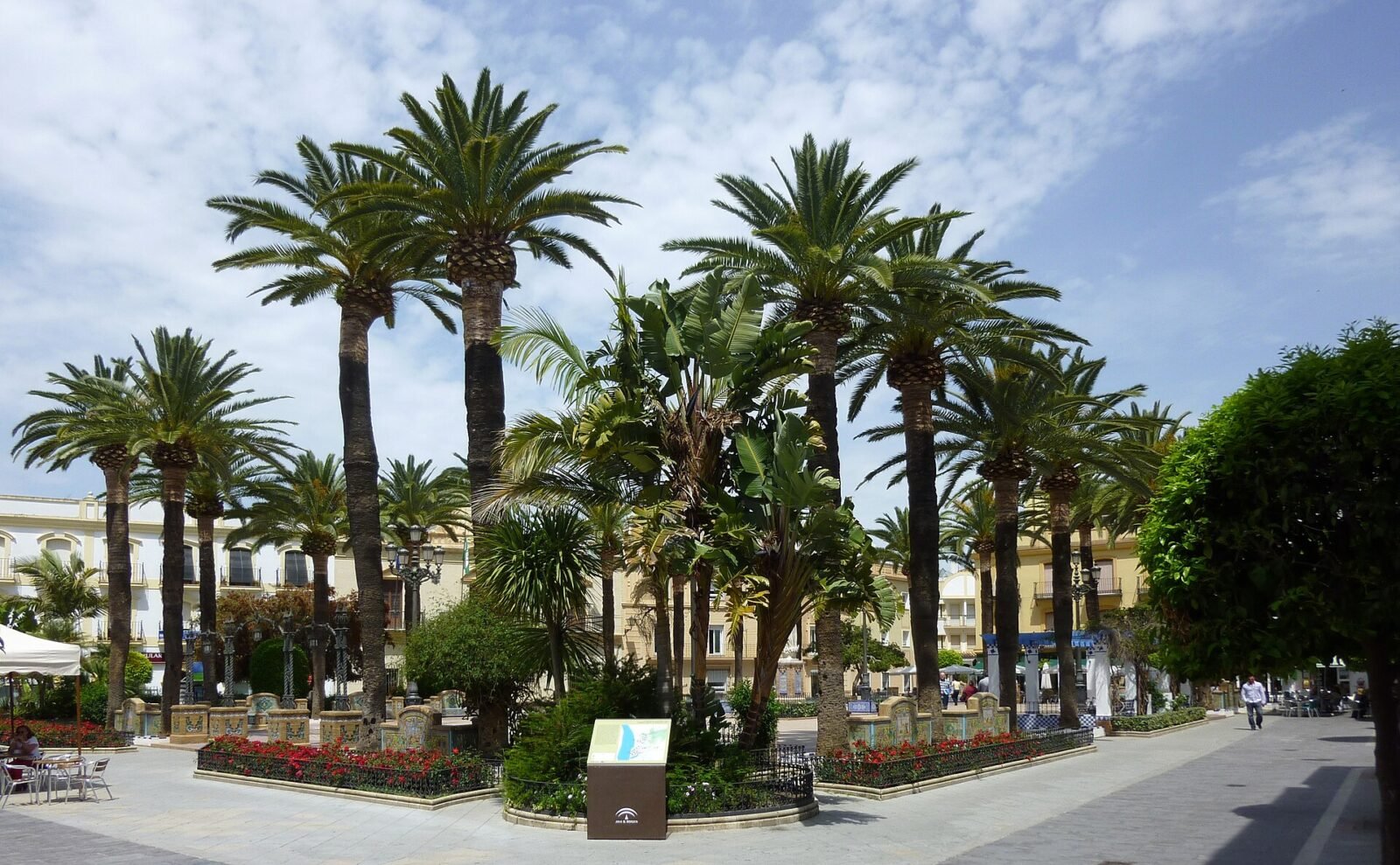
Plaza de la Laguna is a useful introduction to Ayamonte because it is both a landmark and an everyday meeting place. Look at the ceramic work on the benches: the decorative scenes offer clues to a maritime town whose identity reaches well beyond the beach. Palms and neighbouring façades give the square a recognisable character, without needing an entrance ticket or a fixed timetable.
From here, wander into the commercial streets rather than following the waterfront immediately. In the morning, shopping and errands give the centre a different rhythm from the café terraces later in the day. The municipal tourist office is nearby if you need a current map or information on an event.
2. Follow the Paseo de la Ribera towards the Guadiana
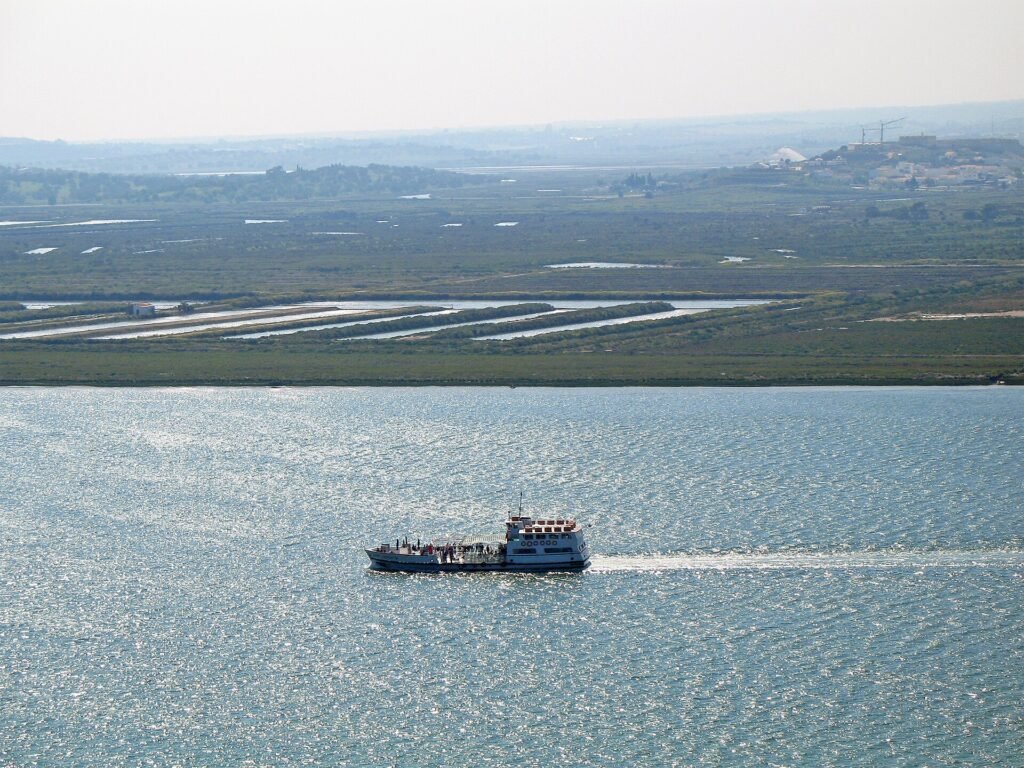
The Paseo de la Ribera and nearby waterside stretches show why Ayamonte is a border town rather than just a coastal holiday base. Boats, open sky and the Portuguese bank form the backdrop to a walk that needs no complicated planning. It is a particularly good stop after the tighter streets around Plaza de la Laguna.
Stay alert to the distinction between the promenade, ferry embarkation area and working quays: they have different uses and some areas are not pedestrian sightseeing space. The riverfront is easy to enjoy as a short circuit, but a longer walk may appeal to anyone interested in watching the changing activity on the Guadiana.
3. Visit Nuestra Señora de las Angustias
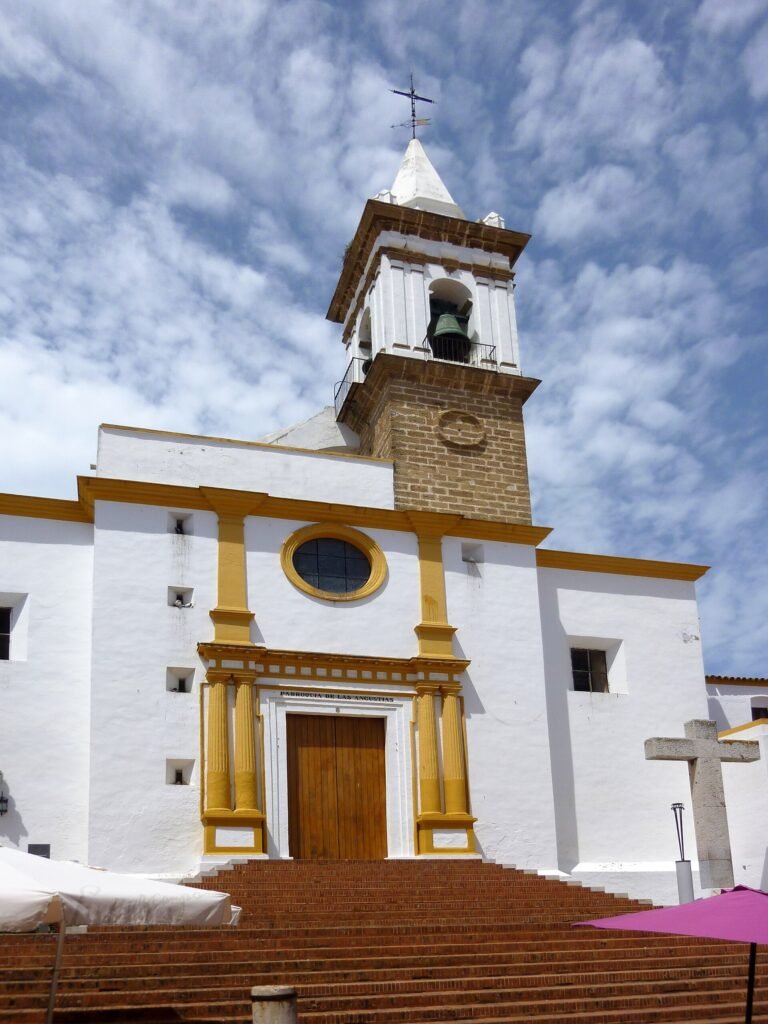
The white façade and bell tower of the Church of Nuestra Señora de las Angustias form a familiar image of central Ayamonte. The church is linked to the town’s patron saint and local religious celebrations. Its history includes alterations after the Lisbon earthquake of 1755, while its interior retains important devotional and artistic elements.
This is still an active place of worship. Approach it as a cultural and religious visit, not a permanently open museum: confirm whether visitors are admitted at your preferred time and avoid interrupting services. Even when the interior is unavailable, the exterior and neighbouring streets are worth seeing.
4. Walk uphill through La Villa to El Salvador
La Villa shows an older, more irregular side of Ayamonte. Streets rise away from the lower town towards white houses, small corners and the parish church of Nuestro Señor y Salvador. The slopes are part of the experience: from above, the relationship between the river, town and distant Portuguese shore becomes easier to understand.
The church occupies one of the older parts of Ayamonte, and its architecture reflects medieval origins followed by later changes. Visitors should not assume daily sightseeing admission; the municipal church guide restricts access substantially. If you are not attending worship, plan to appreciate the building and surrounding neighbourhood from outside. Take comfortable shoes; this is the part of the route least suited to an entirely flat walk.
5. Look inside Casa Grande when exhibitions are open
Casa Grande, on Calle Huelva, is a substantial eighteenth-century former residence now used for municipal cultural activities. Its courtyard-based layout is an opportunity to see a different chapter of Ayamonte’s history: local wealth, architecture and civic life instead of fortifications and fishing boats.
Check which rooms or exhibitions are open before making it a fixed appointment. A cultural venue can have partial access or temporary installations; do not expect every historic space in the building to function as a conventional museum. It makes a sensible short addition to a central walking route.
6. Add Parque Prudencio Navarro to a short family walk
Ayamonte’s central botanical park offers greenery close to the streets and riverfront. The local tourism office describes a collection of many tree and shrub species, making it a practical choice when you want a pause rather than another interior visit.
This is not a substitute for a natural wetland excursion: it is an urban park that works for a breather, a relaxed stroll or a short stop with children. Check local access arrangements if visiting during refurbishment or a municipal event.
7. Understand the shoreline at Torre de Canela and the Roman mausoleum
Away from the historic centre, Torre de Canela recalls the need to watch over this stretch of coast. The municipality describes it as a defensive tower whose role changed as the coastline shifted. Close to the road connecting town and Punta del Moral are the remains of a Roman mausoleum, a quieter reminder that fishing and coastal trade have much older roots here.
These are not two attractions to assume you can enter whenever you arrive. Treat them as heritage stops whose exterior setting and information may be more readily accessible than any interior. Use marked approaches and avoid crossing unsafe roads or fenced archaeological ground.
8. See how tides once powered Molino de El Pintado
Molino de El Pintado is a former tidal mill: water movement, not a river current from the mountains, once powered its milling machinery. Its position near the marshes makes the mechanics easier to picture when the surrounding channels are visible.
For travellers interested in engineering or landscapes, it offers something less predictable than a church or a beach. Public access and interpretation may have seasonal or operator-specific arrangements, so check the current status with tourism services rather than relying on an old schedule.
9. Choose between Isla Canela and Punta del Moral for time by the sea
Ayamonte’s Atlantic shore includes broad sandy beach areas with different characters. The more developed Isla Canela sections are convenient when you value nearby services; around Punta del Moral, a fishing settlement and modern marina sit near the coast. This makes the beach an addition to a historical visit rather than the only reason to come.
Allow time to travel from the town centre to the coast. Check weather, flags and the presence of lifeguards on the particular day; access arrangements and summer facilities should never be assumed to apply year-round. For an extended comparison of the beach sections, a dedicated coastal guide is more useful than trying to cover all of them in a single afternoon.
10. Consider the short ferry journey across the border
The ferry between Ayamonte and Vila Real de Santo António is a distinctive cross-border experience. A river crossing can make the international geography of the town tangible in a few minutes; it also gives you a view that is very different from the town’s own promenade.
The destination is in Portugal, outside Ayamonte municipality, so this is an optional excursion rather than an additional Ayamonte sight. Check the operator’s current schedule and boarding point. Remember the one-hour time difference between mainland Spain and mainland Portugal when arranging onward plans or a return crossing.
How to plan a visit without rushing
For a straightforward first visit, start around Plaza de la Laguna, see Las Angustias, continue to the riverfront and eat in the centre. Add La Villa when you have energy for slopes. Casa Grande, the old tower and the tidal mill work better as optional interests than obligatory stops on a short day.
If you are staying at Isla Canela, check the local bus service before planning an evening in central Ayamonte: service patterns differ between weekdays, weekends and seasons. The municipal tourism office lists walking, cycling, bus and taxi options. Visitors relying on step-free routes should favour the lower riverfront and independently confirm the accessibility of older churches and La Villa streets.