Food in Ayamonte begins with the sea, but it does not end there. The town’s position beside the Guadiana estuary helps explain why fish, shellfish and preserved seafood matter so much to its cooking, while nearby inland traditions contribute Iberian pork and other dishes. For visitors, the more useful question is not simply “Which restaurant is best?” but what to order, which part of town suits the meal and how to recognise a menu worth trying.
This guide focuses on food in Ayamonte municipality: central Ayamonte, the Canela neighbourhood and Punta del Moral. The named restaurants below are practical starting points documented in municipal information, not a claim that they are currently the highest-rated or guaranteed to serve particular dishes every day.
Start with gamba blanca de Huelva
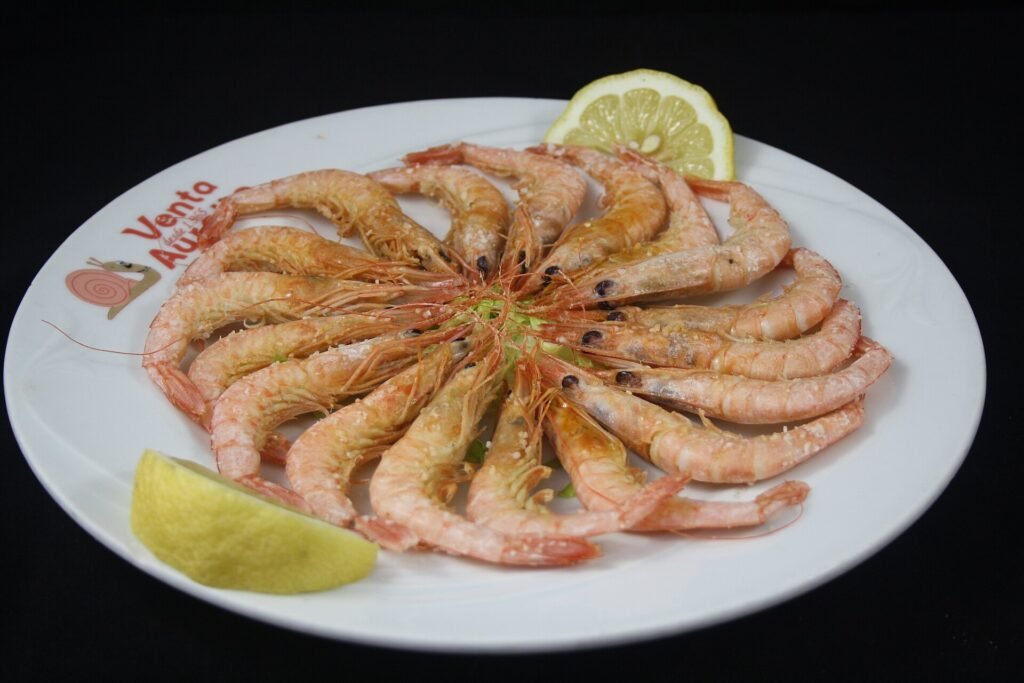
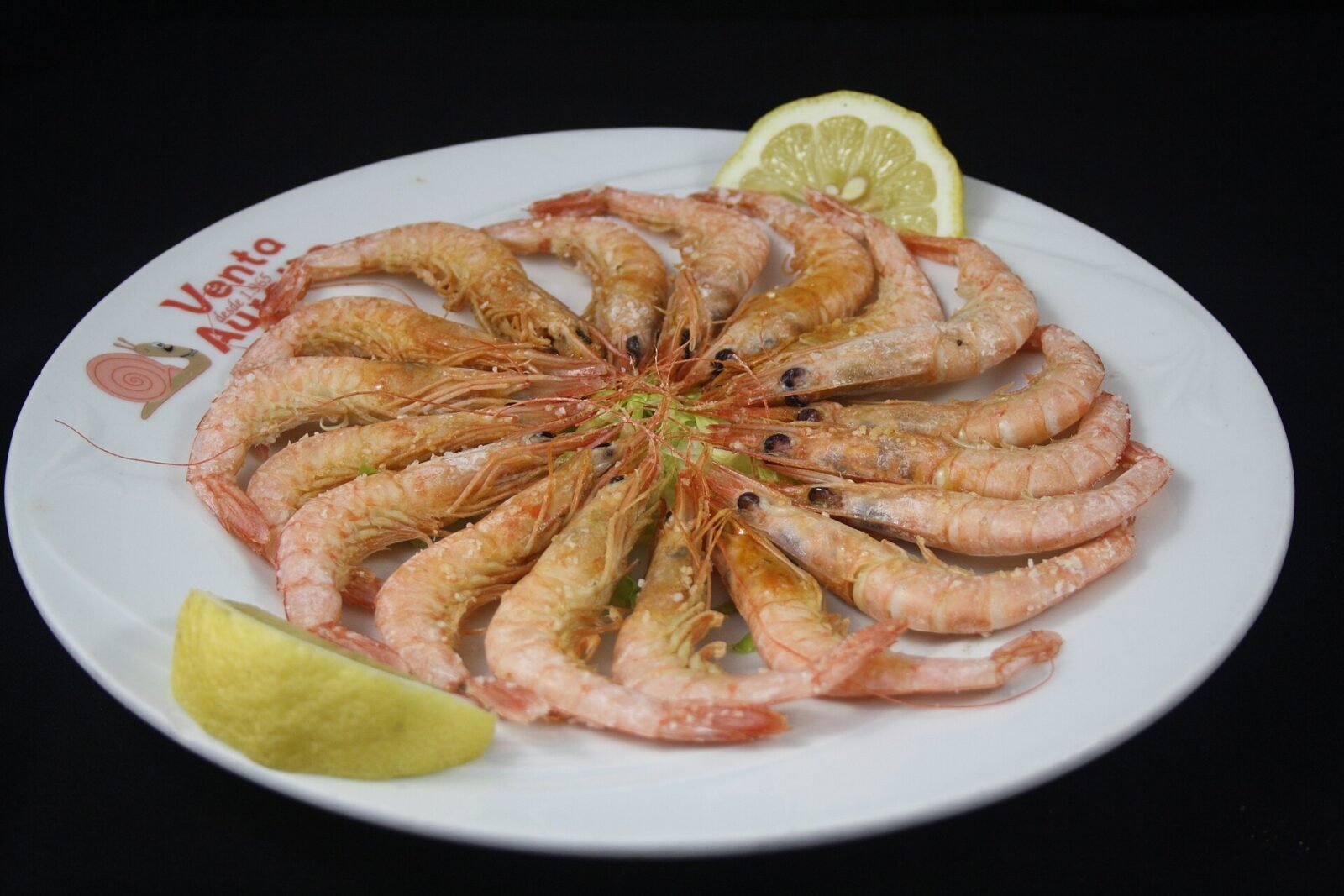
White prawns from the coast of the Province of Huelva are among the products worth looking for on Ayamonte menus. Simply cooked or served cold, they are usually ordered to share rather than treated as a complicated dish. Their appeal is the seafood itself: heavy sauces are not necessary to understand why the ingredient matters locally.
Before ordering, ask whether the prawns are fresh or frozen, how they are prepared, and whether the listed price is for a plate, a portion or weight. A photograph of a platter tells you very little about the price or current origin. The image included for this section illustrates the dish; it is not a photograph of food served by a named Ayamonte restaurant.
Order coquinas when they are available
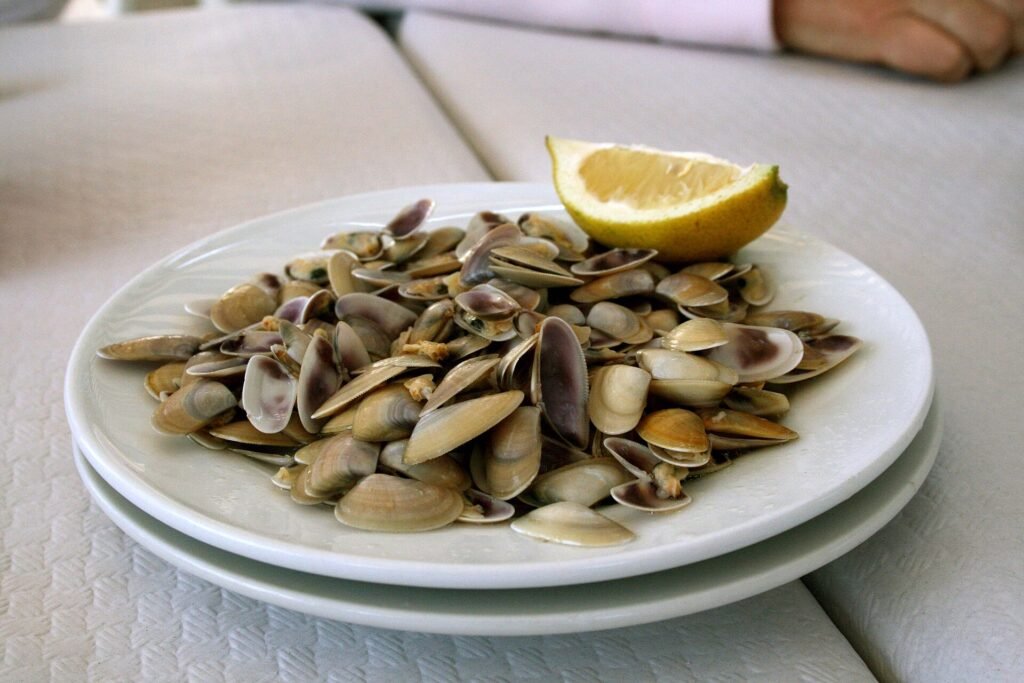
Coquinas are small clams associated with Atlantic coastal cooking. They are often served in a pan with garlic and a simple sauce, making them particularly appealing for sharing at the start of a meal. The shells pile up quickly, so a modest-looking portion can be more substantial than it first appears.
Availability depends on supply and harvesting rules, and the dish may not appear every day. If the menu says “seasonal” or the waiter suggests an alternative, that is more believable than a promise of permanent availability. People with shellfish allergies should confirm preparation and possible cross-contact before ordering.
Look beyond prawns: choco, skate and fish preserves
Choco is cuttlefish, prepared in many ways across the Province of Huelva. In Ayamonte you may encounter it grilled, fried or in a stew. Another local preparation highlighted in the official gastronomy brochure is raya en pimentón, skate cooked with a paprika-based sauce. It is a more distinctive order than automatically choosing fried calamari wherever you go.
The town also has a strong relationship with preserved fish: tuna, mackerel, salted products and mojama can appear as starters or in shops. These foods are helpful for understanding a working coastal economy, not merely tasting something fashionable. Ask the staff how a house version is served and whether it comes as a tapa or a full plate.
Eat where it suits your day: three useful areas
Plaza de la Laguna and nearby centre: best for combining an old-town walk with tapas and a choice of establishments in close proximity. Paseo de la Ribera: a natural option when you want a meal around a riverside stroll, though waterfront location alone does not guarantee better cooking. Punta del Moral: makes sense after the beach or marina, especially if fish and shellfish are your priority.
A simple way to avoid a disappointing meal is to read the displayed menu and ask about portions before sitting down. A relaxed weekday lunch in the centre is a different experience from a high-season dinner near the coast, and both can be enjoyable for different reasons.
A few named restaurants to investigate
The town council’s 2025 Ruta de la Tapa listing confirms several central establishments. La Puerta Ancha is recorded at Plaza de la Laguna, 14; Mesón Plumas at Calle José Pérez Barroso, 14; Mariscos Romero on Calle Padre Álvarez; and Cervecería El Estero around Plaza de la Laguna. Each gives you a concrete name to check rather than a made-up recommendation.
These listings establish participation in a past town event, not current opening status, ratings or menu specialities. Look up the establishment directly before going; check whether it is taking reservations and whether its current menu fits your budget. There is no reason to order a specific former festival tapa unless the restaurant independently still advertises it.
Around Canela: neighbourhood restaurants, not just resort dining
Ayamonte’s municipal restaurant directory also lists La Granadina and Restaurante La Rana in the Barriada de Canela. These can be useful starting points if you want to look beyond the historic centre and see another side of the municipality.
Their inclusion here is not an endorsement of their present food quality or a guarantee that they are currently trading. Check directly before travelling out of town for a meal. If you are coming from Isla Canela beach, distinguish the older Canela neighbourhood from the resort coastline when arranging transport.
Visit the Mercado de Abastos for ingredients and context
The Mercado de Abastos offers an opportunity to see the produce and everyday shopping habits behind restaurant menus. A market visit is most rewarding if you look at what sellers actually have in stock and let that inform what you try later, instead of arriving with a fixed shopping list borrowed from a travel blog.
It is a working food market, not a guaranteed all-day street-food hall. Check the opening day and current entrance before setting out, and be considerate when photographing traders or produce. You can combine a short market stop with a walk through Ayamonte’s commercial streets.
How to order tapas and seafood confidently
Portion labels matter. A tapa is usually the smallest serving, a media ración is a medium share and a ración is larger, but the actual quantity varies from one venue to another. If two people want to sample several dishes, ask the staff whether two or three tapas plus one larger plate is sensible. It is easier to add another order than to finish a table covered with too much food.
For seafood priced by weight, ask for an estimate before the kitchen prepares it. Request an itemised bill when the wording is unclear. Travellers with allergies or dietary restrictions should speak directly with the restaurant about ingredients and shared cooking surfaces; menus alone do not always cover cross-contact.
When and where to eat: a flexible food day
For a food-focused day, visit the market earlier when it is active, take a short walk around Plaza de la Laguna and choose a first small meal in the centre. Leave time to explore the Guadiana front rather than treating lunch as a fixed sightseeing stop. Later, consider dinner in the centre or an alternative near the coast if you are already spending the afternoon at Punta del Moral.
Because businesses can change and seasonal service is common near beach areas, make at least one confirmed booking if eating at a particular establishment matters to your trip. Otherwise, let open menus and local supply guide the day. The best meals often come from a clear idea of the ingredients you want to try and a willingness to ask questions.