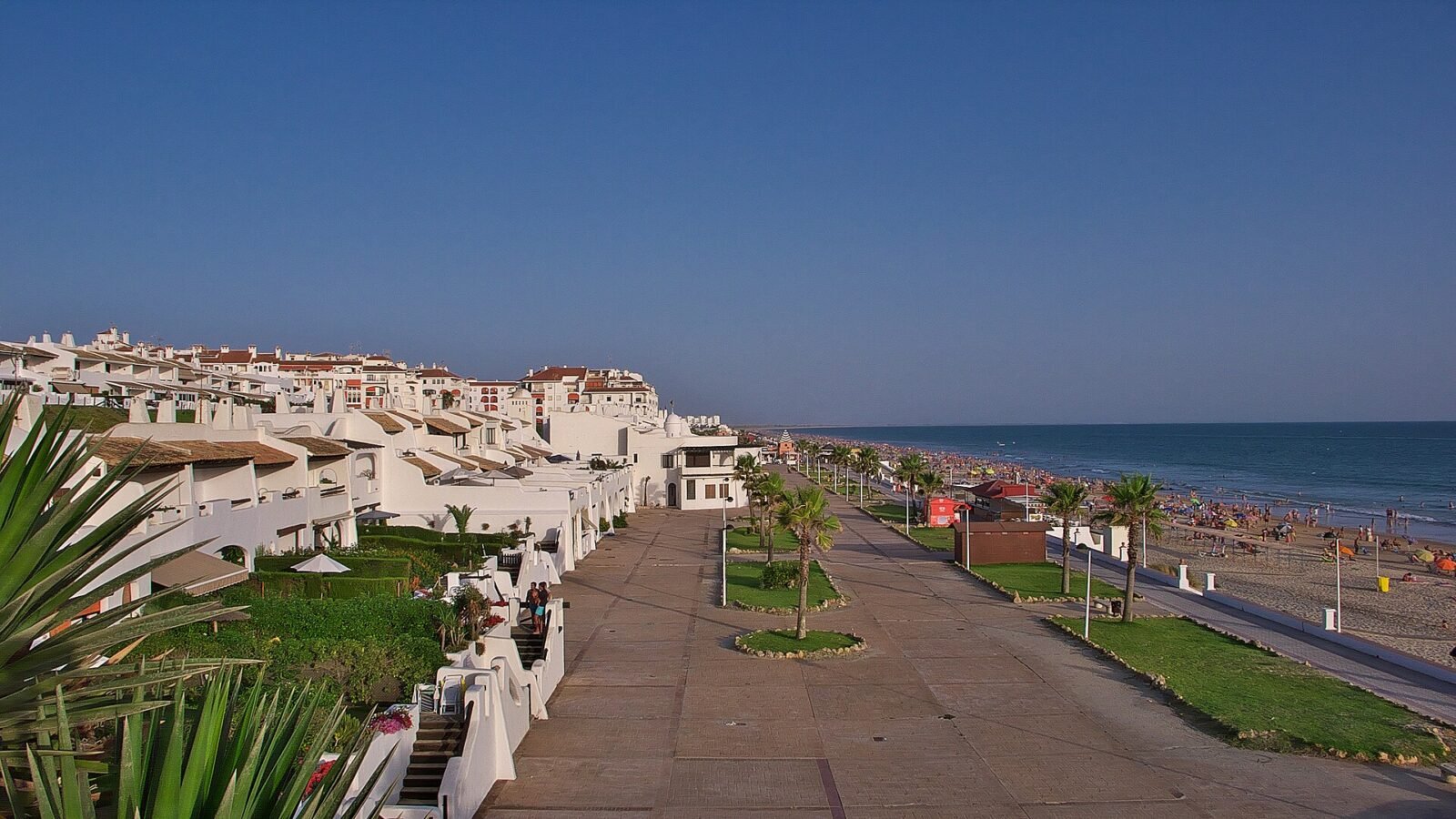
Matalascañas is Almonte’s Atlantic beach destination, but it is not interchangeable with the quieter villages of the inland municipality or with the protected wilderness beside it. Its long sandy waterfront, holiday atmosphere and connection to Doñana make it best suited to travellers who want beach time with optional nature excursions.
For a relaxed visit, plan around the beach’s real conditions rather than an idealised postcard. Waves, tides, access routes, erosion and seasonal services all affect the experience, while the resort feels very different in summer and in the quieter months.
Choose your stretch of Matalascañas beach
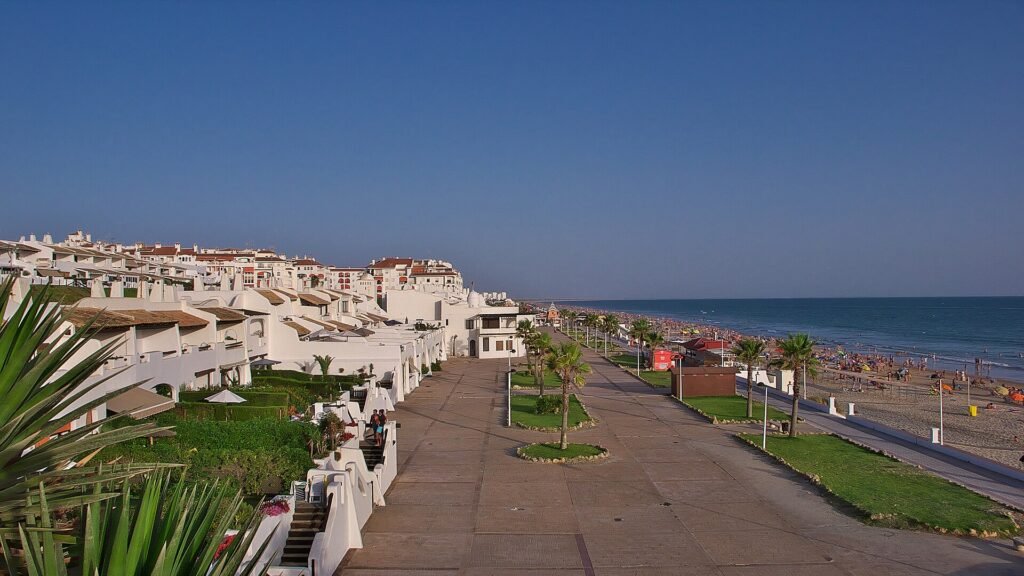
The beach is the main reason many travellers come. Instead of aiming for one exact pin, decide whether you prefer access near the most developed resort areas, with shops and eating options, or a longer shoreline walk in a quieter direction.
The amount of exposed sand changes with the tide, and coastal conditions may affect certain entrances. Avoid treating a beach map as a guarantee of facilities: toilets, lifeguards and adapted access are often seasonal or subject to local notices.
If swimming, follow posted flags and advice from lifeguards where they are present. The Atlantic deserves more caution than a sheltered hotel pool, particularly with children.
Find the curious Torre de la Higuera
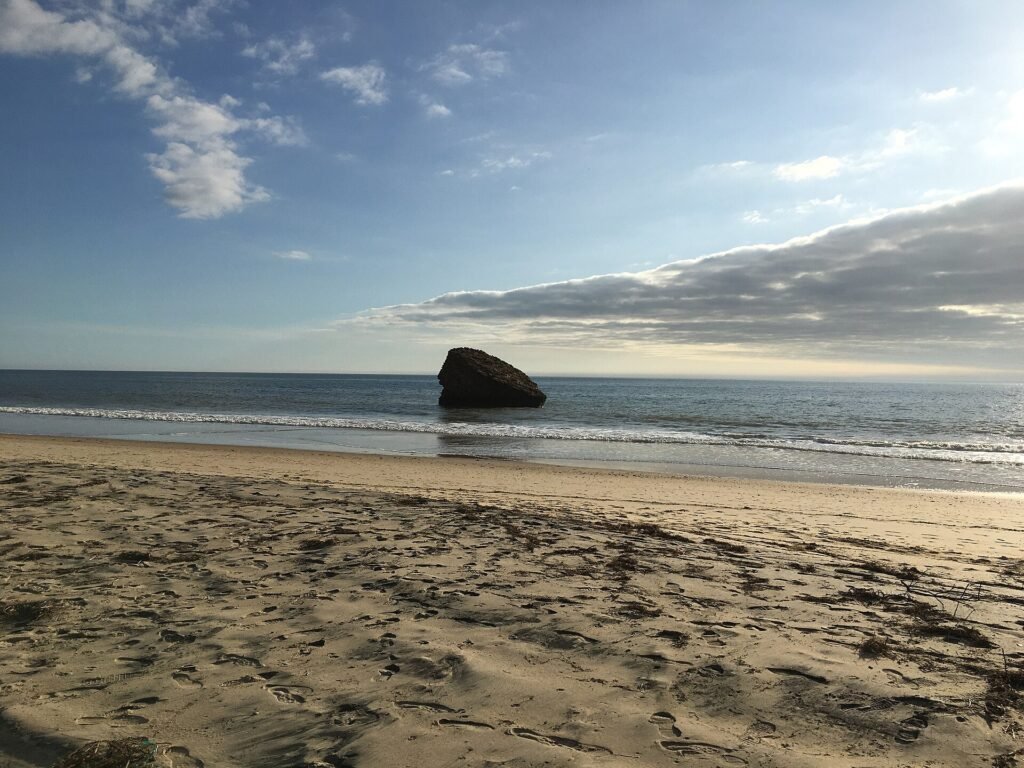
One of the beach’s most distinctive features is the overturned remnant of Torre de la Higuera, a former coastal watchtower. The ruined structure appears almost like a rock sitting in the water, but its story belongs to historic coastal surveillance and the changing shoreline.
The visual effect depends on the tide. Approach only from a safe position; do not climb on the remains or enter the water around them in rough conditions. It makes a good short historical stop on a beach walk rather than an attraction needing a formal tour.
Walk through the resort rather than only along the sand
Matalascañas has developed beachside residential and holiday areas, pedestrian stretches, local businesses and gathering places. A walk in the evening offers a view of its everyday social life: people returning from the shore, children playing, and families choosing somewhere to eat.
Paseo de Caño Guerrero and the central resort areas are useful points of orientation. The choice of open shops and restaurants changes outside high season, so keep dining plans flexible if travelling in winter. A quieter town is not necessarily a problem, but it means a different sort of holiday.
Look for the Balcón del Atlántico and lighthouse
The Balcón del Atlántico area is associated with the Parque Dunar and views towards the coastline. The Matalascañas lighthouse gives this end of the resort a useful visual landmark and a different perspective from the busier beach accesses.
It is a place to enjoy the coastal setting rather than a promise of access inside the lighthouse. Check the state of paths and viewpoints after storms, and do not cross barriers or unstable slopes just to get a photograph.
Combine the beach with an introduction to Doñana
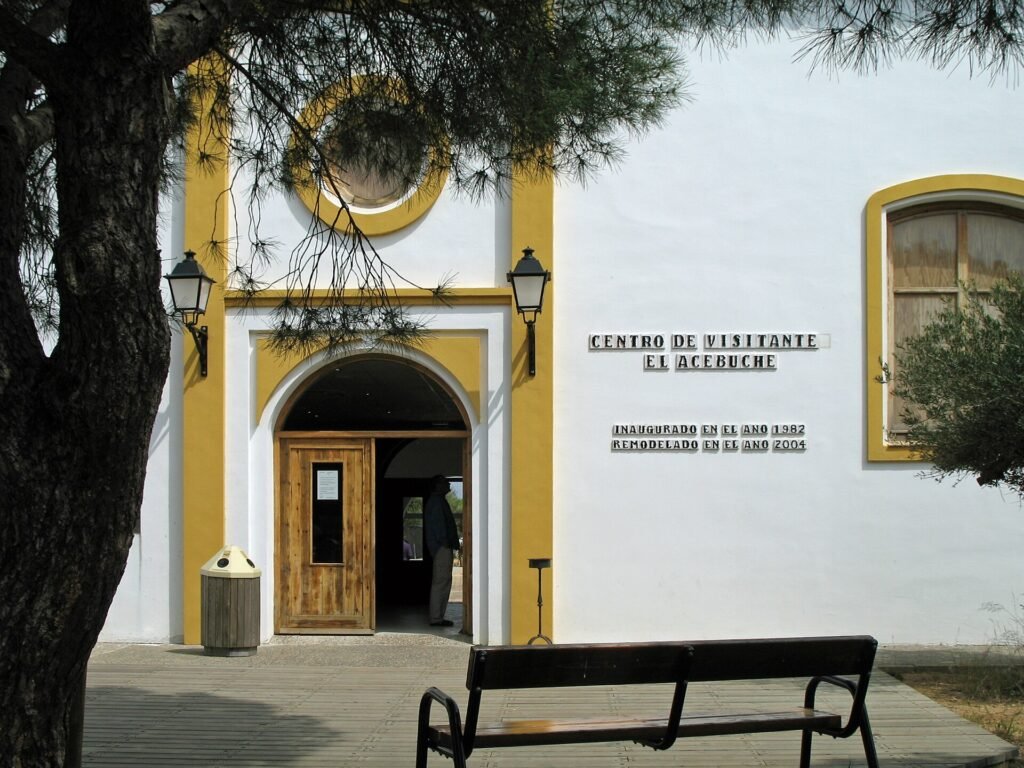
A beach holiday here can include nature without attempting to enter restricted parts of the national park. Centro de Visitantes El Acebuche provides official interpretation and designated trails inland from Matalascañas, together with information about authorised guided excursions.
The centre needs its own journey from the resort, including an approach off the A-483. It is better treated as a planned half-day than an incidental promenade stop. Park access does not mean free wandering through dunes, marshes or wildlife-sensitive areas.
Should you visit the less developed coast?
The coastline beyond the resort looks inviting on photographs, but natural beaches are not necessarily easy day trips. Some stretches have longer approaches, little shade or few services, and protected dunes should never be crossed away from permitted trails. The Cuesta Maneli area is a separate excursion, not part of Matalascañas’s urban beach frontage.
If you choose an additional nature walk, check the official location, permitted routes and municipality boundary before scheduling it. Do not improvise access through sand tracks or assume a coastal path continues safely for kilometres. In hot weather a short, legal walk with water is much better than an ambitious detour.
Families, accessibility and safety
- With young children: choose a beach access near your accommodation and confirm current lifeguard coverage rather than relying on last year’s opening calendar.
- With limited mobility: ask local tourism services which boardwalks and adapted beach entries are presently usable; storm damage may affect routes.
- For swimming: pay attention to waves, currents, local notices and flags; conditions vary by day.
- For beach photography: avoid unstable dune edges and watch the incoming tide around low-lying areas.
- For summer: bring shade, water and sun protection; exposed sand becomes uncomfortable in intense heat.
How to get to Matalascañas
The resort sits on the coastal end of the Almonte–El Rocío corridor and is reachable by road. Buses connect parts of the municipality and larger towns, but service patterns and frequency vary by date. Check the relevant operator’s current schedule before travelling, especially if planning a return after dinner.
Drivers should use designated parking and account for busy summer traffic. Visitors based in Huelva or Seville can plan a day at the coast, but a stay in Matalascañas works better if you want time on the beach without constantly watching the clock.
Who will enjoy it most?
Matalascañas suits families seeking a straightforward Atlantic beach break, visitors who enjoy walking along the shoreline, and travellers who want a coastal base for a separate Doñana outing. It is less suitable if you expect a historic old town filled with monuments or a guarantee of year-round resort services.
Give the place the kind of visit it is good at: a generous beach walk, time to sit by the sea and, when conditions allow, one carefully planned nature experience nearby.