Almonte covers three travel experiences that feel almost like different destinations. There is the working Andalusian town itself, where wine-growing history and devotion to the Virgen del Rocío shape public life; El Rocío, the sandy-street pilgrimage village beside the marshes; and Matalascañas, a beach resort looking out over the Atlantic. Connecting them is the protected landscape of Doñana.
It is worth resisting the temptation to treat Almonte simply as a stop on the way to the coast. The contrast between its town squares, the quiet edge of the wetlands and the sea is the reason to explore this municipality properly. Choose a few of the following experiences rather than attempting to fit everything into a hurried afternoon.
Start in Plaza Virgen del Rocío
The main square is a sensible place to begin: its scale and architecture introduce Almonte as a town with its own civic identity, rather than only a gateway to a national park. Walk the surrounding streets, look at the white façades and notice the relationship between the church, town hall and public space. This is where local life is easiest to understand on foot.
Take a slow circuit before setting off to other sights. Many of Almonte’s small landmarks are best appreciated together rather than treated as isolated destinations.
See the Church of Nuestra Señora de la Asunción
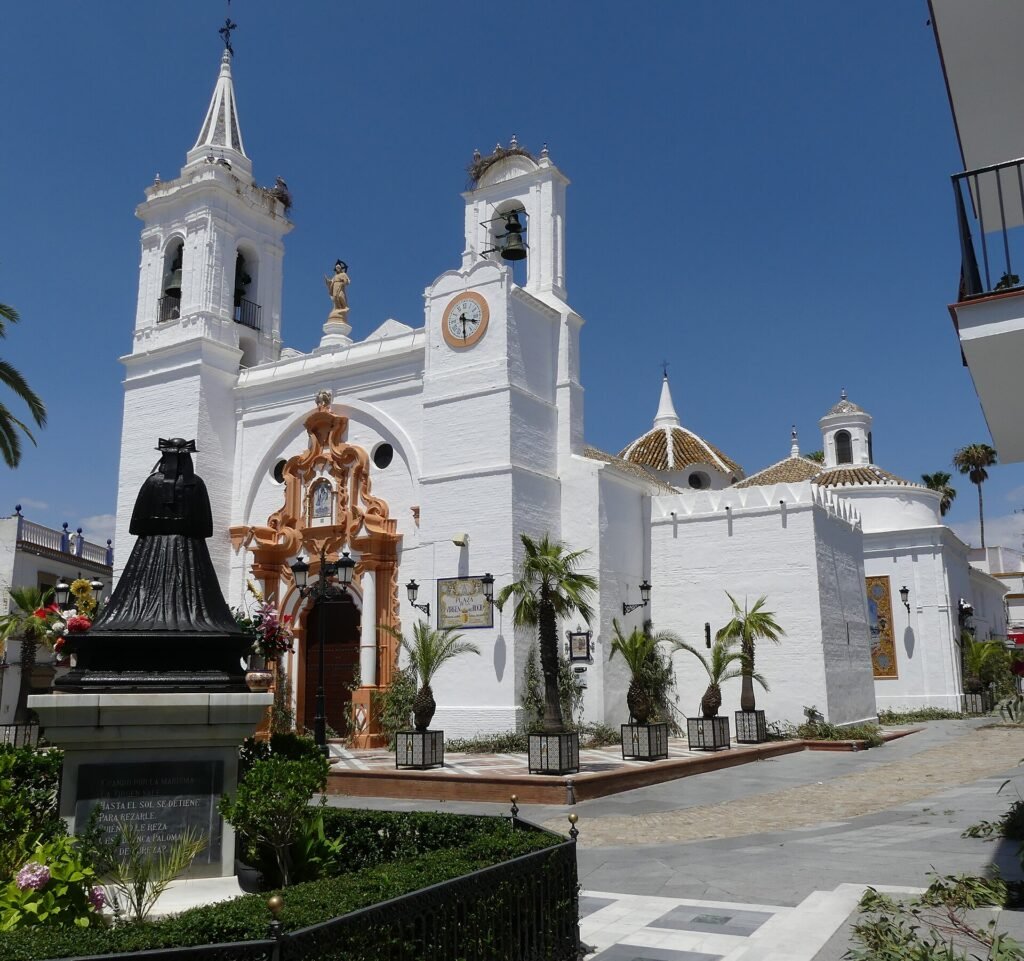
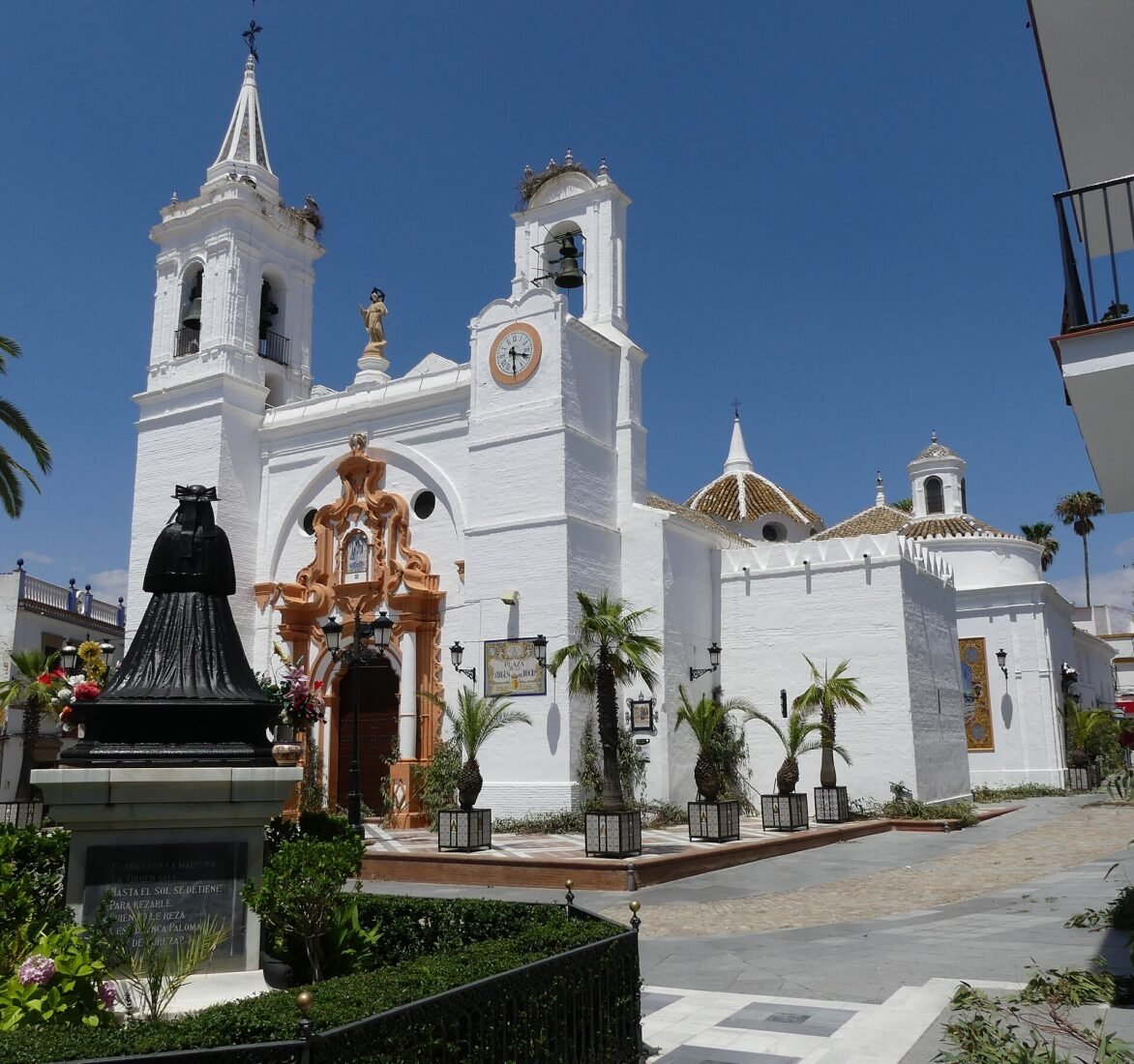
The parish church sits at the heart of Almonte’s religious history. Its present appearance reflects alterations and rebuilding across several centuries, including changes following the Lisbon earthquake of 1755. Inside and outside, look for the interplay between traditional Andalusian church design and later Baroque details.
There is a particularly important reason to visit in 2026–27: the revered image of the Virgen del Rocío was transferred here from El Rocío on 19–20 August 2026 and is expected to remain in Almonte for approximately nine months. This changes where pilgrims should go to see the image. Consult the managing brotherhood’s announcements for the current situation and worship arrangements; access for sightseeing can be affected by services.
The square is also a public gathering place. Keep entrances clear, avoid taking photographs during services unless expressly permitted, and dress respectfully.
Follow Almonte’s cultural and agricultural story
The municipal heritage trail points visitors towards the town hall, the Museo de la Villa and the Museo del Vino. Taken together, these places tell a different story from the famous pilgrimage: local livelihoods, community celebrations, wine production and the way a rural town has changed.
The wine museum is particularly relevant in the Condado area, where vineyards form part of the agricultural landscape. Check current opening information directly before making it a fixed stop; museum services and guided visits may change. The museum and the old town make a better pairing than attempting to visit them between timed Doñana activities.
Look for the routes of the pilgrimage and the horses
Almonte’s tourist routes include a route associated with the Virgin’s periodic journey, another connected to the traditional Saca de las Yeguas, and a route linked to woodland and wine-related work. These are good ways of reading the town beyond its individual buildings: streets acquire meaning through the ceremonies and occupations that use them.
If you visit during a major religious celebration or the horse-gathering season, expect altered traffic, crowded public spaces and a very different town from an ordinary weekday. Do not approach animals or enter managed areas without authorisation.
Explore El Rocío without rushing
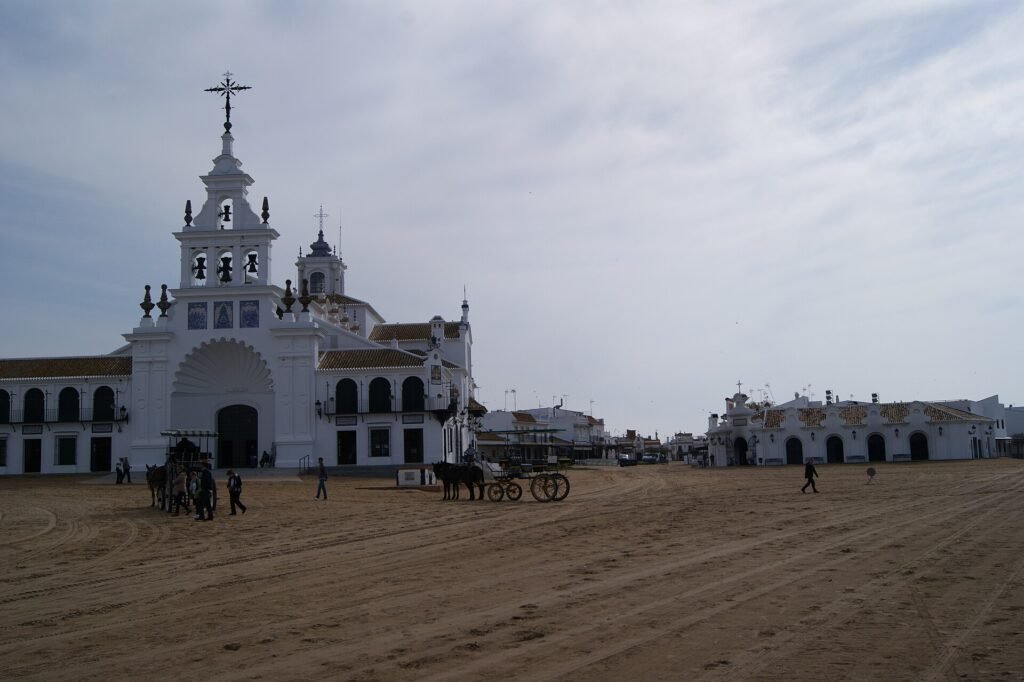
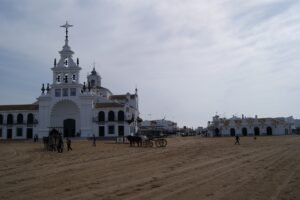
El Rocío belongs to Almonte municipality but has a distinct appearance. Broad sandy streets, low white buildings and the prominent sanctuary make it unusually memorable. Its identity has been shaped by pilgrimage and equestrian traditions, although outside the busiest celebrations it can feel remarkably quiet.
Begin around the sanctuary and continue towards the marshland edge. Remember that the 2026 transfer means the Marian image is temporarily in Almonte’s parish church, not automatically in the sanctuary. A visit to El Rocío remains worthwhile for its architecture, landscape and local history.
Watch the light change over the marshes
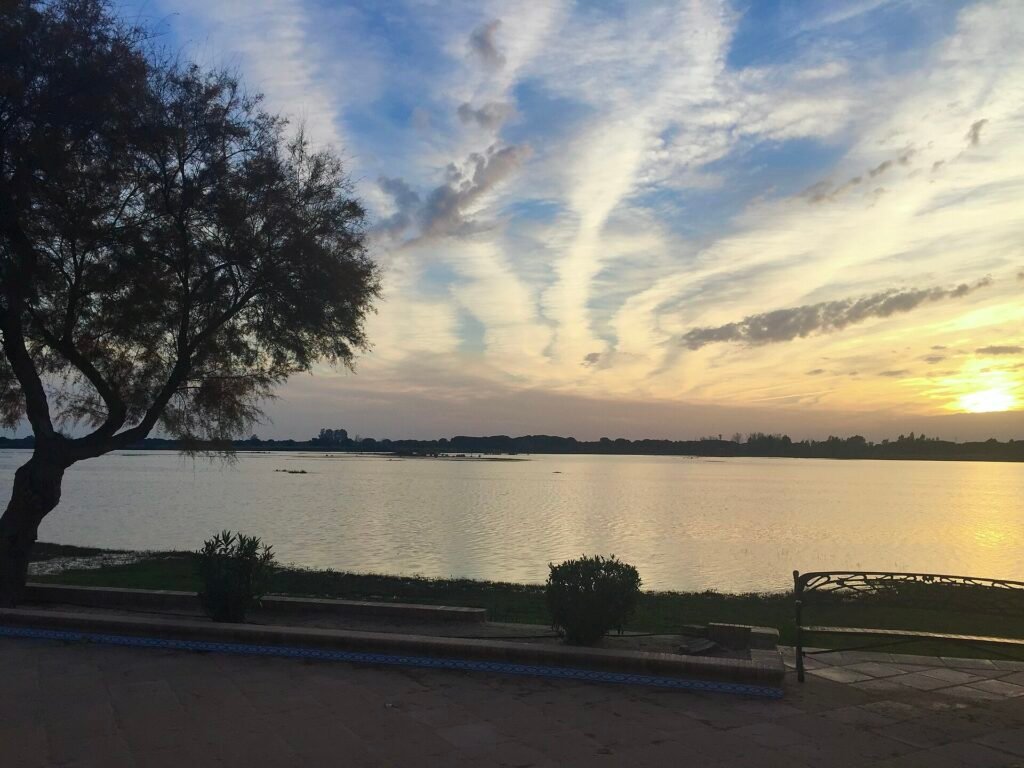
At the edge of El Rocío, the marshes introduce Doñana’s changing water landscape. The view will not be the same in every season: water levels, vegetation and birds vary substantially. With binoculars and patience, a visit becomes less about spotting one famous animal and more about noticing how the habitat works.
Stay in designated public areas and do not cross into fragile wetland ground. Birds may be distant; a long lens or binoculars is more helpful than moving closer.
Get a first taste of Doñana at La Rocina
La Rocina visitor centre is close to El Rocío and provides an accessible introduction to Doñana’s wetland ecology, with exhibitions and an official walking route. It is particularly useful for people who do not want to book a longer vehicle excursion.
Unlike some other Doñana facilities, La Rocina has a pedestrian approach from El Rocío. Check its current opening arrangements and the condition of the designated trail before setting out. The walk should be planned around weather, footwear and observation time rather than the distance alone.
Visit Matalascañas for an Atlantic beach walk
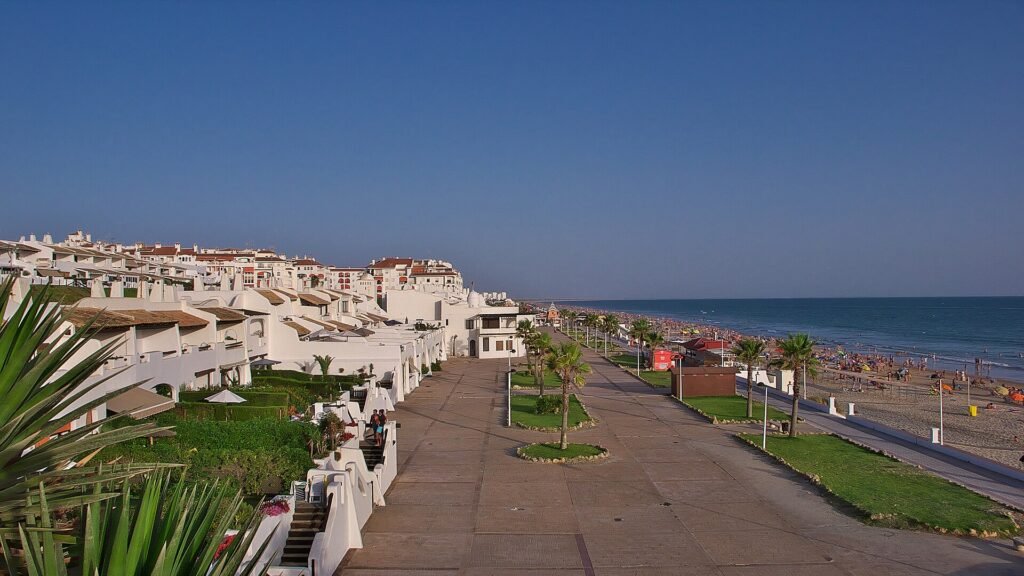
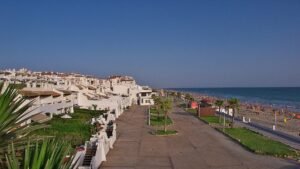
Matalascañas is the coastal face of Almonte. Its beach and resort promenade attract summer visitors, but walking beside the Atlantic can be pleasant outside high season too. The change from the municipality’s inland vineyards and marshland to an open horizon is striking.
The beach’s width, wave conditions, access points and seasonal services can change. Check local notices and lifeguard arrangements before swimming. For a quieter experience, focus on a comfortable walk rather than expecting the same beach facilities year-round.
Find the remains of Torre de la Higuera
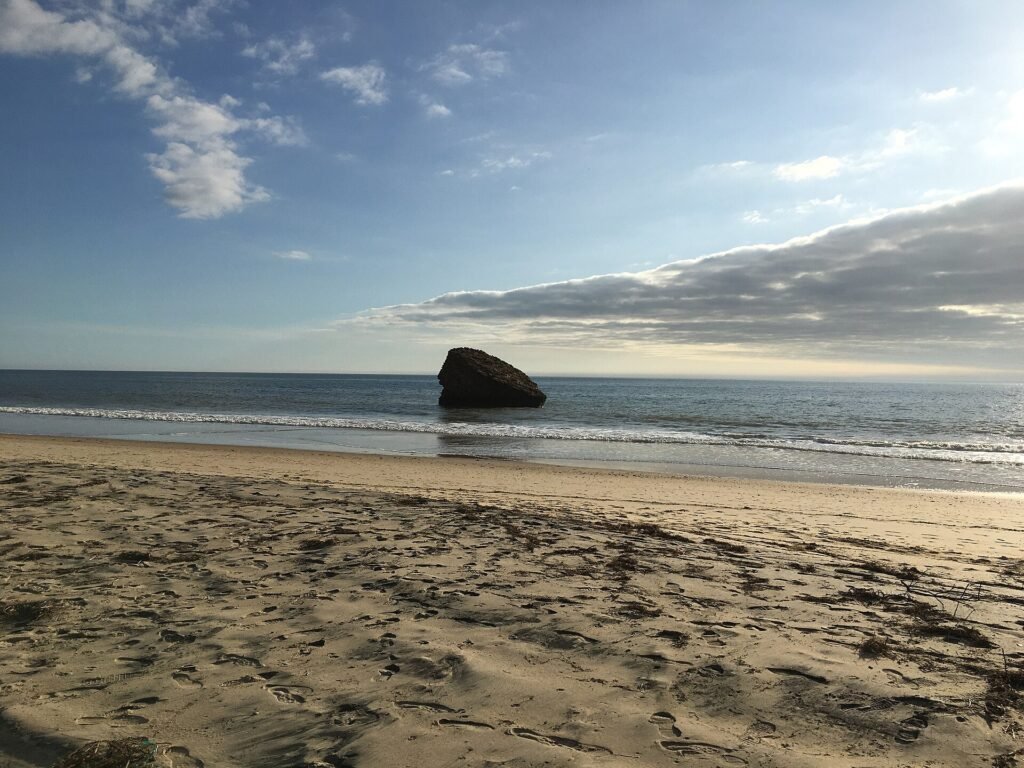
At the seafront, the overturned remains of the historic coastal watchtower create a curious landmark. The structure once formed part of the coastline’s watch system, but sea movement and erosion transformed it into the object now visible on the sand and near the surf.
Observe it from a safe distance, particularly when the sea is rough. It is an archaeological remnant and coastal landmark, not climbing equipment.
How to plan a day or two
For a balanced first day, begin with the square, parish church and one cultural stop in Almonte; then drive to El Rocío for the sanctuary area and marsh views. If you have another day, choose between a Doñana visitor-centre walk and a slower Matalascañas beach visit rather than treating both as quick photo stops.
- With a car: the town, village and coast are easier to link; follow official parking and access instructions.
- Without a car: buses serve the wider Almonte–El Rocío–Matalascañas corridor, but timetables and onward access to individual nature sites need checking.
- During the 2026–27 transfer: verify the Virgin’s location and pilgrimage calendar with the Hermandad Matriz before deciding whether to visit the town, sanctuary or both.
- For nature: use official visitor centres, marked paths and licensed excursions; much of Doñana is not freely accessible.