Doñana is not a conventional park where you arrive, park beside a famous viewpoint and wander wherever you like. Its protected landscapes include marshes, lagoons, pinewoods, scrub and dunes, with different levels of visitor access. Much of its appeal lies in small observations: the movement of birds across shallow water, a change in vegetation along a boardwalk or the way a wetland looks completely different after a dry spell.
For visitors staying in Almonte, El Rocío or Matalascañas, the key planning decision is simple: choose an accessible visitor centre and marked trail for an independent outing, or book an authorised guided route if you want to explore controlled-access parts of the national park.
First, understand what access really means
The Doñana protected area includes both national-park and natural-park landscapes and spans more than one province. Almonte is a practical base for several important visitor facilities, but being near a protected boundary does not give you permission to drive or hike through restricted sectors.
The park authority distinguishes freely accessible visitor facilities and designated trails from concession-operated excursions. Official signs, temporary closures and ranger instructions take precedence over a map app’s apparent tracks. Wildlife-sensitive access may change for conservation reasons.
For a first visit, do not try to see everything in a day: choose one main nature experience and leave time to watch rather than constantly travel.
La Rocina: the easiest option when based in El Rocío
La Rocina visitor centre provides an introduction to the local watercourse and wetland ecology. Its Charco de la Boca footpath includes wildlife-viewing opportunities along the stream’s surroundings. This is a useful starting point for travellers who want to walk independently and spend time observing habitats.
According to the national park’s access guidance, La Rocina is the centre that can be reached on foot from El Rocío. Still, confirm current visitor opening, trail restrictions and the condition of individual accessible sections. Do not expect an abundance of wildlife on demand; binoculars make distant sightings more satisfying.
Palacio del Acebrón: wetlands meet cultural history
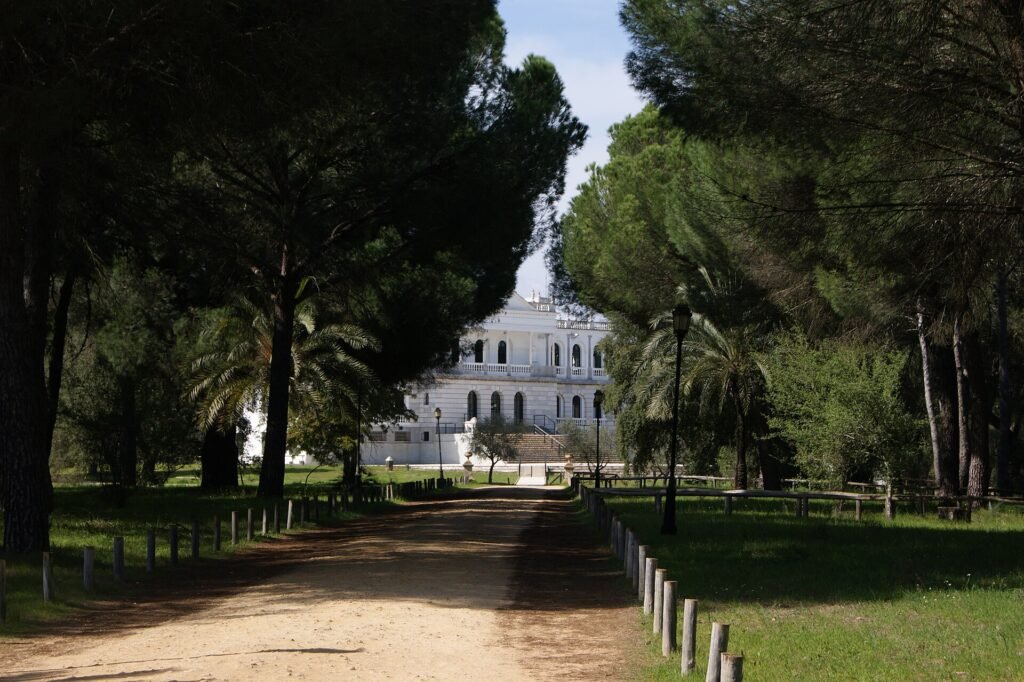
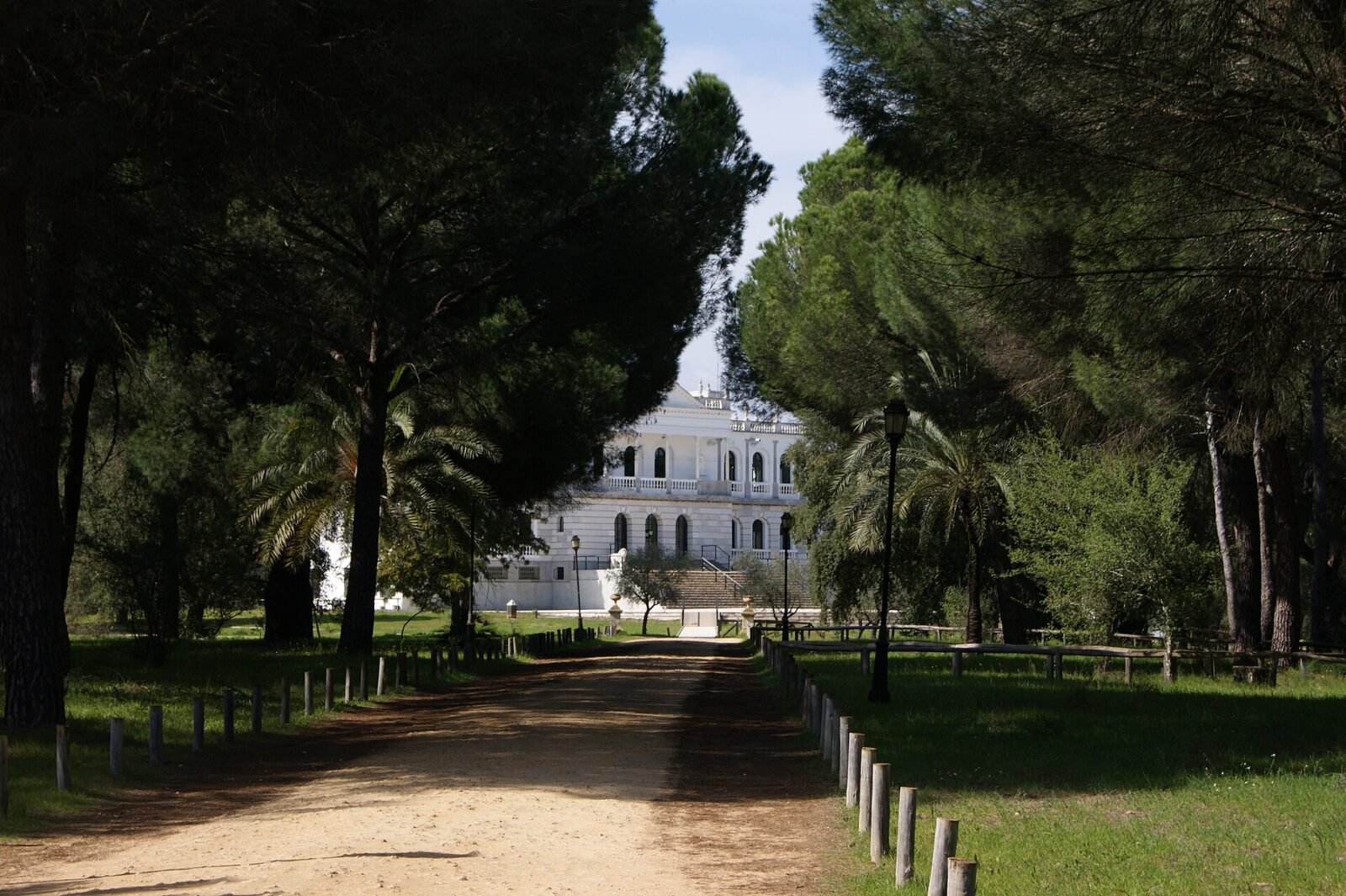
Palacio del Acebrón adds the human story to the natural one. Its visitor exhibitions address how people have lived and worked with the Doñana landscape. The adjacent Charco del Acebrón route winds through habitats that feel notably different from open marshland, including trees and vegetation around the water.
The visitor centre lies along a paved approach of roughly six kilometres from La Rocina’s parking area. You can travel by car or bicycle, or walk if adequately prepared, but this is not a casual ten-minute detour. Check the centre’s notices before relying on it as the second half of your day.
El Acebuche: interpretation, paths and guided-route departures
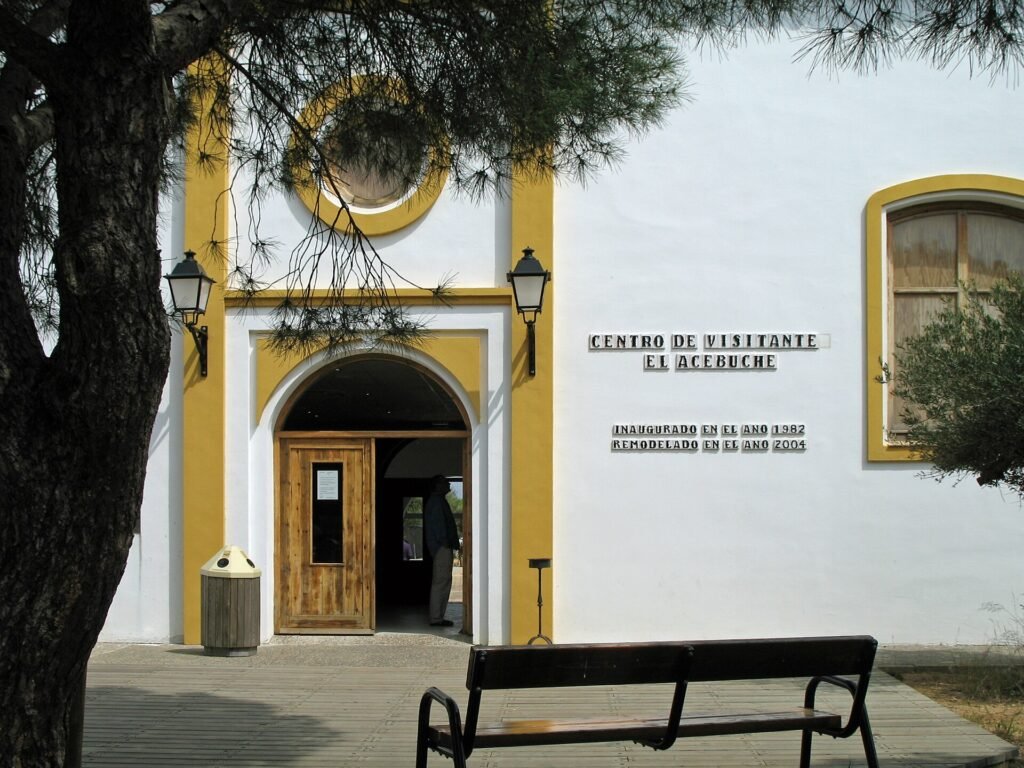
El Acebuche is the main practical choice for visitors approaching from Matalascañas by car. The centre offers information, interpretation and marked trails through the surrounding area; the national park’s south-route four-wheel-drive excursions also start here.
The access road turns off the A-483 and continues to the centre. Do not plan to walk there directly from Matalascañas as though it were a town-centre attraction: the park authority describes a multi-kilometre approach, with part of it on the road.
For a self-guided visit, allow time to use the interpretation facilities before choosing an available trail. Conditions at lagoons vary, and a distant or partly dry lagoon is still an important habitat.
Should you book a four-wheel-drive excursion?
If you want to see more of the national park than its open visitor-centre trails, a guided authorised excursion is the appropriate option. The official Acebuche–La Plancha–Acebuche route is run under concession, using specialist vehicles and a driver-guide; it passes through several of Doñana’s characteristic ecosystems.
Book through an officially listed operator, and verify departure point, duration, accessibility, cancellation terms and whether the trip is operating on your chosen date. Do not use old timetable screenshots as evidence of present availability. A guided drive is an introduction to an ecosystem, not a guarantee of seeing a lynx, flamingos or any other particular animal.
For some travellers, a slow self-guided walk and an hour in the hides will be more rewarding than spending a long time in a vehicle. Choose by interests and physical comfort.
What wildlife and landscapes might you encounter?
The interplay of marshes, seasonal ponds, scrub and woodland is why Doñana supports such varied species. Waterbirds are a major attraction when conditions suit them, while the Iberian lynx is a conservation symbol rather than a reliable tourist sighting. Species, numbers and visibility change with season, rainfall and time of day.
Binoculars, patience and a willingness to stay still are more valuable than attempting to reach remote places. Keep noise down around observatories, give animals space and never feed wildlife. In dry periods, place more attention on vegetation and ecological adaptation instead of judging the trip solely by the presence of water.
Choose the right season and equipment
Autumn and winter are especially attractive for cooler temperatures and, depending on conditions, wintering birds. Spring can also be rewarding, while high summer brings demanding heat and reduced comfort for long walks. Conditions in a given year matter more than a fixed seasonal promise.
- Carry drinking water, sun protection and suitable walking shoes, even for a short trail.
- Use binoculars or a camera lens rather than leaving paths to get close to birds.
- Insects may be present near water; avoid strong fragrances and consider appropriate protection.
- Ask about step-free access at the specific centre and path; not every part of the landscape is wheelchair accessible.
- Check seasonal or conservation closures shortly before you travel.
Getting there without your own car
Intercity buses can bring travellers to El Rocío or Matalascañas, but that does not mean they stop at every visitor centre. The park authority specifically identifies La Rocina as reachable on foot from El Rocío. El Acebuche and Palacio del Acebrón require additional onward travel planning.
If you will rely on public transport, make La Rocina your simplest independent plan or arrange a confirmed transfer with a legitimate operator. Do not assume that an advertised Doñana tour provides accommodation pickup.
Check Doñana’s official access information and the individual visitor-centre pages for the latest access guidance.
Two practical ways to spend a day
Option A — short, independent: Travel to El Rocío, visit La Rocina, choose the available designated trail and allow an unrushed period for observing water and vegetation. Add a public viewpoint near El Rocío only if time and conditions permit.
Option B — guided immersion: Drive or arrange confirmed transport to El Acebuche, join an authorised reserved route and leave any remaining time for the centre’s exhibitions rather than adding distant attractions. In either case, start by asking what is open: Doñana rewards flexible plans.