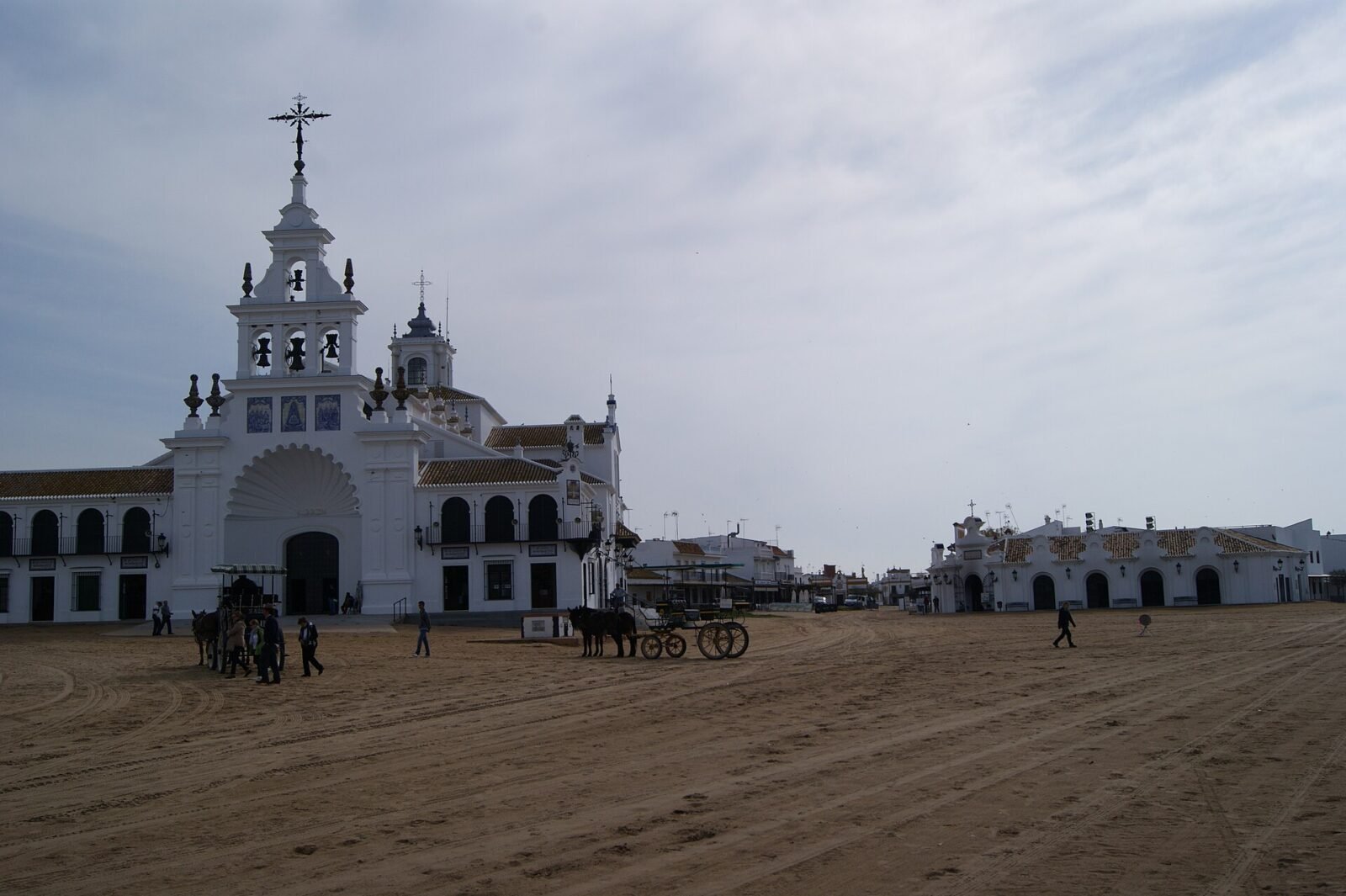
El Rocío looks unlike most Andalusian villages. Sandy roads, white façades, broad open spaces and signs of horse culture give the settlement a character shaped by centuries of pilgrimage. Its other defining feature is the landscape: beyond the buildings lie the wetlands of Doñana, which shift with the seasons and the availability of water.
El Rocío is part of Almonte municipality. You can appreciate it on a quiet day without joining a religious celebration, but understanding why the village exists—and how the pilgrimage changes it—makes the experience richer. There is also a particularly important temporary change to know about before visiting.
A vital update for visitors in 2026–27
The image of the Virgen del Rocío was transferred from the sanctuary in El Rocío to the parish church of Nuestra Señora de la Asunción in Almonte on 19–20 August 2026. According to the Hermandad Matriz, it is expected to remain there for approximately nine months, with a return associated with the 2027 pilgrimage period.
This means visiting the sanctuary building in El Rocío is not the same as visiting the Marian image at the moment. If that is the purpose of your journey, check the brotherhood’s official announcements immediately before travelling. Worship, pilgrimages and ceremonial movements can affect access at either location.
Begin at the sanctuary and its square
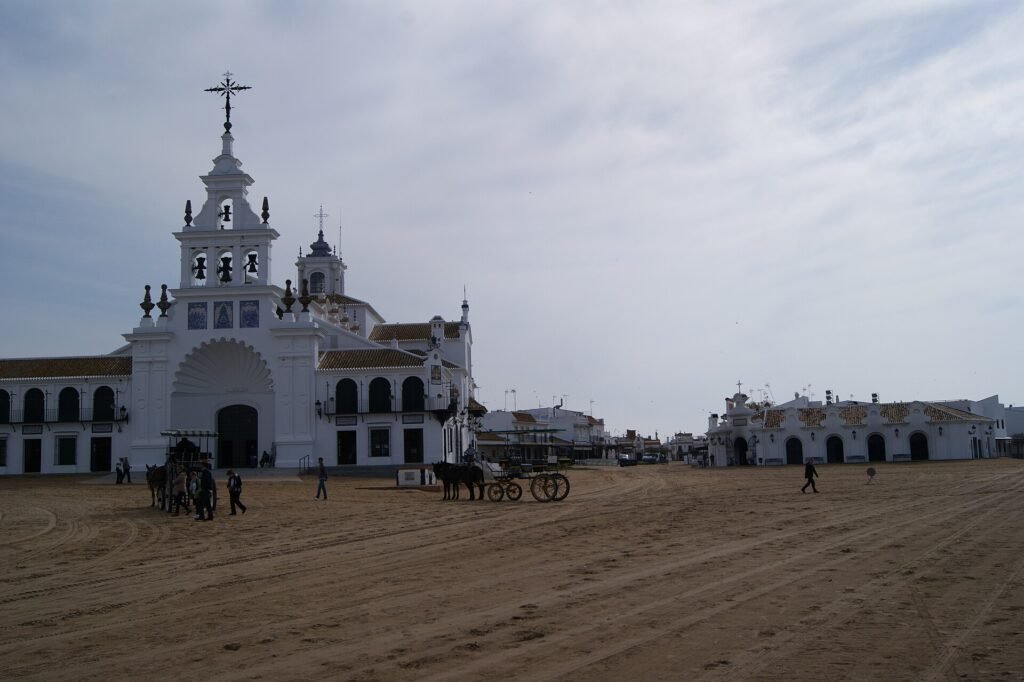
The white sanctuary is the visual centre of El Rocío. Its architecture, bell tower and the generous space around it explain how the village accommodates both regular worship and the enormous gatherings associated with Pentecost.
Outside the major celebrations, the atmosphere is different: a spacious square, traditional buildings and ordinary visitors sharing a place that carries great religious meaning. Respect services, observe any photography restrictions and avoid blocking doors or procession routes.
You can visit the surrounding public area without committing to a structured tour. The interior’s availability, however, depends on worship and the current transfer-related programme.
Understand the Romería del Rocío
Each year around Pentecost, brotherhoods undertake journeys towards El Rocío, traditionally combining religious devotion with a strong collective identity. The pilgrimage is not simply a parade or festival designed for tourists: for participants it is an act of faith, and large-scale celebrations place considerable demands on the village.
If you are coming specifically for the Romería, plan accommodation and transport well ahead of time and consult the organisers’ programme. Road closures, restricted vehicle movements and large crowds can make spontaneous arrivals difficult. Travellers seeking a quiet visit are better served by dates outside the principal pilgrimage period.
The ceremony calendar will be especially unusual during the 2026–27 transfer year; avoid assuming the usual location of every act or procession.
Walk the sandy streets with attention to the place
The ground is a distinctive part of El Rocío’s identity. The sandy streets reflect longstanding equestrian and pilgrimage traditions, and the architecture of the village includes low white buildings and houses connected with brotherhood life. Rather than collecting a checklist of monuments, allow time to follow the streets away from the sanctuary and return by a different route.
Footwear matters more here than it does on a paved city-centre walk. Loose sand can make wheeled luggage, wheelchairs and pushchairs awkward in some streets; enquire about suitable entrances and surfaces if accessibility is a priority. Respect horses and riders and leave adequate space when they pass.
Look out across the marshland edge
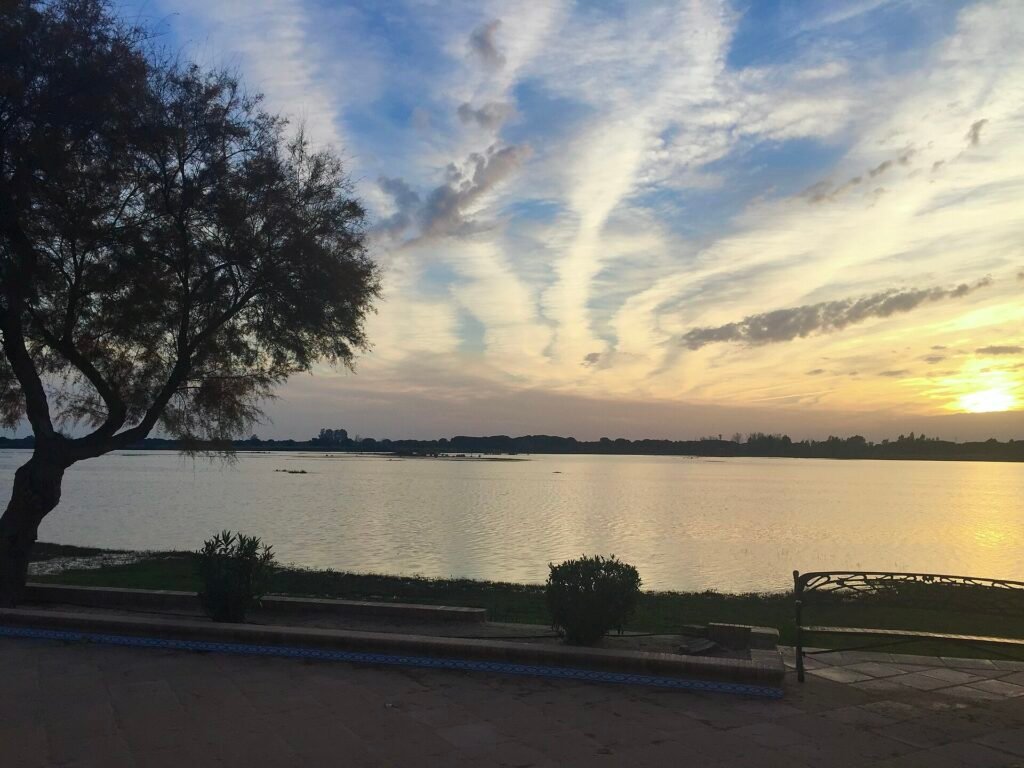
El Rocío sits at the edge of a remarkable wetland landscape. From public viewing areas, watch how sunlight moves over the marsh and how birds use its open spaces. Depending on season and rainfall, the view may be dominated by water, exposed mud or vegetation; no specific scene can be guaranteed.
Bring binoculars if birdwatching interests you and be content to observe from a distance. Marshland is not an open-access playground: stay on permitted ground and do not walk into protected habitat. Water levels and bird activity are natural variables rather than shortcomings of a visit.
Make La Rocina your short nature excursion
The Centro de Visitantes La Rocina introduces the ecological story behind the scenery, including the Arroyo de la Rocina and associated habitats. Its official Charco de la Boca trail links observation spaces along the wetland’s edge, making it a better choice for many visitors than an improvised walk across the marsh.
La Rocina is reachable on foot from El Rocío, unlike some other visitor centres. Check with the centre about trail condition and accessible sections. Spring vegetation can be lovely, but warm weather may make even a modest outdoor walk more tiring than expected.
Consider a second nature stop at Palacio del Acebrón
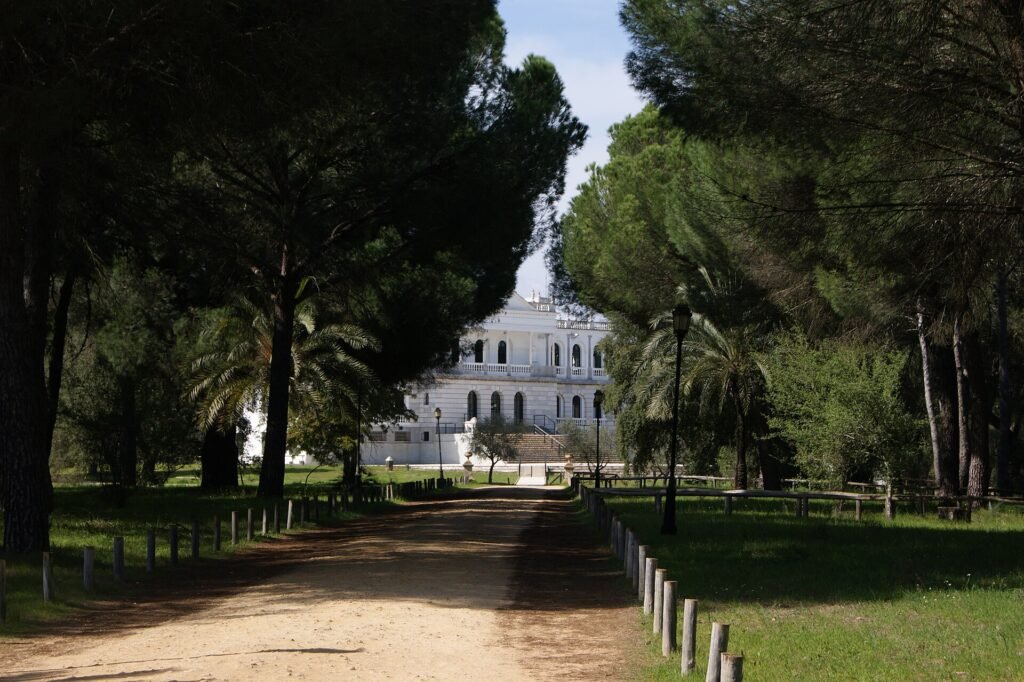
Palacio del Acebrón offers another way to understand Doñana: the building contains cultural and ethnographic interpretation of the relationship between people and the protected landscape. Nearby, the Charco del Acebrón path explores woodland and water-associated vegetation.
The centre is reached by an approximately six-kilometre paved track from La Rocina. That distance is an important logistical detail: do not mistake it for a quick extra stop on foot. Visitors who have a car or a well-planned bicycle outing can combine the two sites more easily.
When to go and how to get there
An ordinary weekday outside major events gives the clearest view of El Rocío’s everyday layout. During the Romería, the village becomes a pilgrimage destination on a very different scale; confirm transport, access rules and lodging instead of relying on a normal travel-day plan.
- From Huelva or Seville: check current intercity bus options and transfers; a service reaching El Rocío does not necessarily reach every Doñana visitor centre.
- By car: plan for event-related restrictions and use designated parking.
- For birdwatching: cooler parts of the day, patience and binoculars are more useful than a rigid wildlife checklist.
- For worship: consult the Hermandad Matriz directly about the Virgin’s current location and service times.
A sensible half-day in El Rocío
Start at the sanctuary square, take a slow circuit of nearby streets and then move to the publicly accessible edge of the marsh. If the visitor centre is operating and conditions permit, continue to La Rocina for its interpretation and trail. This combines the settlement’s culture with its landscape without treating a national park as something to tick off in thirty minutes.
If you want to see the Virgen del Rocío during the current transfer period, plan a separate stop in Almonte town rather than expecting to find the image at the sanctuary.