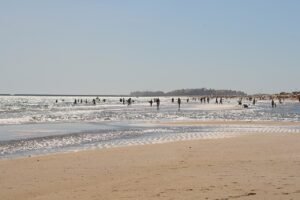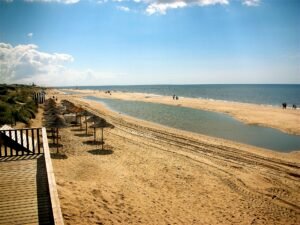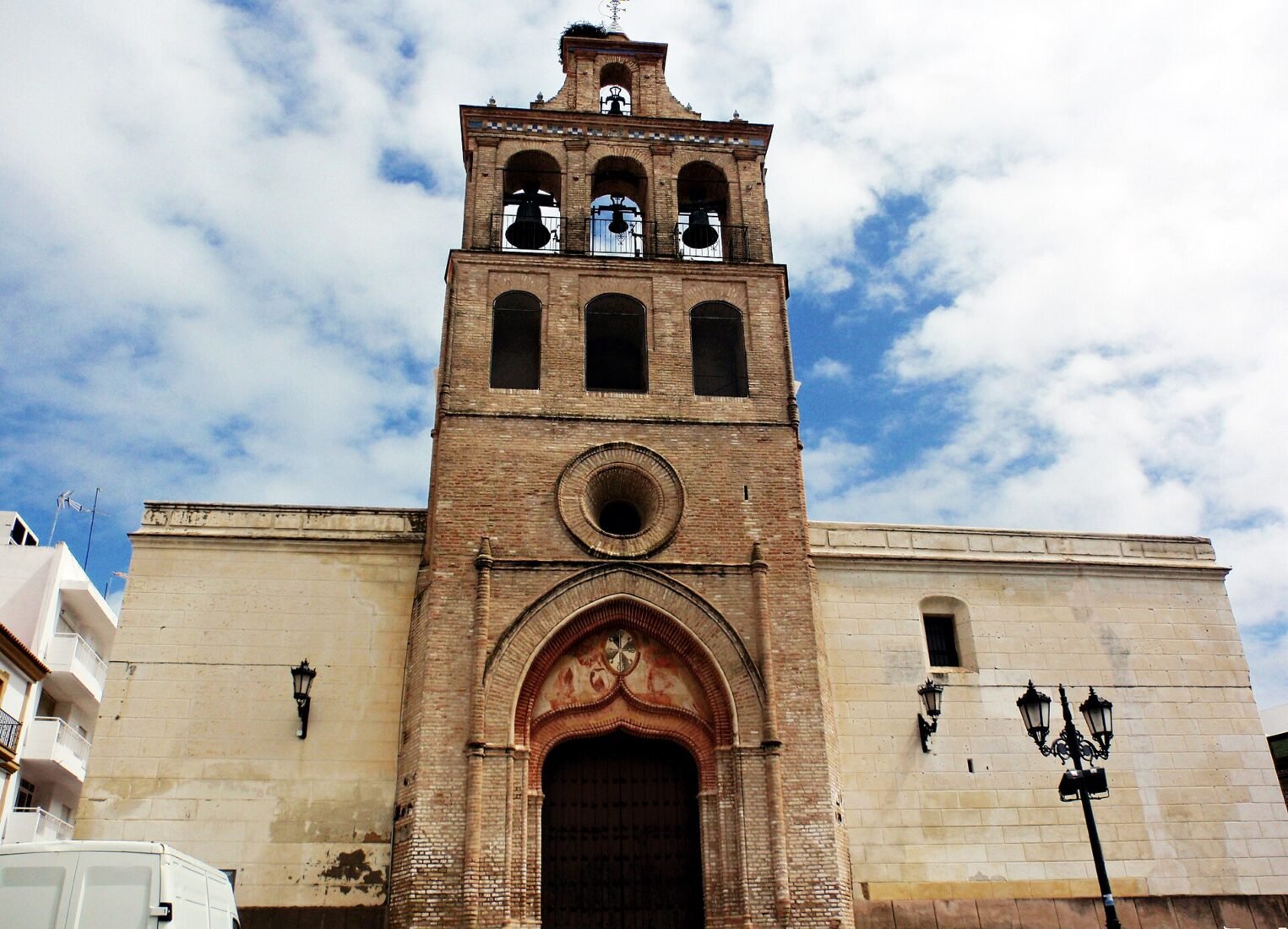
Lepe is often described through its beaches, but the municipality is not simply a strip of holiday resorts. Its town centre sits inland, with a parish church that tells a complicated story of rebuilding, streets organised around a central square and a landscape that changes quickly as you head towards the Río Piedras estuary. Between them are an old railway route, a coastal watchtower and the traces of communities that worked the sea long before seaside tourism became an industry.
If you are staying at La Antilla or Islantilla, give the town itself part of a day. And if you arrive in Lepe for its history, continue towards El Terrón to see why the river and the Atlantic have mattered to the area for centuries. These stops are all within Lepe municipality; Islantilla is jointly associated with Lepe and neighbouring Isla Cristina.
01 · LOCAL EXPERIENCE
Start in Plaza de España
Lepe’s central square is a useful first stop. It places the town hall, Iglesia de Santo Domingo de Guzmán and several of the centre’s connecting streets within a short walk of one another. This is where to get your bearings before following the smaller streets rather than driving from monument to monument.
Make it worthwhile: Look at the contrasts between the church frontage and the ordinary commercial life around it. The point here is the setting as much as any one building: Lepe’s centre functions as a working town, not a preserved tourist quarter. Stop for a coffee, check your route, then explore on foot.
02 · LOCAL EXPERIENCE
Look closely at Santo Domingo de Guzmán Church
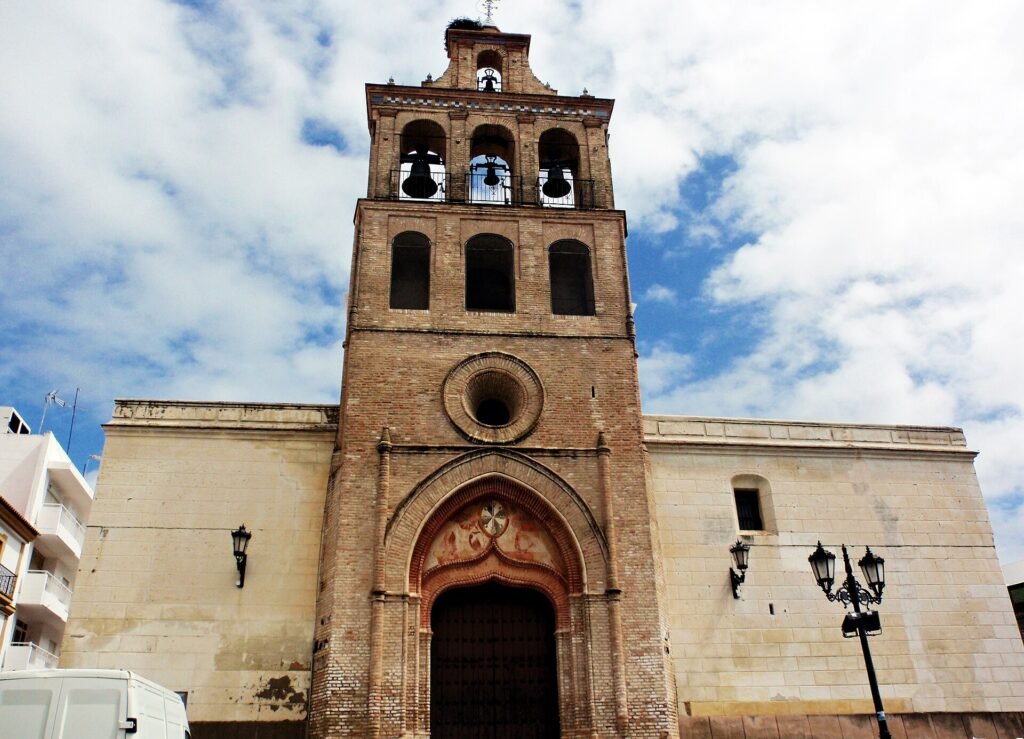
The parish church has roots in the sixteenth century, with Gothic-Mudéjar elements and later Baroque changes. Its present appearance also reflects substantial rebuilding over time. That history matters: a visitor looking for an untouched medieval building would misunderstand what makes it interesting. The west doorway and bell tower deserve a careful look.
Visiting advice: It is an active church rather than a permanently open museum. Check local notices and do not assume you can enter during services or private celebrations. The exterior is worth seeing even if the doors are closed.
03 · LOCAL EXPERIENCE
Find the older Lepe behind the shopping streets
A short wander away from Plaza de España reveals a town whose architecture changed after the destructive 1755 Lisbon earthquake. Lepe’s tourism office describes how churches, homes and civic buildings were repaired or replaced during the following centuries. Looking at the centre with this in mind helps explain why you find a mixture of architectural details rather than a single historical style.
Try this: Follow Calle Real and nearby connecting streets at a relaxed pace. You need no fixed walking circuit; simply return towards the main square when you are ready. Pavements, road crossings and shop hours will vary along the route.
04 · COAST AND HERITAGE
See the coastal watchtower, Torre del Catalán
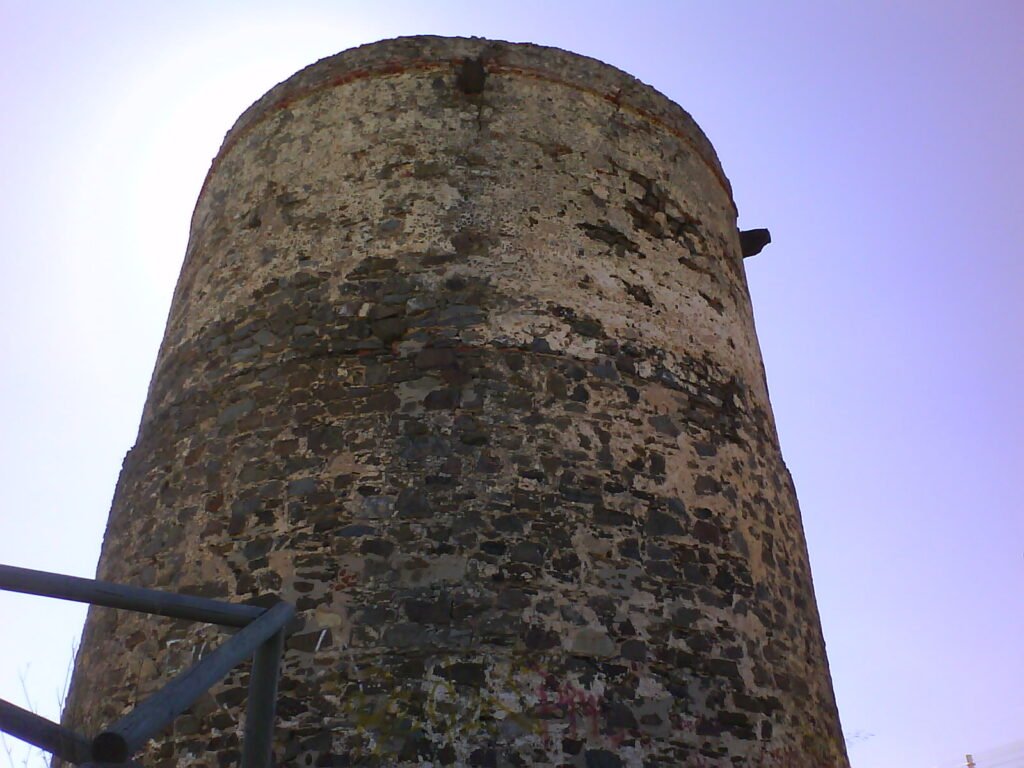
The Torre del Catalán is a reminder that the coast was once watched for threats approaching from the sea. The surviving tower is an early-modern defensive landmark rather than a viewing platform built for tourists. Its exposed position helps explain why watchtowers were placed where they could survey the surrounding coastline.
Visiting advice: Treat this primarily as an exterior heritage stop. Do not assume interior access, and use an established approach rather than crossing private land or scrambling around the structure. Conditions can change after wet weather.
05 · COAST AND HERITAGE
Understand the Romería de la Bella
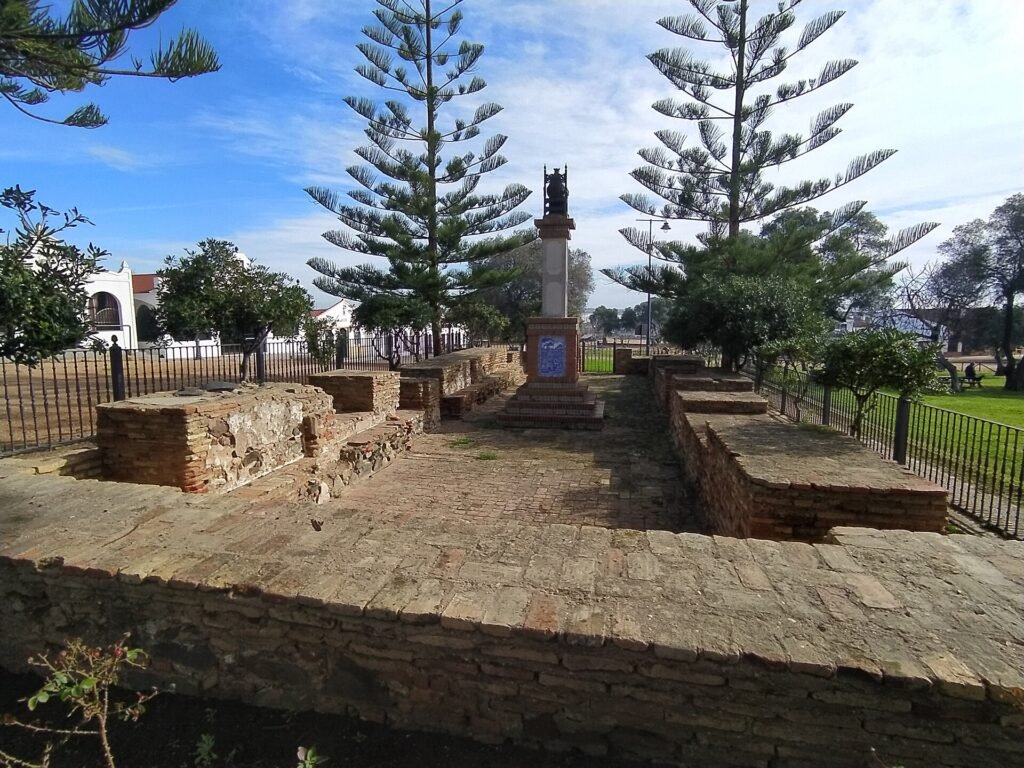
The Romería de la Bella links Lepe’s town and countryside through a pilgrimage traditionally held around the second weekend of May. The celebrations centre on the devotion to Nuestra Señora de la Bella and the pilgrimage grounds near El Terrón. During the festival, religious observance and social celebration share the same landscape; outside festival dates, it is much quieter.
The twentieth-century Ermita de Nuestra Señora de la Bella stands near the Cabezo de la Bella. Nearby remains of the former Franciscan convent recall an older layer of local religious life. Visiting advice: Confirm the programme if you intend to attend the Romería. Do not expect festival stalls, processions or open facilities on an ordinary weekday.
06 · COAST AND HERITAGE
Walk around the port of El Terrón
El Terrón sits near the Río Piedras estuary and connects Lepe with fishing and maritime activity. Rather than a traditional city waterfront, expect a small port landscape in which boats, tidal water and the protected marsh environment sit close together. It is an especially useful stop if you want to understand the area beyond its modern beach resorts.
What to do: Walk in publicly accessible areas, watch the movement of boats and look towards the estuary. Boat excursions may operate from the area, but seasonal schedules and conditions should be confirmed with the operator. Do not enter working quays without permission.
07 · COAST AND HERITAGE
Follow part of the Ruta de la Tavirona
This route uses sections of a former railway alignment that once connected towns along the western Huelva coast. The local tourism authority describes a walk from the old railway station towards the Puente de la Tavirona, with views towards the Río Piedras marshes. The interest lies in both the transport history and the change from built-up streets to open landscape.
Visiting advice: Choose a section that suits your fitness and return plan. The described path is generally low difficulty, but a former railway route is not automatically a fully accessible path: surfaces, shade and individual crossings may vary. Take water, especially in warm weather.
08 · COAST AND HERITAGE
Look for the remains of the Nueva Umbría tuna fishery
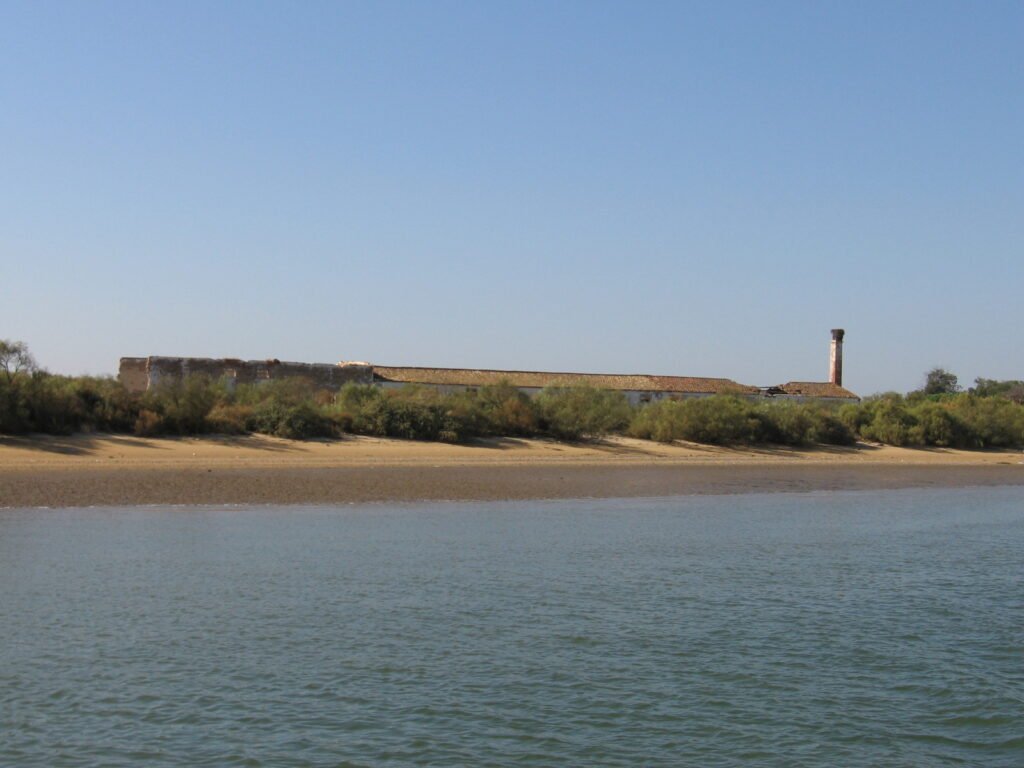
The old Real de la Almadraba de Nueva Umbría tells a different story from the beach bars and hotels. These surviving industrial and residential structures were associated with a twentieth-century tuna-fishing installation. They form part of a fragile historical landscape near the river and protected sandspit.
Visiting advice: Respect fencing, signs and conservation work. Some remains are in a remote setting and should not be approached as if they were an open museum. Choose designated access routes and check local access information before going.
09 · LOCAL EXPERIENCE
Spend time at La Antilla’s fishing quarter
La Antilla developed as Lepe’s best-known holiday beach, but the municipal tourism office also describes a surviving fishermen’s quarter. This is an appealing contrast: boats and nets evoke older livelihoods beside apartments, restaurants and a beach shaped by decades of tourism.
Visiting advice: Look around respectfully; fishing gear is working equipment, not a prop. If you are planning a full beach day, the more detailed La Antilla and Islantilla guide compares the character of the different stretches.
10 · LOCAL EXPERIENCE
Finish with Lepe’s food traditions
The municipality’s agricultural and maritime connections turn up at the table. Coastal restaurants commonly serve fish and shellfish, while the wider surrounding area is associated with berry cultivation. Instead of deciding that one dish defines Lepe, explore what is actually available in season.
Practical advice: At seafood restaurants, ask whether a dish is priced per portion or by weight. In the town centre, choose somewhere suitable for a slower lunch; at the coast, check whether kitchens operate year-round. The most tourist-facing streets can change considerably outside summer.
Practical visiting advice
Lepe town, El Terrón and the beaches are separate stops; avoid promising a comfortable walking route between them. A car or confirmed local transport may be needed depending on the itinerary. Churches, chapels and some heritage settings are not guaranteed to be open for general visits. Check locally before planning around interior access.
Many coastal services operate seasonally. For more remote historical remains and protected areas, respect restrictions and marked approaches.