El Rompido is best understood as a village built around an estuary rather than a beach with a few buildings behind it. Fishing boats share the view with pleasure craft; beyond the river lies a long barrier of sand and dunes, and inland paths wind through tidal marsh and pine forest. The mix is what makes this corner of Cartaya interesting.
You can have a worthwhile visit without crossing the water at all. A short wander around the harbour, lighthouses and riverside paths is enough for a gentle half-day. If you want a full beach outing, however, the seasonal boats to the Flecha demand a little planning. The guide below separates those experiences so you can choose what works for your trip.
Discover the fishing-village waterfront

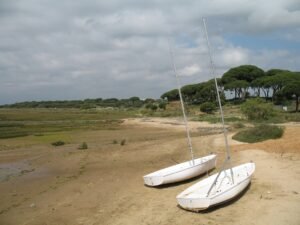
Start near the port and look across the Río Piedras before deciding where to go. The waterway is tidal: at one time boats may appear to float above broad, reflective water, while later the mudflats and edges of channels become much more visible. It is a reminder that the estuary is a working and changing environment, not a static harbour scene.
Continue through the village streets, where places to eat and small businesses reflect a mixture of coastal tourism and ordinary local life. Practical tip: If you are interested in watching fishing activity, remember that harbour spaces may have operational restrictions. Stay in public areas and do not step onto working pontoons.
Visit the old lighthouse interpretation centre
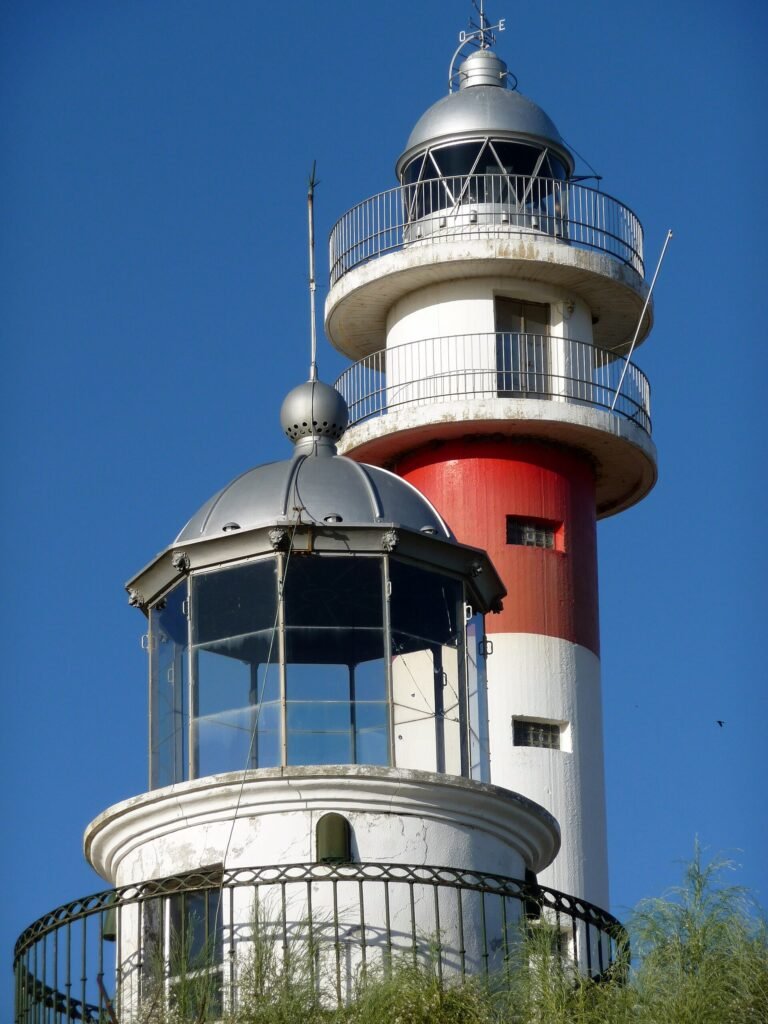
El Rompido has two lighthouses standing close together, one built in 1861 and a taller replacement that began operating in 1976. Their contrasting shapes offer an unexpectedly clear introduction to maritime history. The old tower no longer functions as the principal light but has gained a new purpose.
Opened to visitors as an interpretation centre in 2025, the historic lighthouse houses material about the surrounding wetlands, birds, pinewoods and the area’s links with fishing. The old lighthouse lens is a centrepiece. Practical tip: Check the current programme and opening schedule with the Cartaya tourism office. Do not assume either tower is available for a climb.
Understand the Flecha del Rompido before you book a boat
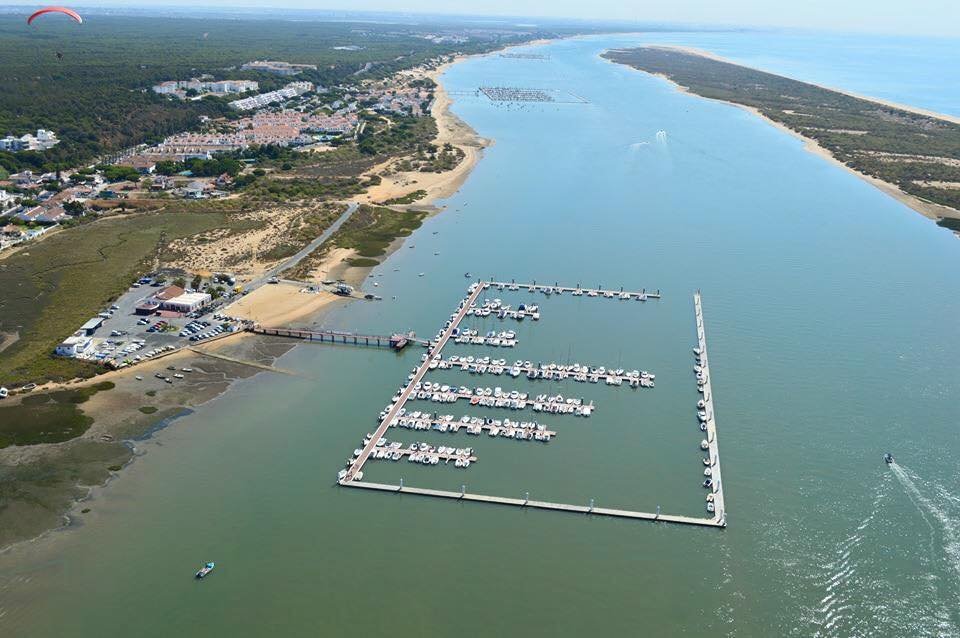
Across the estuary is a sandspit shaped by water, tides and coastal currents. It separates much of the estuary from the Atlantic and forms part of the protected Marismas del Río Piedras y Flecha del Rompido landscape, which spans the municipalities of Cartaya and Lepe. The sandspit is commonly associated with the name El Rompido because visitors depart from the village, but it should not be confused with a beach entirely inside Cartaya.
From the waterfront, study the shape of the shore opposite. Its long, narrow profile explains why travelling across the water changes the whole beach experience. Practical tip: Treat the Flecha as a protected natural landscape: keep to paths and boardwalks, avoid fragile dunes and leave no litter. Facilities can be sparse away from ferry access points.
Take the seasonal ferry to the Atlantic side
A boat crossing is the simplest option for many visitors who want the ocean-facing sands. Local operator FlechaMar advertises a seasonal service from El Rompido’s fishing port, generally between spring and autumn. Its published 2026 information describes the Casa del Palo service, a short crossing and a boardwalk from the landing area toward the beach.
Practical tip: Check the ferry operator’s current service page before departure, including return time, wind-related cancellations, accessibility, pets and what to carry. Do not base your trip on a timetable from an earlier season. Boardwalk access does not imply the sand itself is suitable for wheelchairs.
Prefer a shore walk? Follow the Río Piedras path
If you would rather keep your feet on land, head toward the trail starting close to the lighthouse parking area. It provides a route past marsh vegetation, lagoon habitats and views back across the water. The municipality describes a four-kilometre loop with a low difficulty rating, and an accessible portion at the beginning with resting benches.
The estuary is particularly rewarding when watched quietly. Wading birds use the mudflats, and the shape of the channels becomes clearer as the tide changes. Practical tip: Carry binoculars if you have them. Stay on the path and check that it has not been affected by weather or maintenance before setting out.
Make time for the village and a meal
Fishing remains a useful lens through which to understand El Rompido. The waterfront gives a natural setting for ordering fish or seafood, although a picturesque view is not proof that a restaurant serves local catch. Look at the menu, ask about the day’s fish and check whether dishes are priced by portion or weight.
In busy periods, popular terraces may fill quickly; outside summer, opening patterns can change significantly. Practical tip: For families or groups, book a table if a particular establishment matters to you. If you simply want to explore, keep meal plans flexible rather than building the entire day around one unverified venue.
Add Playa de San Miguel without crossing the estuary
If ferry trips are not for you, the nearby Playa de San Miguel lies within Cartaya municipality between El Rompido and Nuevo Portil. Pinewoods lead toward the sand and provide a different outing from the village’s harbour-facing shore. It is a good choice for visitors interested in a quieter walk along the coast.
Practical tip: Choose your access point in advance. Always check the status of lifeguards and beach services on the day, because both vary by season. Do not equate the relatively sheltered estuary with the exposed Atlantic beach: swimming conditions can differ considerably.
How to spend a day in El Rompido
For a relaxed half-day: Walk by the fishing port, visit the lighthouse area and choose a stretch of the Río Piedras trail. Finish with time to sit by the water. This plan works even when the ferry is not running.
For a beach day: Confirm the ferry before you arrive, then build your timing around both crossings and the walk from the landing to the Atlantic beach. If conditions change, Playa de San Miguel is a separate mainland option.
With children: The waterfront and interpretation centre offer shorter activities without committing to several hours outdoors. On the Flecha, consider sun exposure, the absence of shade and the difficulty of moving over sand with a buggy.
Transport: El Rompido belongs to Cartaya, but is not an easy extension of a walking visit to Cartaya town centre. Check current regional buses if you are travelling without a car. For updates, the local tourism office is at Plaza de las Sirenas.