Food is a good reason to make time for Aracena rather than treating the town as a quick cave stop. The Sierra’s cooking reflects a landscape of holm oaks, grazing animals, woodland products and changing seasons. Iberian pork is the most obvious association, but a satisfying meal here is not necessarily a plate of ham followed by another plate of ham.
This guide explains what to look for on a menu, how to order with confidence and which regional products deserve attention. It is about eating in Aracena, not a ranked list of restaurants whose owners, chefs and opening days may change.
Start with Iberian ham—but choose it carefully
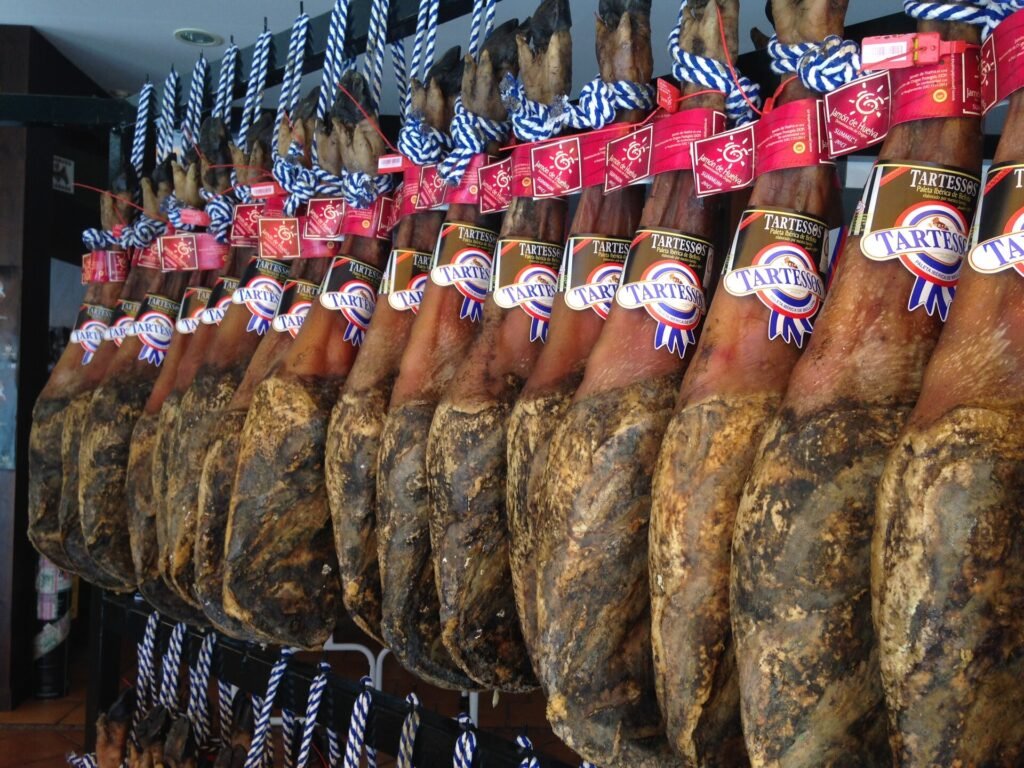
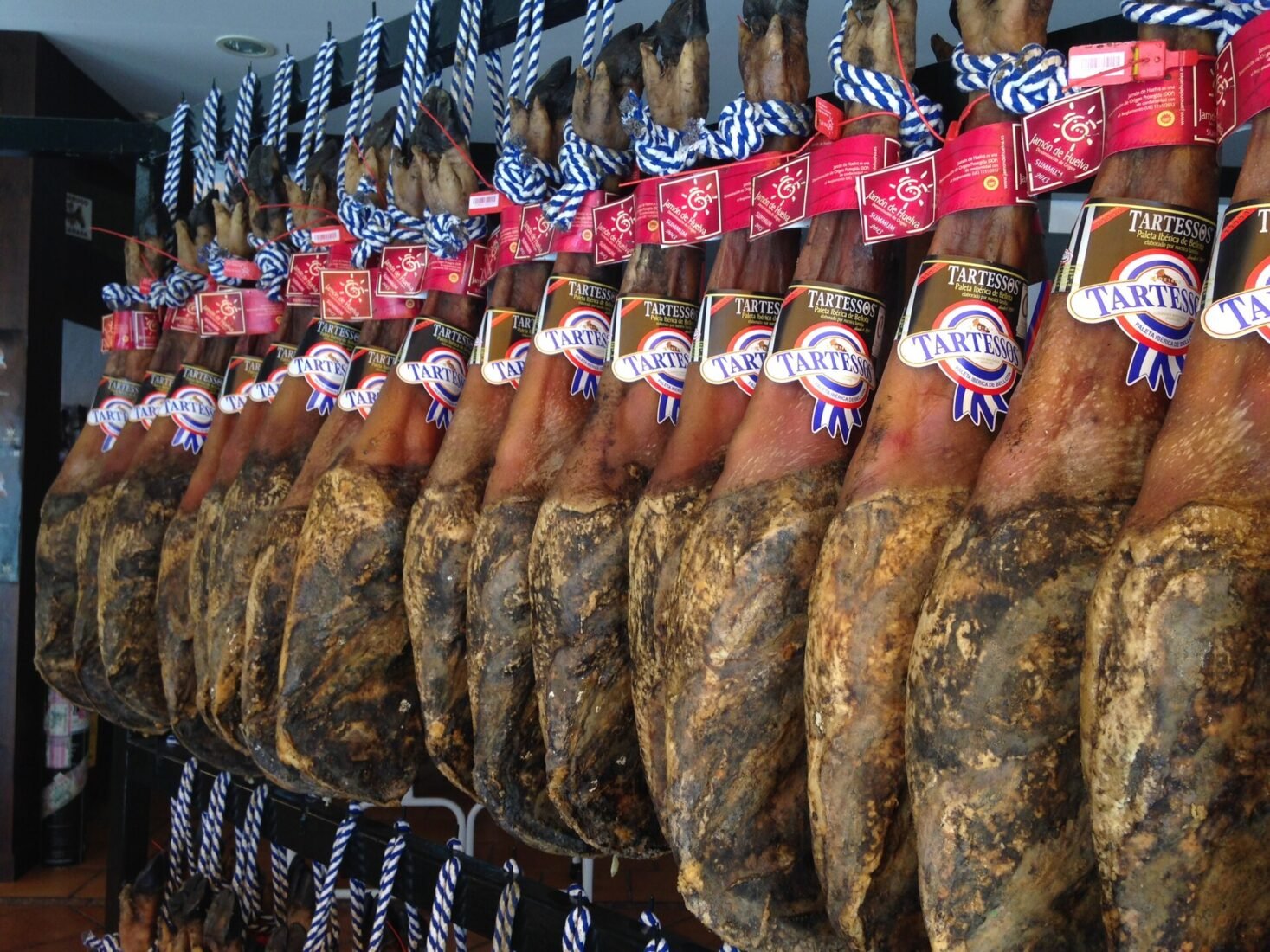
Jamón ibérico is central to the Sierra’s food identity. The best versions are often served simply in thin slices, which lets you notice texture and flavour without much else competing for attention. In Aracena, the real question is not just whether a restaurant serves ham, but what kind of ham it serves.
Look at the exact product description, particularly references to feeding category and protected origin. Jamón de Jabugo is a designation with its own rules; it does not mean every ham in the Sierra was produced in the municipality of Jabugo, nor should any generic jamón serrano be assumed to be the same thing.
If you are buying ham to take home, ask about the product’s label and traceability. If you are ordering it in a bar, consider sharing a portion before committing to a larger plate.
Try other cuts and preparations of Iberian pork
Many visitors recognise the cured ham but are less familiar with cooked Iberian-pork dishes. Depending on the kitchen, you may see grilled cuts such as presa or secreto, or slow-cooked pork preparations. These are not interchangeable: some cuts are tender and rich with a short cooking time, while others benefit from longer preparation.
Instead of asking only for the most famous cut, ask how the restaurant cooks it and what comes with it. A simple plate of meat, potatoes and seasonal vegetables can show the region’s style of cooking as clearly as a more elaborate presentation.
Look for seasonal mushrooms
Autumn brings a different sort of attention to the Sierra’s food. Regional festivals in Aracena have included displays and cooking demonstrations focused on wild mushrooms and other local products. Mushroom dishes might appear as a sauté, in a stew or as an accompaniment to meat, but what is actually available depends on weather and suppliers.
Do not expect a particular wild mushroom to be on the menu in every month. Nor should visitors gather and eat woodland fungi without expert identification and checking local collection rules. The safer, more interesting choice is to try professionally sourced mushrooms from a restaurant that can tell you what it is serving.
Make space for mountain stews and comforting dishes
Not every memorable meal needs to centre on an expensive cut of meat. In cooler weather, ask whether the kitchen has a daily stew, a legume dish or a soup that reflects its home cooking. Spanish menus often separate small starter portions from fuller platos de cuchara, the satisfying spoon dishes associated with everyday meals.
Menus are not fixed museum exhibits, and no single stew represents every restaurant in Aracena. The practical approach is to look for a dish of the day and ask what ingredients are in it. That question is particularly useful if you have allergies or dietary restrictions, since stock and cooking fats can be less obvious than the ingredients listed in the name.
Cheese, honey and other products to take home
Aracena’s regional food events also highlight artisan cheese, honey, olive oil and other mountain or provincial products. The town has hosted a dedicated artisan cheese market, while wider food events have brought together producers from across the Province of Huelva.
That is worth remembering when shopping: not everything sold in Aracena is made in Aracena. If local origin matters, check the producer’s address or ask the vendor. A carefully chosen small jar of honey or wedge of cheese can be a more practical souvenir than a product requiring refrigeration on a long journey.
Visit the Museo del Jamón before a food-focused lunch
The Museo del Jamón is a useful introduction to the Iberian-pig tradition and the landscape behind it. It gives meaning to terms you are likely to encounter later on menus and in shops. The museum is not a substitute for trying the food, but it helps turn a plate of cured ham into something more than a regional stereotype.
Check whether a combined municipal tourism ticket includes the museum. Operating details have varied across official pages over time, so confirm access through the current municipal information rather than relying on an old timetable.
How to order tapas and a full meal in Aracena
Ordering styles differ by establishment. Where tapas or smaller portions are available, they allow you to sample several dishes without making the meal exclusively about one product. Larger raciones are useful for sharing, while a media ración, when offered, falls between the two.
Do not assume a restaurant serves its full menu all day. Check when the kitchen opens for lunch and dinner, especially on weekdays. If you want to try a particular dish, asking before sitting down can save disappointment. Vegetarians should check soups, beans and mushroom dishes carefully, because recipes may contain pork products even when meat is not obvious in the description.
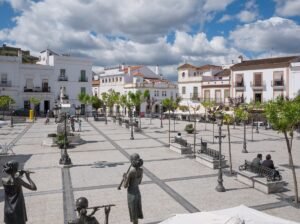
A central square is convenient for a break during sightseeing, but convenience does not guarantee the best meal. Read the menu, ask about the day’s specials and choose a pace that suits the rest of your itinerary.
Aracena’s autumn food calendar
The Feria Regional del Jamón y del Cerdo Ibérico is one of Aracena’s major food events and brings together producers and visitors interested in the Iberian-pig tradition. The town also has a history of cheese markets and other regional food activities.
These events make autumn attractive for food-led travel, but individual dates and programmes change annually. If an event is the main reason for your trip, check the municipal events calendar before booking accommodation. Do not assume an edition from a previous year will repeat at the same time.
A simple food-led day in Aracena
Start with a walk through the central streets and the Museo del Jamón, then choose a relaxed lunch built around one or two regional specialities. In the afternoon, explore the square and shops, perhaps taking home a carefully labelled product. If you are visiting during an event, make that part of the plan rather than expecting to fit every stall and monument into the same hour.
The strongest approach to eating in Aracena is curiosity without a checklist. Ask what is good today, understand the regional terms and leave space for a dish you had not planned to order.