The castle of Aracena occupies the hill that explains the town below it. Today’s visitor sees the surviving outline of a fortress, a priory church and broad views over tiled roofs and wooded slopes. What makes the visit interesting is the connection between all three: defence, settlement and the later town that gradually moved down the hill.
It is tempting to treat the castle as a viewpoint and leave it at that. A slower walk reveals why this position mattered and how the visible remains fit into different chapters of Aracena’s history.
A fortress built on an older settlement
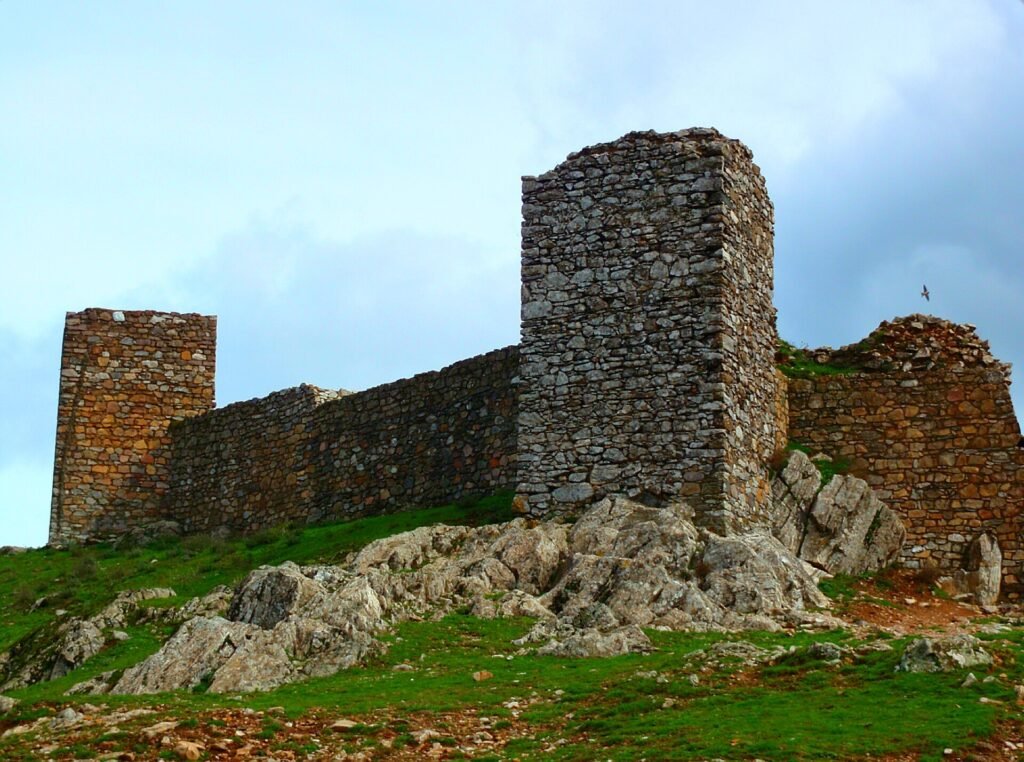
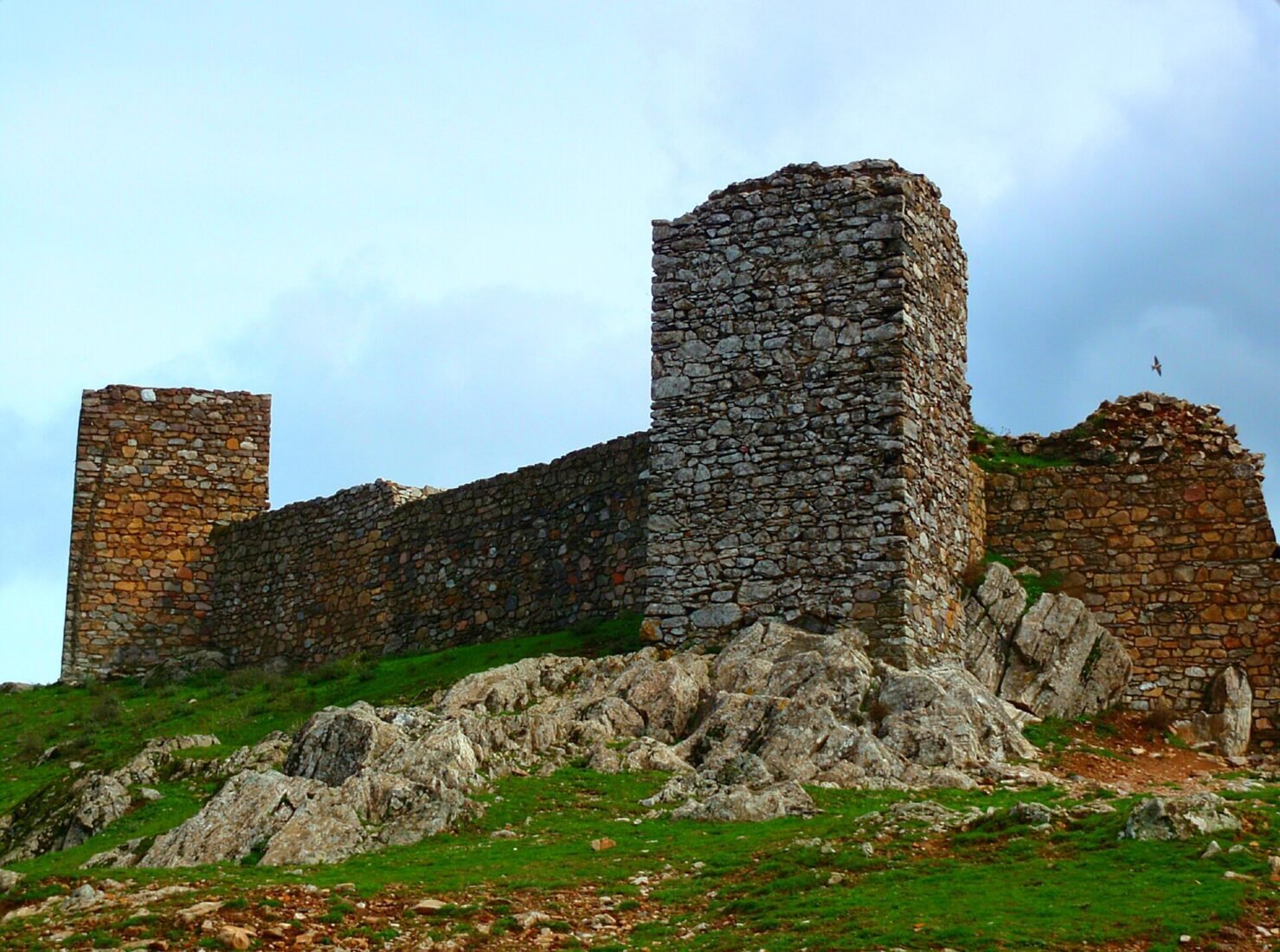
The surviving castle was built around the middle of the thirteenth century. Official municipal heritage material also records evidence of earlier Islamic occupation on the hill, including residential remains dating from before the Christian-period fortress. This is not simply an isolated military building placed above an otherwise unchanged town; the hill itself was an early centre of settlement.
The fortress belonged to a wider medieval defensive landscape sometimes referred to as the Banda Gallega, guarding approaches to the territory of Seville. Its role changed over time, and as Aracena expanded downhill, the old hilltop settlement gradually lost its former position at the centre of local life.
What remains of the fortifications?
The municipal castle brochure describes a parade ground and an inner alcázar, divided by walls, with the Torre Mayor occupying a commanding position. Cisterns were part of the defensive arrangements, providing water supplies needed during a siege.
As you explore, try to read the remains as parts of a functioning complex instead of expecting a furnished medieval palace. Look at the relationship between the wall lines, towers and ground levels. Some stonework has survived better than other elements, so interpretation is useful for understanding where buildings and routes once stood.
Do not climb historic walls or go beyond barriers for a better photograph. The operator explicitly prohibits climbing on historic structures, and some surfaces are uneven.
The Iglesia Prioral de Nuestra Señora del Mayor Dolor
Beside the fortress stands the priory church, one of the most distinctive features of Aracena’s skyline. Its architecture represents a later religious use of the prominent hilltop site. The exterior, with its Gothic-influenced character and imposing mass, looks quite different from the open surviving fortifications.
The church and the castle are next-door neighbours but not interchangeable attractions. The enclosure has managed visitor access; the church is a religious building whose interior may have separate restrictions or worship commitments. Confirm whether the church is open if seeing the inside is important to you.
How to reach the castle on foot
Aracena’s tourism operator describes a walk of roughly fifteen to twenty minutes uphill from the area near Gruta de las Maravillas. The approach is a genuine ascent, not a flat route between museum entrances. The town’s official material also describes pedestrian approaches on the hillside and access via Calle Virgen del Mayor Dolor.
Leave more time if you walk slowly, stop for photographs or travel in hot weather. Proper shoes are more useful than sandals with little grip, especially on uneven ground. Anyone with limited mobility should check the specifics of the ascent and the enclosure before buying admission.
Is the castle worth visiting for the views?
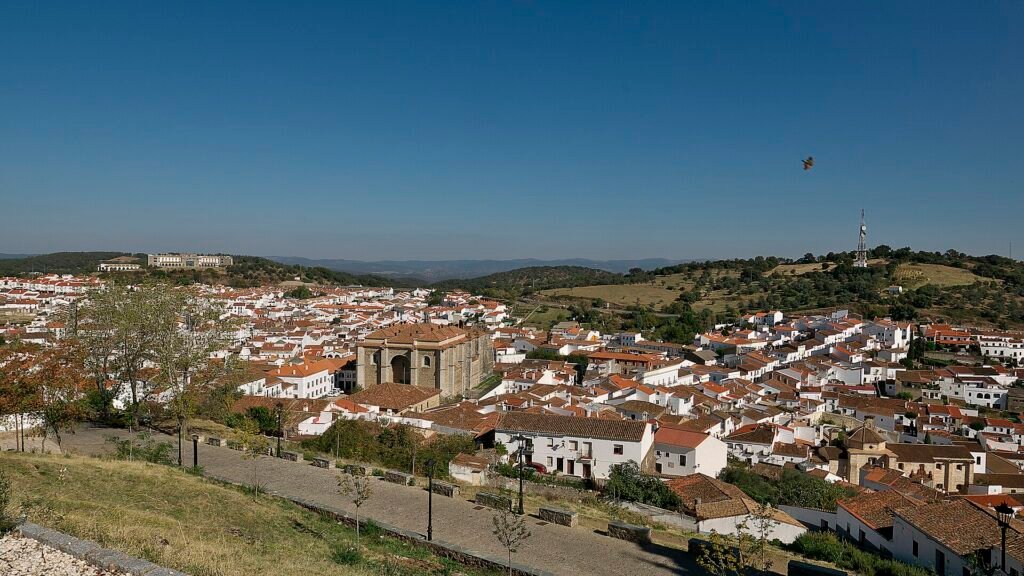
Yes, but not only for the views. Looking back over the roofs, you can see how the town occupies lower ground beneath the defensive hill. That makes the history easier to understand than it might seem from a written timeline. The surrounding greenery also helps place Aracena within its mountain landscape.
The ideal time depends more on heat, visibility and your other appointments than on any single photographic moment. There are exposed parts of the visit, so carry water and avoid treating a summer midday ascent as effortless.
Tickets, guided visits and conditions
The fortified enclosure is a managed attraction with admission requirements. The official booking site publishes ticket options and visitor rules, including limits on accessing fragile structures. Its guided-tour timetable is not necessarily the same as general opening hours, and sessions can change according to availability.
Check the official castle booking page close to your visit, and ask whether an audioguide or guided explanation is available with the type of admission you choose. If you are also visiting the cave, compare the available combined-ticket options before buying separate entries.
Outdoor visits depend on weather and on the safety of exposed areas. Do not assume that a clear sky when you leave your accommodation guarantees unrestricted access on arrival.
Continue downhill towards Plaza Alta
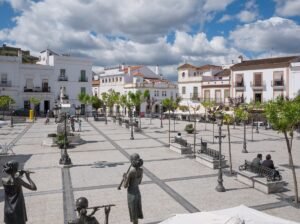
One of the best ways to finish the castle visit is to walk back through the older streets towards Plaza Alta. Historically, the town expanded away from the hilltop, and this square became an important civic centre. The former Cabildo and the Iglesia de Nuestra Señora de la Asunción offer a striking architectural change from the military setting above.
Rather than driving between the two, the descent can make the relationship between the sites tangible. This is where the castle begins to feel like part of a town, not an isolated attraction.
Planning the visit with the cave
Because the Gruta de las Maravillas is a timed group visit, it usually makes sense to arrange your day around the cave booking and then decide when to tackle the castle ascent. The order matters less than allowing for the climb and any queue or interpretation time at the enclosure.
Visitors who prefer a slower pace might visit the cave and the hill on separate parts of an overnight stay. Those with only a day can combine them, provided they avoid adding an unrealistic number of extra stops.
In short: come for the view, but stay for the archaeology and the sense of how Aracena grew. The ruined walls are interesting because they show where the town began and why it eventually moved.