Huelva is a port city with a character of its own. Rather than grand palace complexes, its memorable sights tell stories of ships, mining, changing urban neighbourhoods, food markets and the meeting of two rivers. You can explore much of the centre on foot, then make separate excursions to viewpoints and natural spaces.
These fifteen suggestions are within Huelva municipality, not the wider province. The Columbus monuments are easy to confuse, so this guide distinguishes the central-city statue from the much larger monument at Punta del Sebo. Major coastal resorts and the monastery at La Rábida belong to other municipalities and are deliberately excluded.
1. Walk out onto the Río Tinto Company Loading Pier
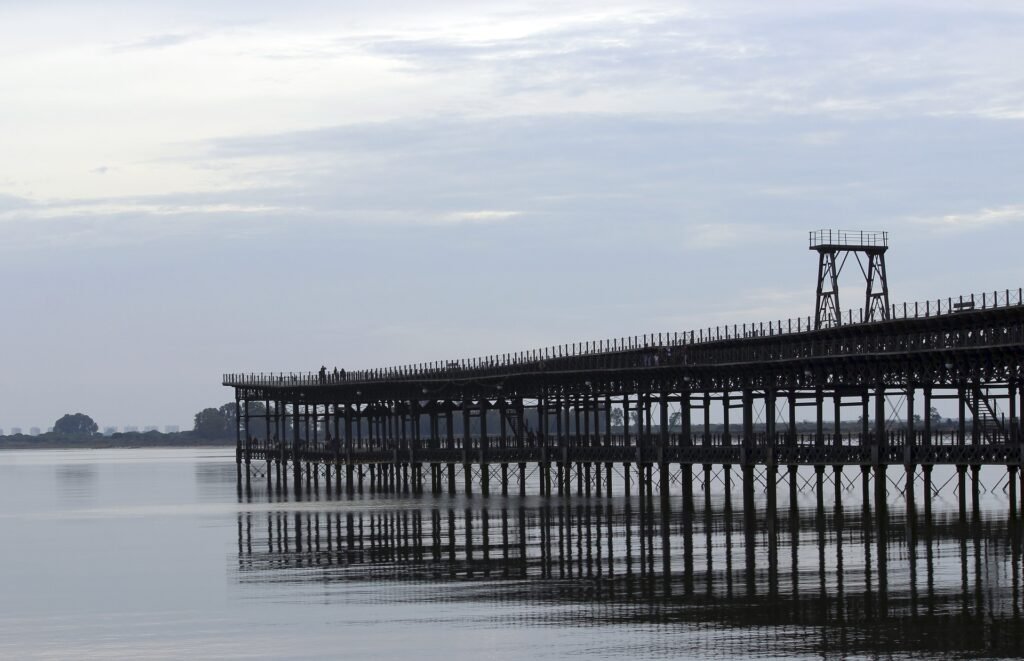
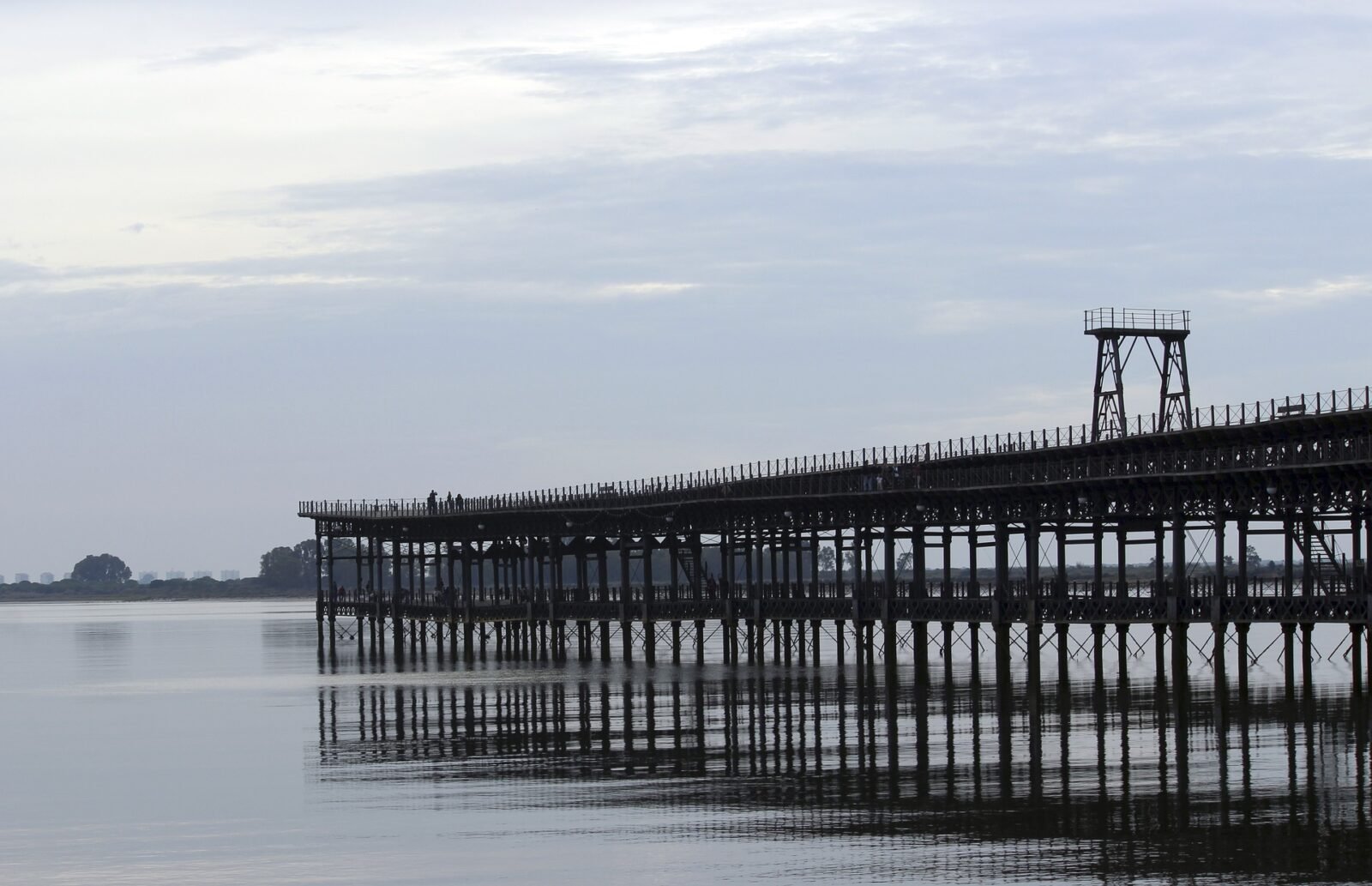
The curving iron structure over the Odiel estuary is Huelva’s signature industrial landmark. It was built for the mineral trade that transformed the area in the nineteenth century. Today, its restored walkway gives visitors a close look at the engineering and uninterrupted views of the waterfront.
Good to know: This is an outdoor, weather-exposed visit; choose suitable footwear and take extra care in wind or rain. It pairs naturally with the Paseo de la Ría. Check for temporary restrictions or maintenance before relying on access.
2. Start in Plaza de las Monjas
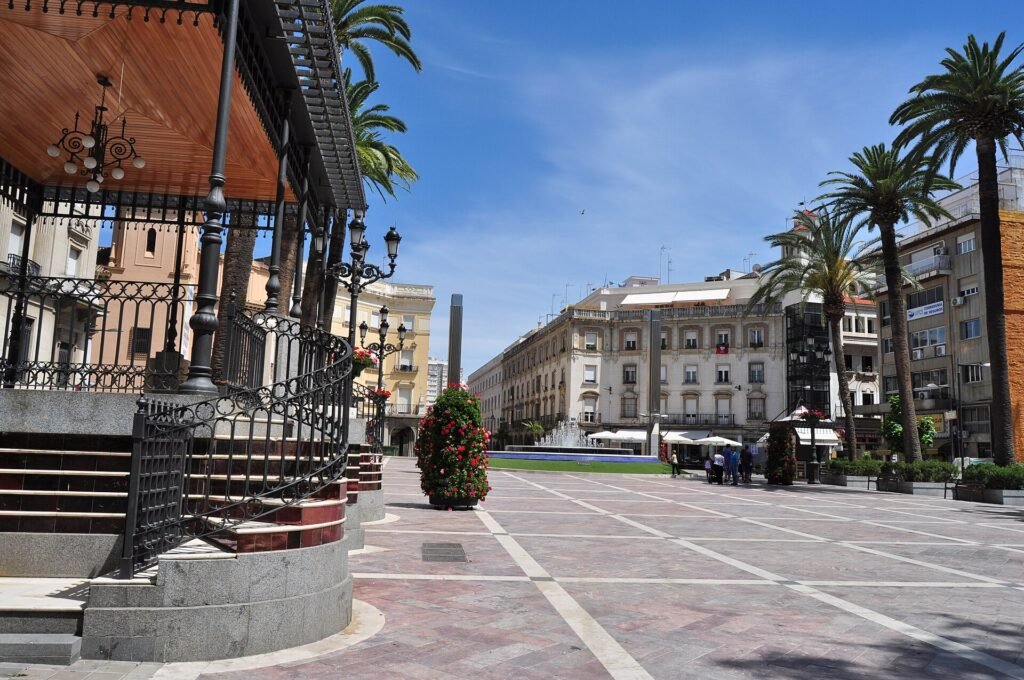
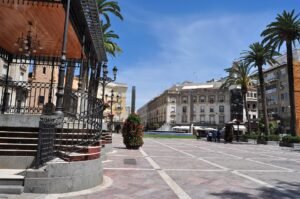
This central square is a natural introduction to Huelva. Its open pedestrian space, surrounding architecture and statue of Christopher Columbus make it useful both for orientation and for getting a sense of the city’s everyday rhythm.
Good to know: Pick a café or simply walk the nearby commercial streets. The square is not the same site as the much larger Columbus monument at Punta del Sebo, a separate excursion farther from the centre.
3. Discover the buildings of Casa Colón
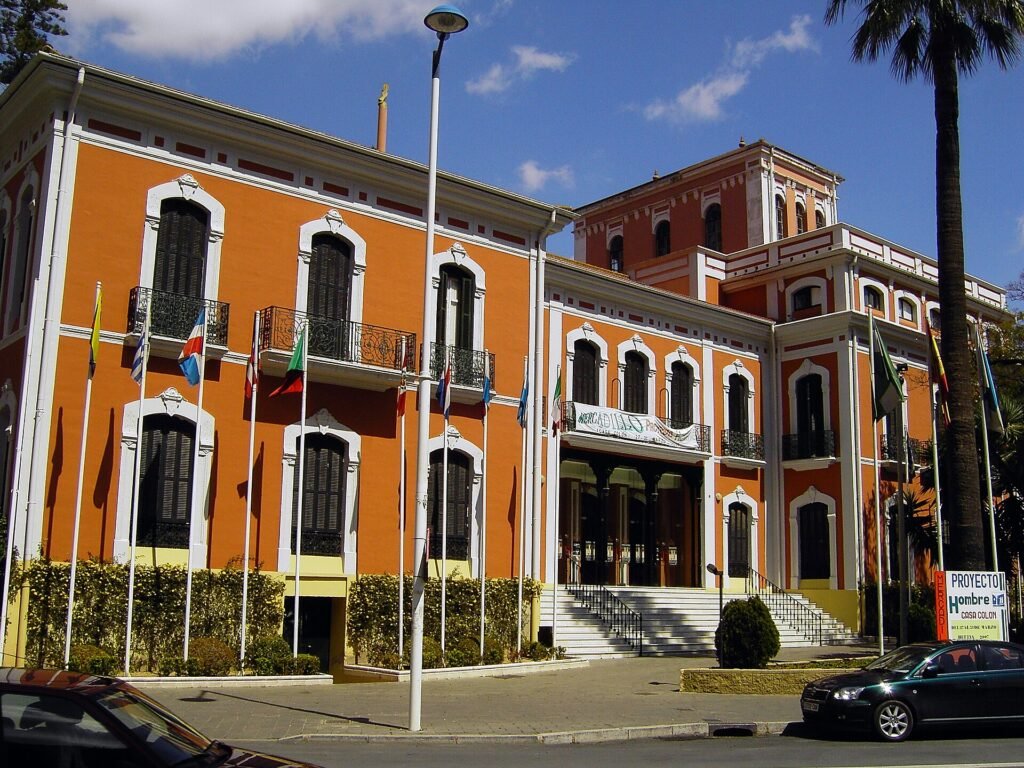
Originally opened as the Hotel Colón in 1883, Casa Colón recalls the period when international mining companies helped reshape Huelva. Its gardens and pavilion-style buildings are a distinctive contrast with modern city streets.
Good to know: It now operates as a cultural and events venue, so interior access depends on the programme. Admire the exterior and garden setting without assuming every room is open for general sightseeing.
4. Explore Barrio Reina Victoria
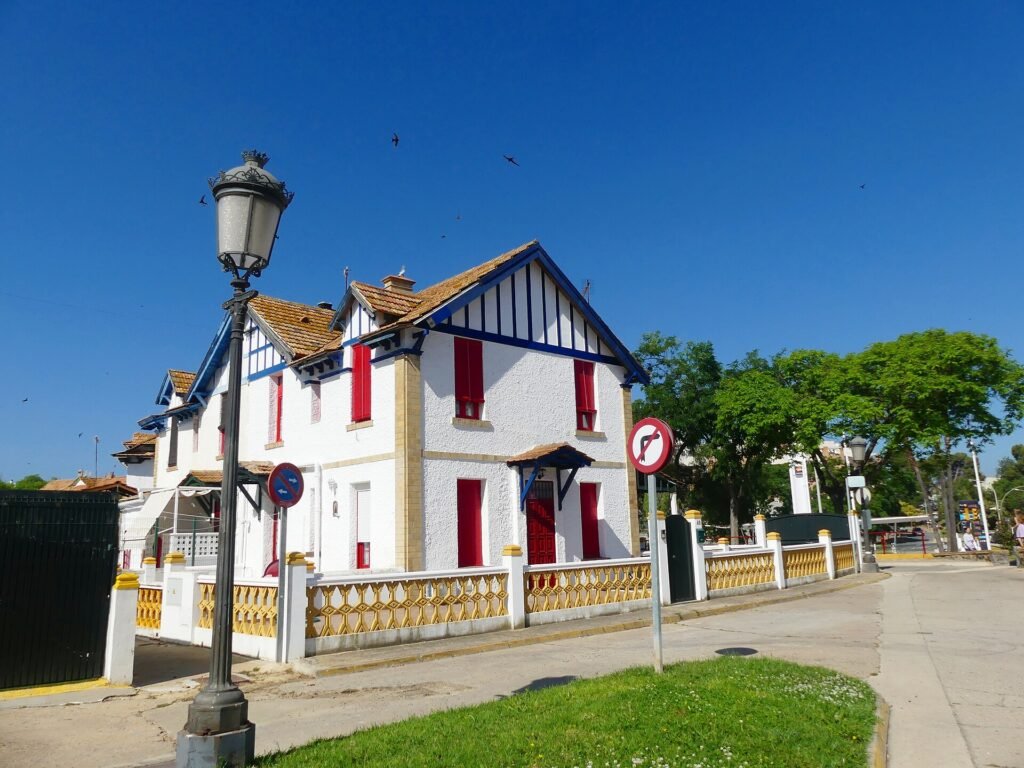
Also known as the Barrio Obrero, this residential quarter was built in connection with Huelva’s mining-era workforce. Its houses and layout show British-inspired elements alongside local building traditions, giving the district a noticeably different atmosphere from the historic centre.
Good to know: It is a lived-in residential neighbourhood. Walk the public streets, observe the façades and respect residents’ privacy; do not enter gardens or homes.
5. Visit the Mercado del Carmen
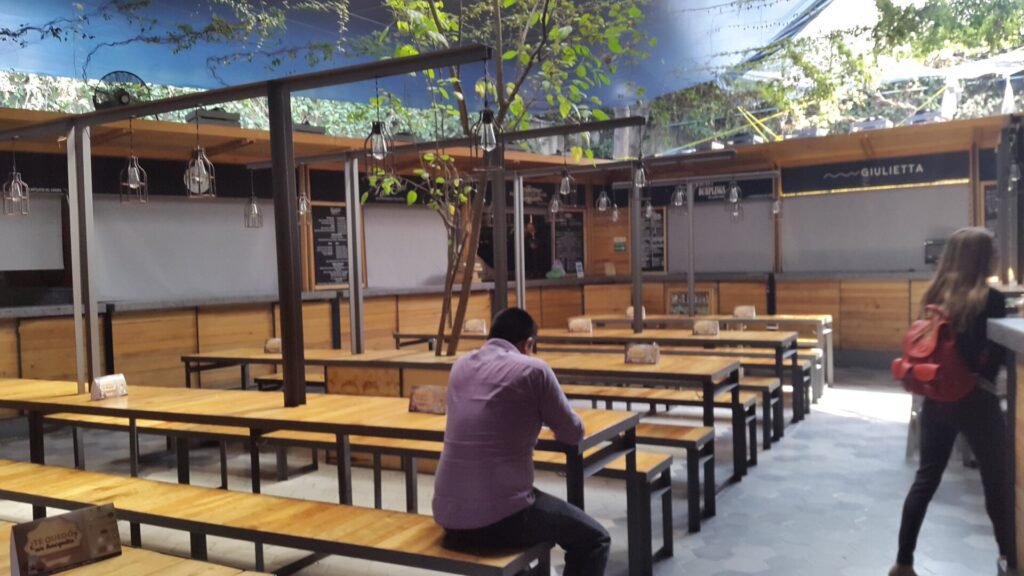
Huelva’s municipal market is a practical introduction to its seafood, vegetables, fruit and daily shopping culture. Even visitors who are not cooking can enjoy seeing what local households buy and how prominently fresh fish features in the city’s food identity.
Good to know: Arrive during market trading hours rather than at dinner time, and ask before photographing vendors. The market’s official tourism entry lists Avenida de Italia, 2; confirm current schedules before going.
6. Walk beneath the Catedral de la Merced
Huelva’s cathedral began as part of a Mercedarian religious complex and acquired its present Baroque character through rebuilding and alterations. The façade and square make a quiet counterpoint to the industrial buildings elsewhere in town.
Good to know: This remains a place of worship. Tourist access can be affected by services and events; check locally before expecting to enter the interior.
7. Look around the Iglesia de San Pedro
Sitting on one of the city’s historic rises, San Pedro is among Huelva’s oldest religious landmarks. Its Gothic-Mudéjar character helps show that the city’s history reaches far beyond the nineteenth-century mining boom.
Good to know: The uphill approach and surrounding streets may be less comfortable for visitors with limited mobility. Opening arrangements depend on religious activities.
8. Take in the view from Mirador del Conquero
Huelva’s cabezos—its characteristic hills—create elevated places to appreciate the city’s unusual setting between river estuaries. From Conquero, the patchwork of buildings, marshes and distant settlements is easier to understand.
Good to know: The viewpoint is more useful in clear weather; it is a different experience from the flat waterfront. Consider a taxi or local transport if the climb is not convenient for your group.
9. Relax in Parque Moret
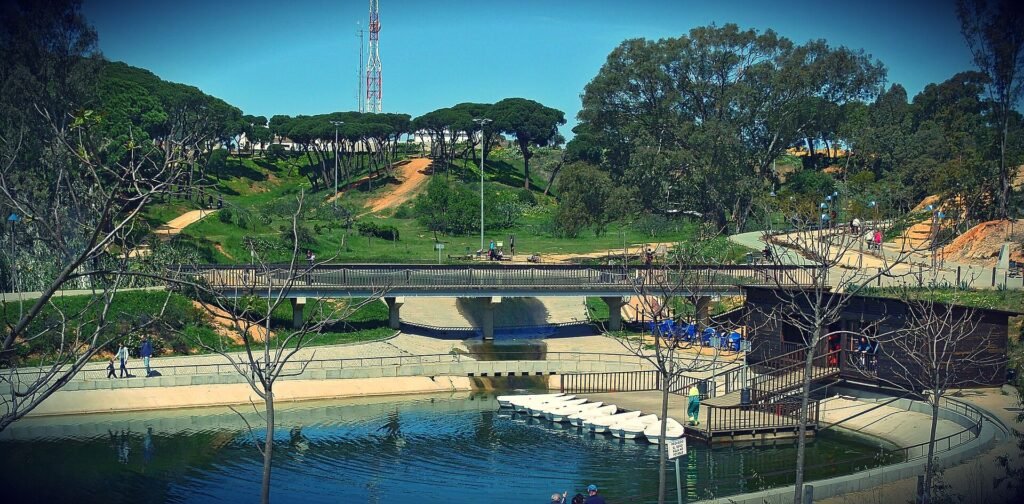
Moret Park is one of Huelva’s largest green spaces and includes a fascinating archaeological dimension. Local tourism information connects some of its low mounds with ancient Tartessian burial sites, so the landscape has meaning beyond its paths and recreational areas.
Good to know: Choose a short loop if you are fitting it around other sightseeing; the park is not immediately beside the main waterfront sights. Bring water in warm weather and follow marked paths.
10. Stroll the Paseo de la Ría
The waterfront promenade is a good place to see Huelva as a working port city. The changing light, broad estuary and sightlines towards the mineral pier make a different impression from the shopping streets inland.
Good to know: This is an easy place to plan a sunset stop, although the exact appearance depends on cloud and tide. Do not confuse a viewpoint over port infrastructure with public access to industrial operating areas.
11. See the large Columbus monument at Punta del Sebo
This striking sculpture by Gertrude Vanderbilt Whitney stands near the meeting of the Tinto and Odiel rivers. It honours the navigators associated with the Atlantic voyages of the late fifteenth century and is an imposing landmark in its riverside setting.
Good to know: It is several kilometres from the central square and suits a separate drive or transport trip. It is not the smaller Columbus statue in Plaza de las Monjas.
12. Learn about local history at Museo de Huelva
The provincial museum gives context to archaeological discoveries and fine-art traditions from Huelva and its surrounding territory. It is particularly worthwhile if the city’s ancient history or the mining region interests you.
Good to know: Confirm which galleries and temporary exhibitions are open, and check access arrangements through the Junta de Andalucía museum pages before building your schedule around the visit.
13. Notice the former Estación de Sevilla
Huelva’s former railway station is an eye-catching piece of railway heritage associated with the city’s industrial age. Its neo-Mudéjar appearance helps tell the story of rail connections between inland extraction areas and the port.
Good to know: Treat the historic façade as an architectural stop rather than assuming it operates as the current passenger station. For travel, confirm the active Huelva railway station separately.
14. Explore the Santuario de la Cinta
This sanctuary is linked to the city’s devotion to the Virgin of La Cinta and to local traditions surrounding Atlantic exploration. Its elevated position gives visitors another perspective on Huelva beyond the compact commercial centre.
Good to know: As an active religious site, access depends on worship and other activities. It is best planned with other northern-city locations rather than as an unplanned detour from the pier.
15. See the old Tharsis loading pier from shore
The Tharsis structure offers a second, distinct chapter in Huelva’s mining-port story. Compared with the refurbished Río Tinto pier, its significance is primarily its surviving industrial silhouette and engineering history.
Good to know: The city’s official British-heritage route says it is not walkable. Appreciate it from an appropriate public viewpoint rather than attempting to access the structure.
How to plan a visit
For a first day, concentrate on Plaza de las Monjas, Casa Colón, Mercado del Carmen, the Río Tinto pier and the estuary promenade. The Conquero viewpoint, Moret Park, Santuario de la Cinta and Punta del Sebo are better treated as separate legs rather than forced into one continuous walking circuit.
Huelva is a real working city, not an open-air theme park. Some attractions are workplaces, churches or residential streets, and availability can change without much notice. Check access to museum interiors or religious buildings and leave time to eat rather than racing through every stop.